23 Beautiful Watercolor Painting References – Unleashing Your Inner Artist with Painting in a Bottle
If you’re seeking inspiration to infuse your artwork with fluid colors and captivating themes, look no further than these 23 beautiful watercolor painting references. This curated collection is designed to spark your creativity and guide your next masterpiece, especially if you’re exploring unique concepts like painting in a bottle.
Whether you’re a seasoned artist or just beginning your journey, these diverse examples offer a fantastic starting point. You’ll discover a variety of subjects, including stunning animal portraits, imaginative scenes, and step-by-step tutorials, providing ample ideas to develop your watercolor painting skills and explore different styles. You might even find inspiration for painting food, like in this Watercolor Cherry Cheesecake Dessert Tutorial.
How to Draw a Plant
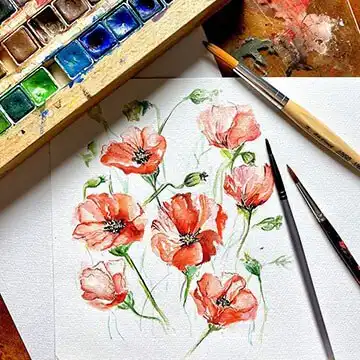
Delve into the organic beauty of nature by learning how to draw and paint a vibrant plant with watercolors. This simple tutorial breaks down the process, guiding you from basic shapes to intricate leaf details. Experiment with various shades of green and hints of yellow or blue to give your foliage depth and dimension, bringing a fresh, botanical feel to your artwork.
Start with light washes for the initial layers, gradually building up color and form. Consider adding subtle shadows to create a sense of realism, making your plant painting truly pop off the page. Focus on the natural flow of the leaves and stems for an authentic representation.
House with Balloons
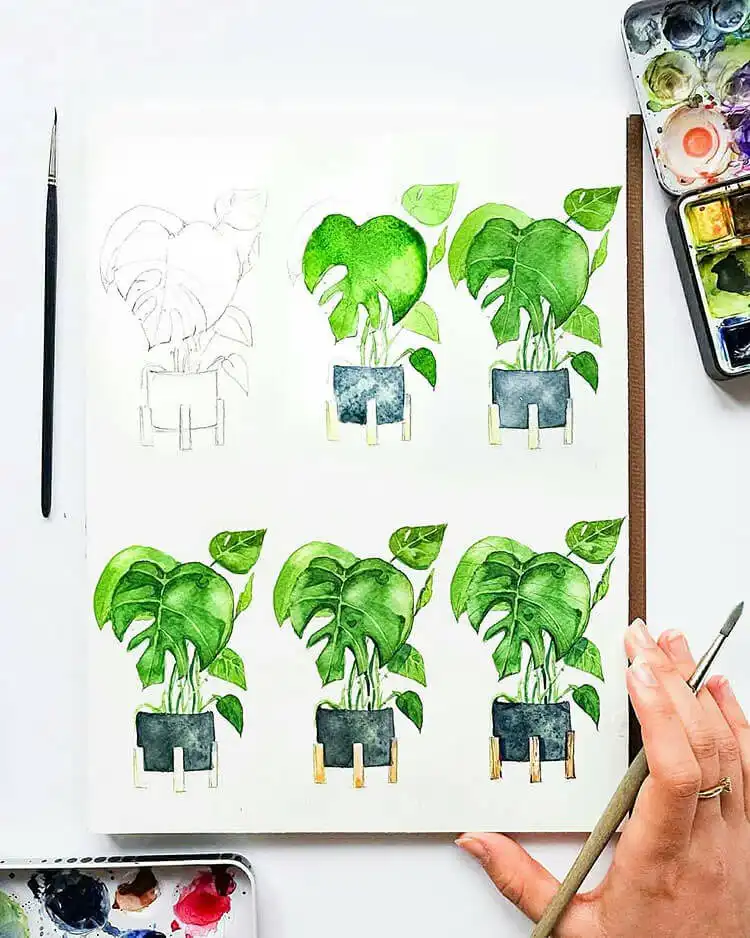
Capture a whimsical scene with this charming painting of a house adorned with an explosion of colorful balloons streaming from its chimney. This delightful concept brings a sense of joy and fantasy to your canvas, perfect for a heartwarming gift or a decorative piece for a child’s room. Use bright, contrasting colors for the balloons to create a vibrant visual impact.
Employ soft, dreamlike washes for the house and background elements to emphasize the playful nature of the balloons. Pay attention to the light and shadow on each balloon to give them a rounded, three-dimensional appearance. This piece beautifully merges architectural form with imaginative whimsy.
Pastel Watercolor Flowers
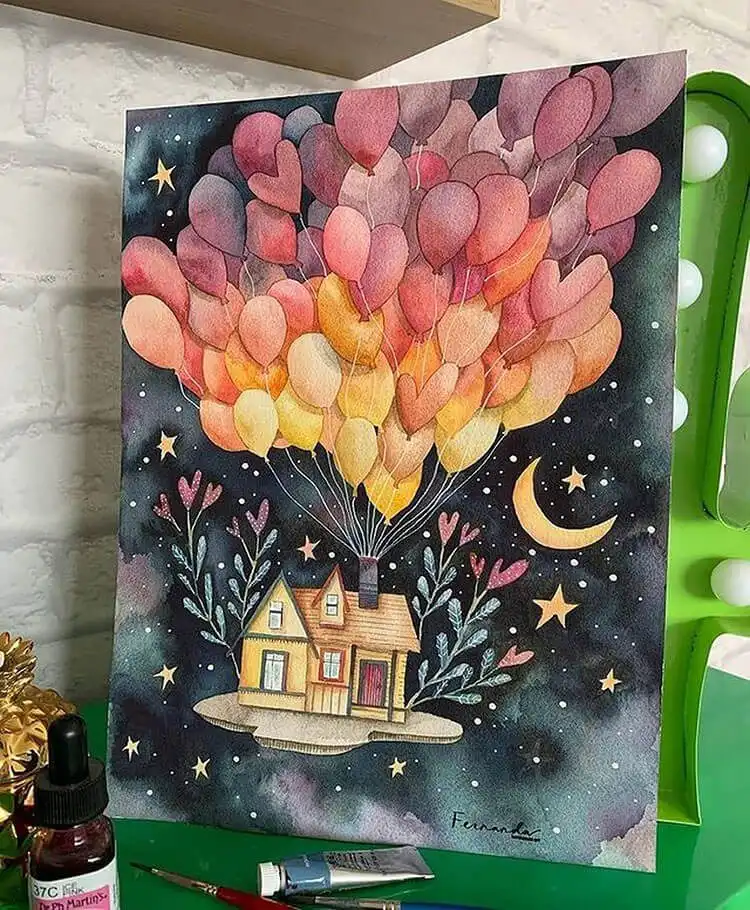
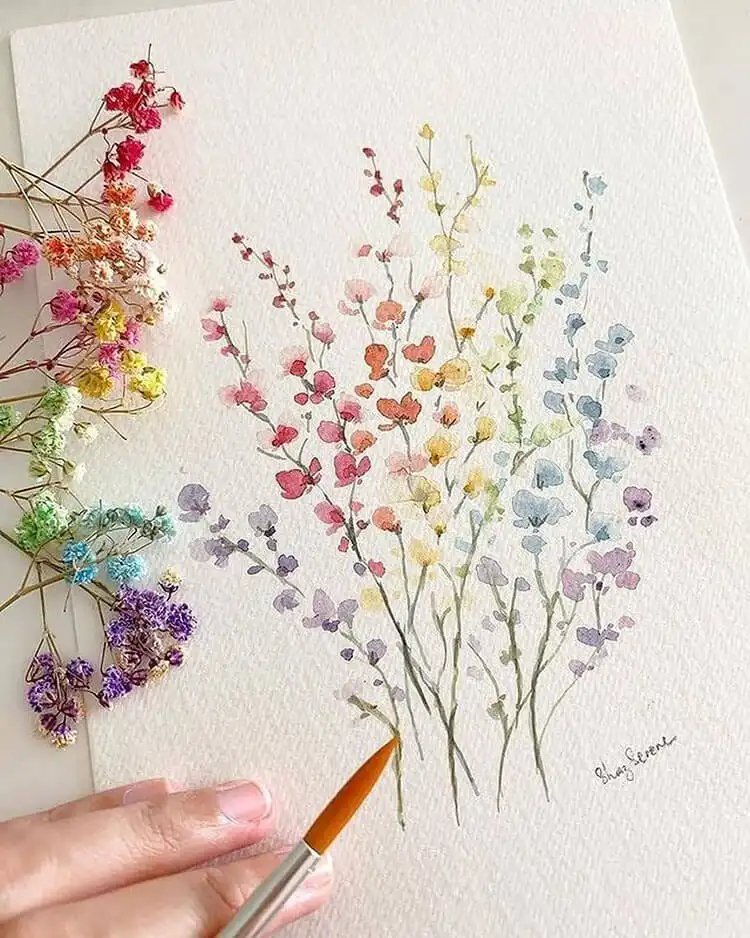
Embrace the delicate charm of floral art with this gorgeous pastel watercolor flower reference. The soft, muted hues create an ethereal and calming effect, making it an ideal subject for tranquil art pieces. Explore various pastel shades like blush pink, lavender, mint green, and sky blue to evoke a gentle, dreamy atmosphere.
Layer your pastel washes to create subtle variations in petal shading, giving your flowers a realistic yet soft appearance. This style is perfect for creating framed art for a loved one or designing elegant greeting cards. Focus on gentle blending for seamless transitions between colors.
Large Watercolor Rose
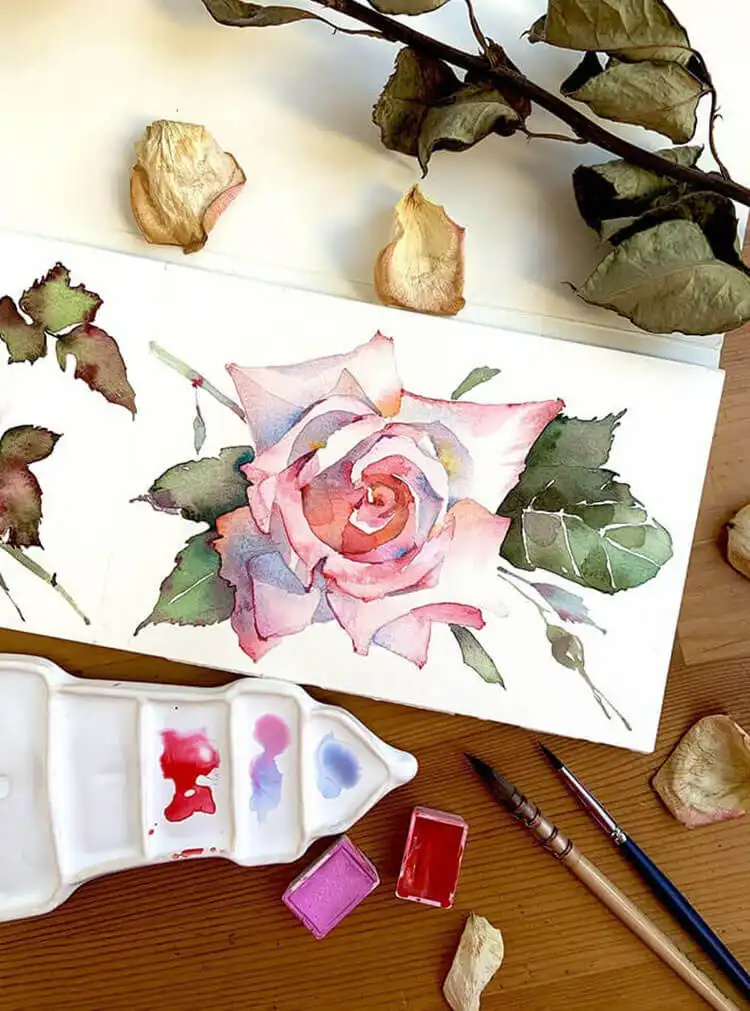
Practice your floral artistry by focusing on a magnificent large watercolor rose. This detailed reference allows you to hone your skills in capturing the intricate layers and delicate textures of rose petals. Choose vibrant reds, deep fuchsias, or soft whites, incorporating subtle gradients for a truly realistic effect.
Begin with a light base wash for the entire flower, then gradually add darker tones to define the contours and shadows of each petal. The key to a beautiful rose lies in the gentle blending and layering of colors, creating depth and a sense of unfolding beauty. This makes for a stunning focal point in any composition.
Quick Flower Sketches
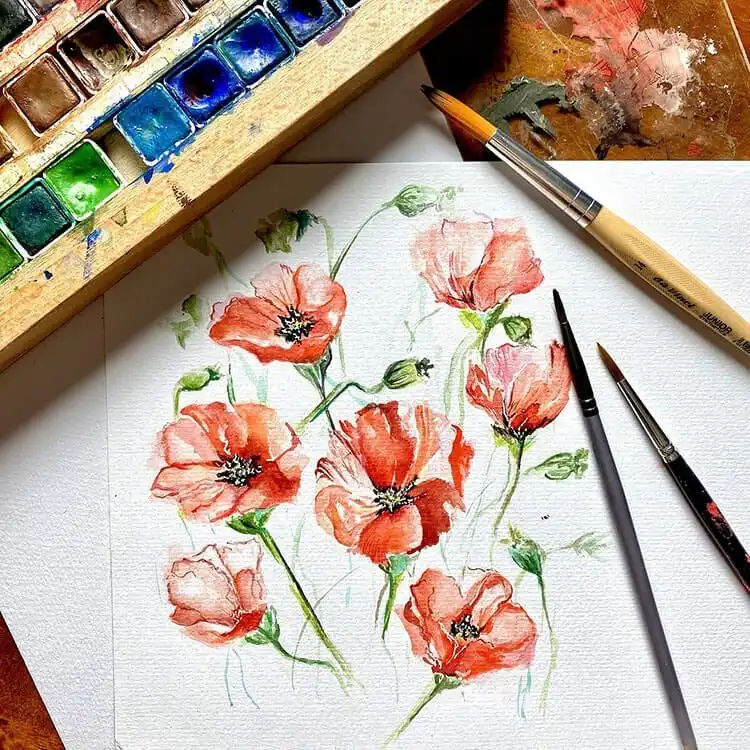
Develop your speed and precision with these quick flower sketches, perfect for practicing watercolor techniques. Choose your favorite blooms, from poppies to daisies, and capture their essence with swift, confident strokes. This exercise encourages you to loosen up and embrace the spontaneous nature of watercolor.
Use light pencil outlines before applying quick washes of color, focusing on capturing the form and vibrancy rather than meticulous detail. This approach is excellent for building confidence and exploring different color combinations without overthinking. These brief studies are also great for populating your sketchbooks.
Lighthouse and Seagulls
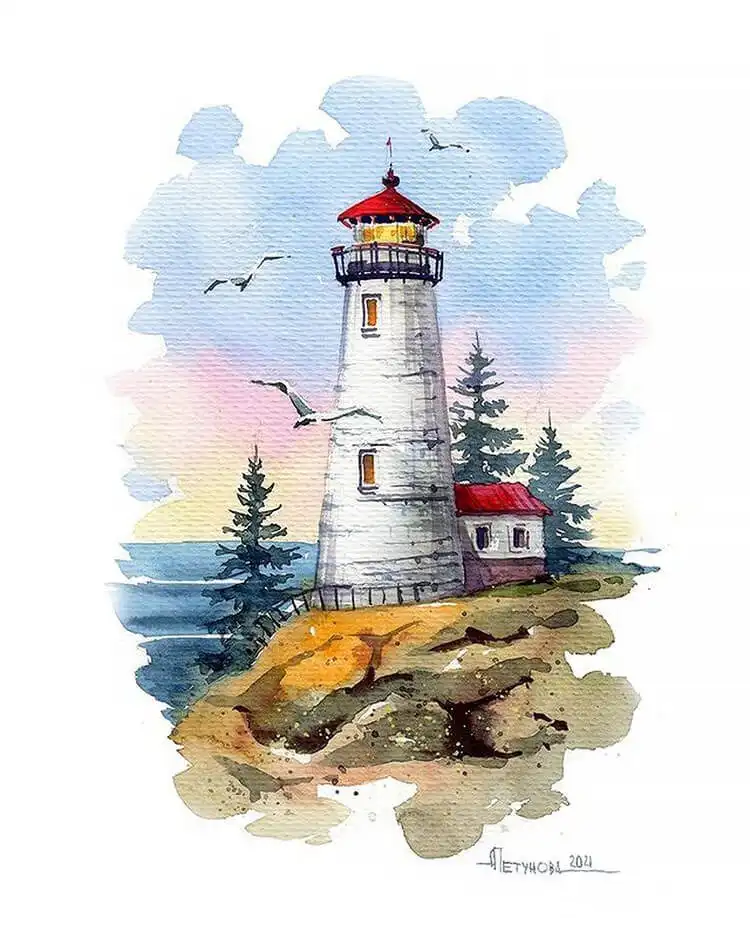
Immerse yourself in coastal beauty with this stunning watercolor painting featuring a majestic lighthouse and soaring seagulls. The artist masterfully blends blues, grays, and whites to create a serene yet powerful maritime scene. Pay close attention to the dramatic interplay of light on the lighthouse and the subtle movement of the water.
Utilize wet-on-wet techniques for the sky and sea to achieve soft, blending effects, contrasting with sharper lines for the lighthouse structure. The inclusion of seagulls adds life and narrative to the composition, making this a captivating reference for landscape artists. This piece truly captures the essence of a tranquil yet wild coast.
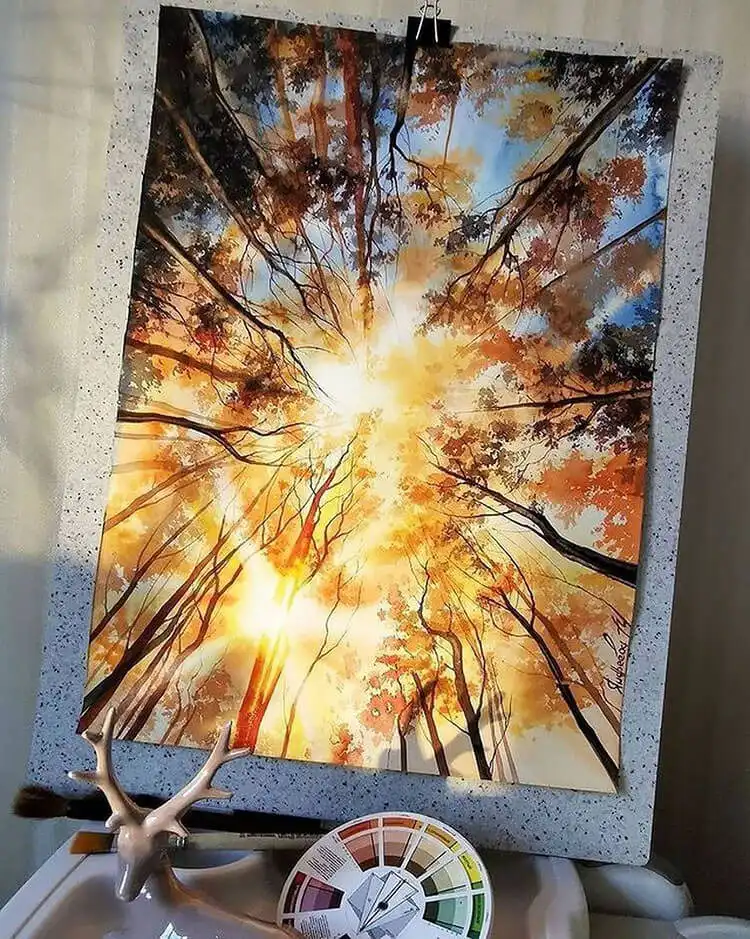
Sky Through the Trees
Experience the enchanting glow of a bright sky and sun filtering through a dense canopy of trees in this nature-inspired watercolor. This painting beautifully captures the serene ambiance of a woodland scene, highlighting the mesmerizing patterns created by light and shadow. Use warm yellows and oranges for the sky, complemented by rich greens and browns for the foliage.
Employ layering techniques to build the density of the tree branches, allowing the light to peek through in strategic areas. This artwork is perfect for those who love to paint nature and wish to explore atmospheric effects. It showcases how light can transform a simple landscape into something magical.
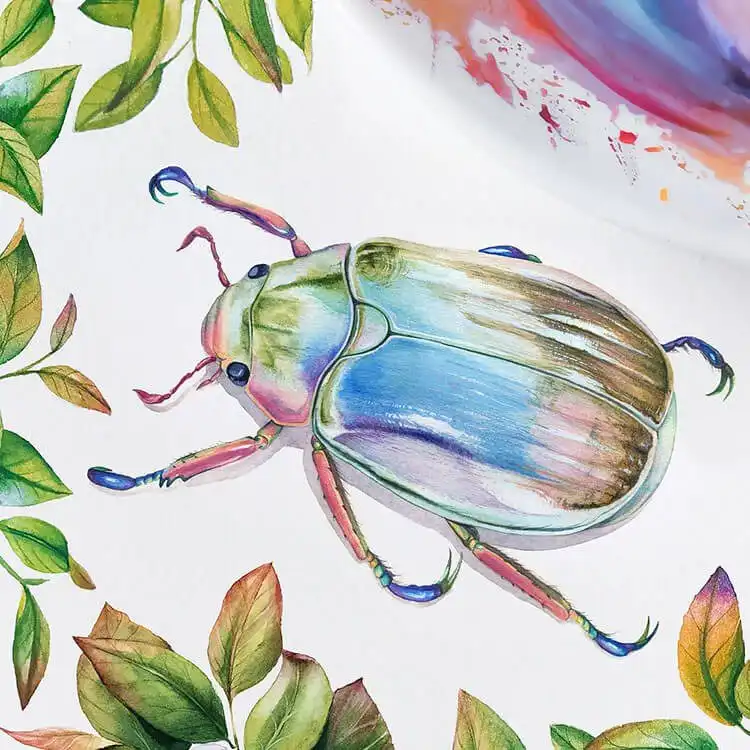
Colorful Beetle
For those intrigued by the intricate beauty of insects, this colorful beetle painting offers a unique artistic challenge. The artist’s gradient work and vibrant color choices are truly impressive, transforming a creature often overlooked into a magnificent focal point. Experiment with iridescent blues, greens, and purples to capture the beetle’s metallic sheen.
Focus on precise brushwork to define the hard shell and delicate legs, using wet-on-dry techniques for crisp details. The addition of a lush leaf border beautifully frames the insect, enhancing its natural habitat. This reference demonstrates how to make even small subjects grand and visually striking, celebrating the biodiversity of our world.
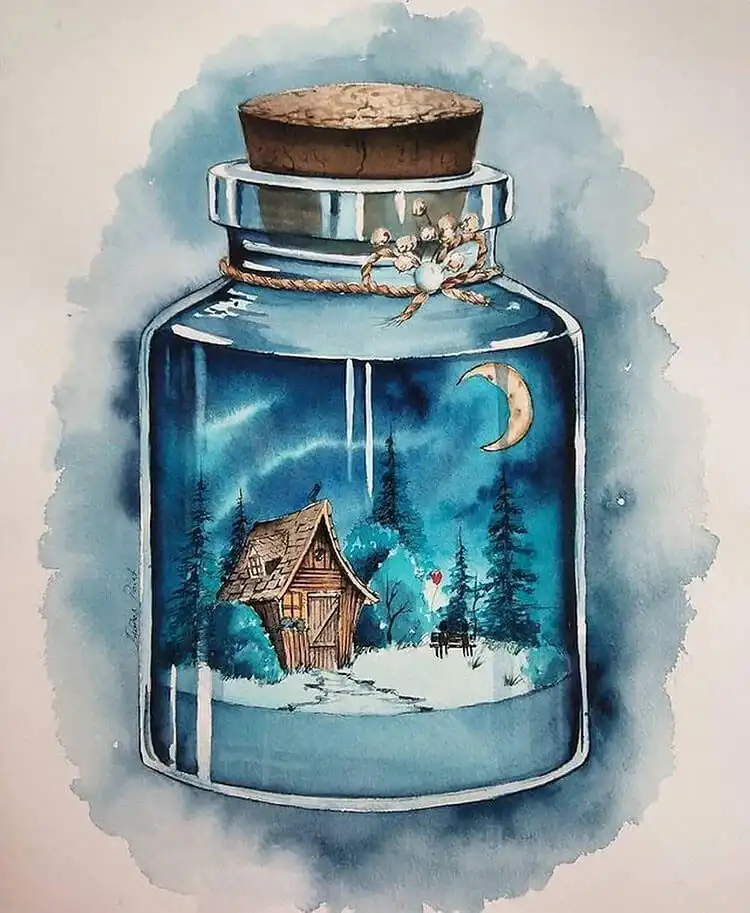
House in a Bottle
Dive into a whimsical world with this enchanting “house in a bottle” painting, a charming example of nature miniaturized. This particular piece features a small wooden house nestled within a serene woodland, all contained within the transparent confines of a bottle. A playful red balloon floating in the background adds a touch of fantasy to the composition.
This concept encourages creativity in depicting miniature worlds and glass reflections. Use delicate washes for the elements inside the bottle and subtle highlights on the glass to convey transparency and depth. This painting invites viewers into a tiny, magical realm, perfect for showcasing art.
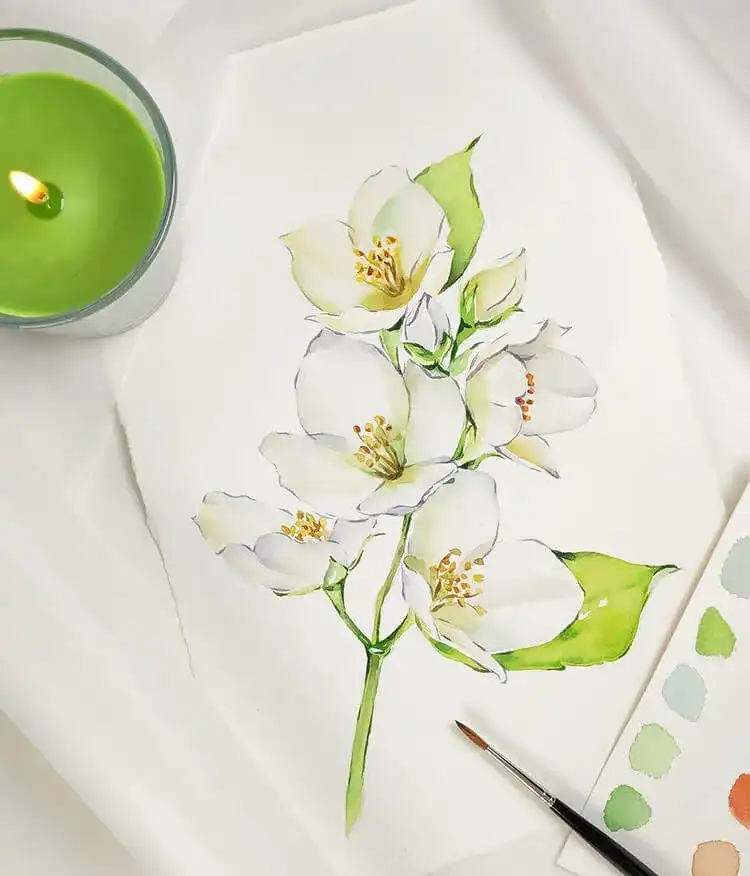
Beautiful and Elegant Flowers
Discover the beauty in simplicity with this elegant floral painting, showcasing a minimalistic approach to watercolor. The artist’s choice of harmonious colors and exceptional shading creates a serene and sophisticated aesthetic. This style emphasizes the inherent grace of flowers without overwhelming details.
Focus on clean lines and controlled washes to achieve a refined look. The subtle blending of hues adds depth and realism, making the flowers appear soft and natural. This reference is ideal for artists who appreciate understated elegance and wish to master nuanced shading in their botanical works, making it a timeless piece.
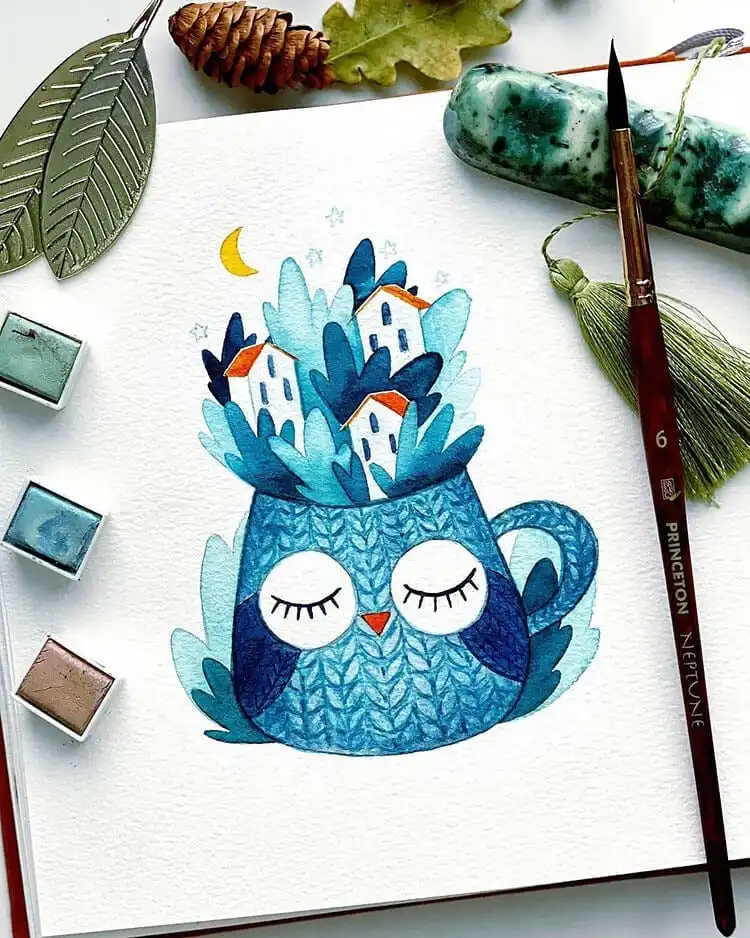
Owl Tea Cup
This adorable owl teacup painting is a delightful blend of charm and creativity, perfect for unique prints or handmade cards. The whimsical design captures the endearing qualities of owls, integrated into an unexpected, comforting object. Choose warm, earthy tones for the owl and delicate patterns for the teacup.
Utilize fine brushwork for the owl’s feathers and intricate details on the teacup, making sure to define its handle and rim. This piece combines illustrative charm with everyday objects, offering endless possibilities for personalization. It’s an imaginative way to infuse personality into your artistic expressions.
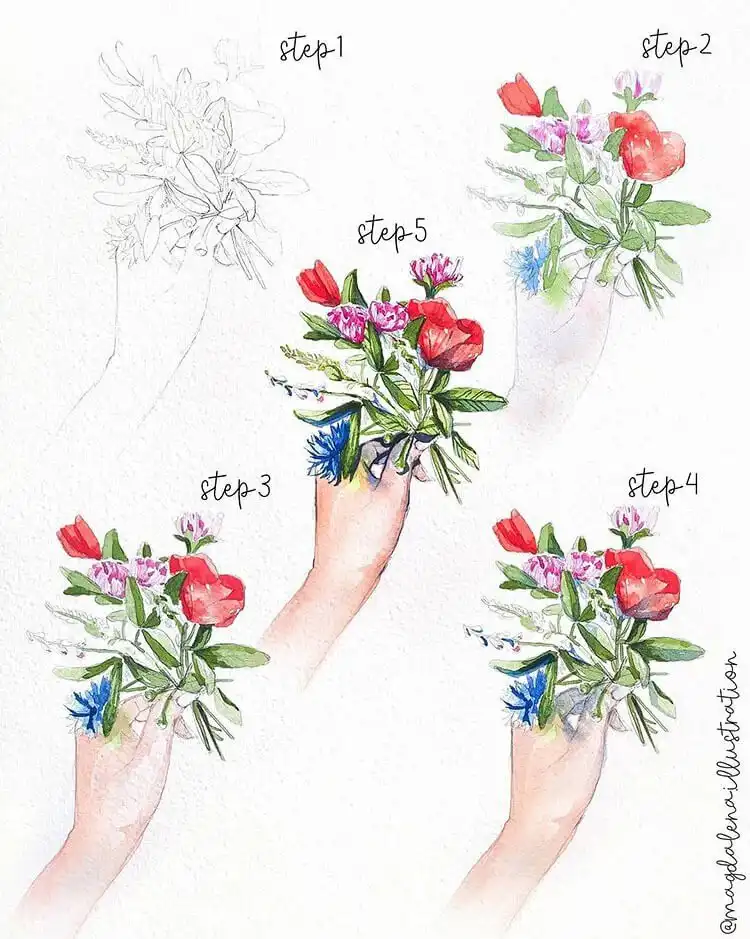
How to Paint a Bouquet
Demystify the process of painting a lush floral bouquet with this easy-to-follow, five-step tutorial. Learning to arrange and paint multiple flowers cohesively can be challenging, but this guide simplifies the technique. Focus on creating a balanced composition and using a varied color palette to represent different blooms.
Start with general shapes and light washes for all flowers, then gradually add details and darker tones to define each individual blossom and leaf. Practice blending colors to achieve natural transitions and depth within the bouquet. This step-by-step approach ensures a beautiful and impressive final painting.
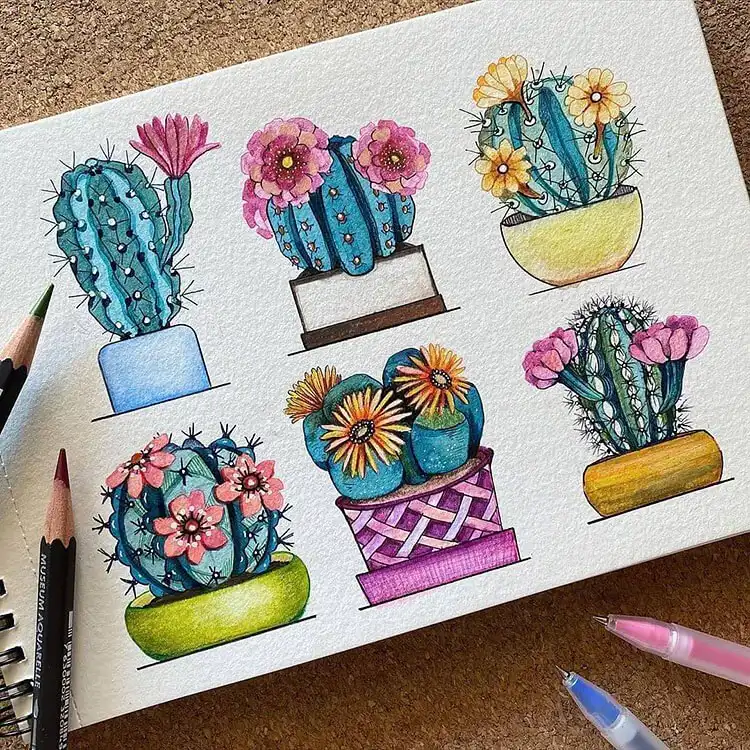
Six Cacti
Embrace the desert aesthetic with this fun painting featuring six unique cacti and succulents. Their varied forms and the potential for colorful blooms offer a fantastic opportunity for artistic exploration. Experiment with different shades of green, from deep forest to vibrant lime, and add bright, contrasting colors for the flowers.
Play with various pot designs and colors to personalize your composition, making each cactus distinct. The texture of cacti can be conveyed through dry brush techniques or stippling. This reference is excellent for practicing botanical details and creating a vibrant, desert-inspired art piece that is both quirky and appealing.
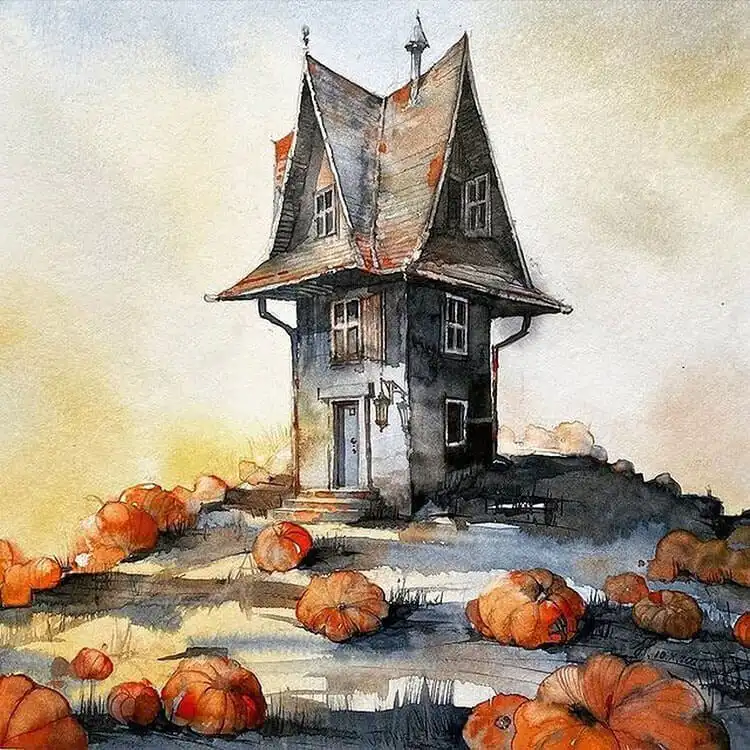
Spooky House
Capture an atmospheric and creative scene with this painting of an old, spooky house, perfect for Halloween or gothic-themed art. The intricate design of the house, combined with the scattered pumpkins, creates a wonderfully eerie vibe. Use muted, mysterious colors like deep grays, purples, and dark blues to enhance the spooky atmosphere.
Focus on creating interesting textures for the old wood and weathered roof, using both wet and dry brush techniques. The pumpkins add a touch of autumnal charm and color contrast to the otherwise dark scene. This piece showcases how to tell a story and evoke a specific mood through architectural and seasonal elements.
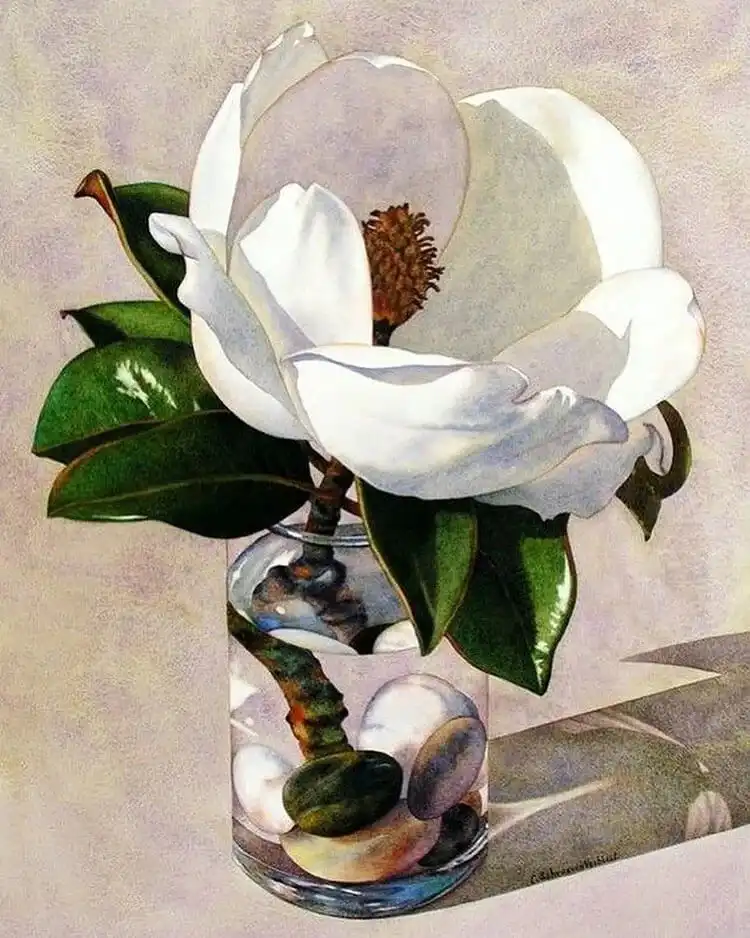
Large Flower in Jar
Achieve realism in your watercolor art with this painting featuring a large, striking flower delicately placed in a jar filled with stones and water. This reference is invaluable for practicing how to depict transparency, reflections, and the detailed beauty of a flower. Use soft, translucent layers for the water and precise brushstrokes for the flower’s petals.
Pay close attention to how light interacts with the glass jar and the water, creating subtle distortions and highlights. The stones at the bottom add visual interest and ground the composition. This piece challenges artists to combine botanical illustration with still-life elements, demonstrating impressive technical skill.
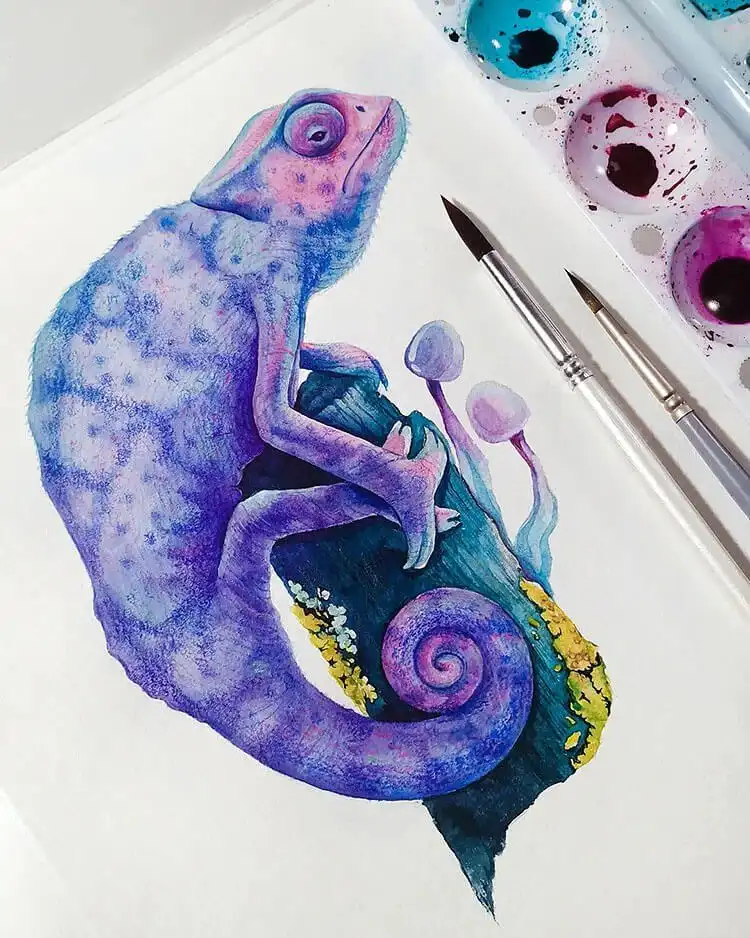
Chameleon Watercolor Painting
Explore vibrant color palettes and unique animal forms with this chameleon watercolor painting. Chameleons are fascinating creatures known for their striking appearance, making them an exciting subject. The artist’s choice of an unconventional color scheme adds a playful and artistic twist to this creature, encouraging experimentation beyond naturalistic colors.
Focus on capturing the chameleon’s distinctive eye, textured skin, and coiled tail. Use a blend of bright and unusual hues to create an eye-catching effect, making the chameleon truly stand out. This reference inspires artists to embrace creative color interpretation in animal portraits, much like the 20 Beautiful Watercolor Butterfly Painting Ideas.
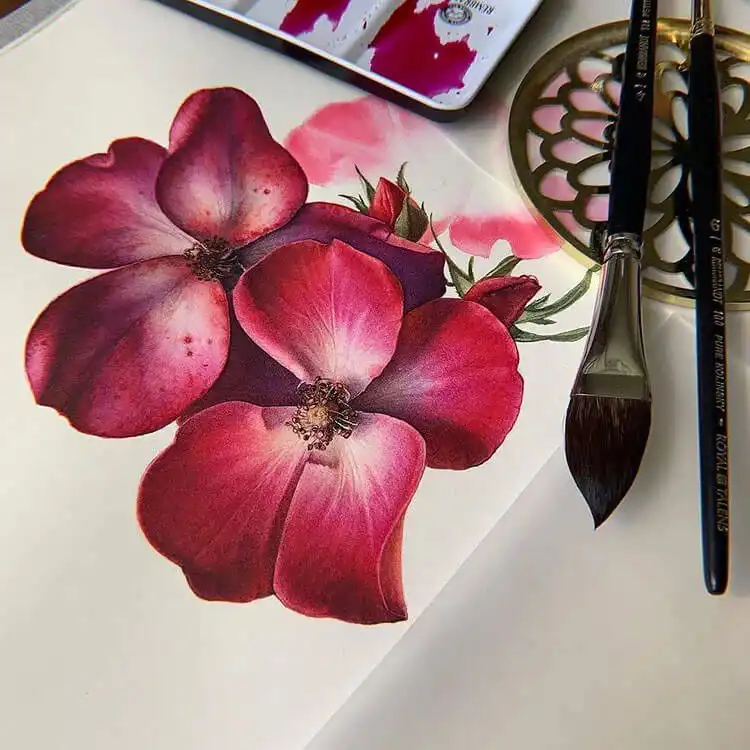
Beautiful Red Flower
Witness the exquisite artistry of shading and blending in this beautiful red flower watercolor painting. The artist’s command of depth and transition between hues is truly remarkable, bringing the flower to life with vibrant intensity. Choose a rich primary red and introduce deeper crimson and maroon tones for shadow, while lighter reds and oranges capture highlights.
The key to such a stunning red flower lies in carefully layered washes, allowing each layer to dry before adding the next to preserve luminosity. This technique creates a sense of velvety texture and natural form, making it a perfect reference for those wishing to master color depth and realism in their floral work.
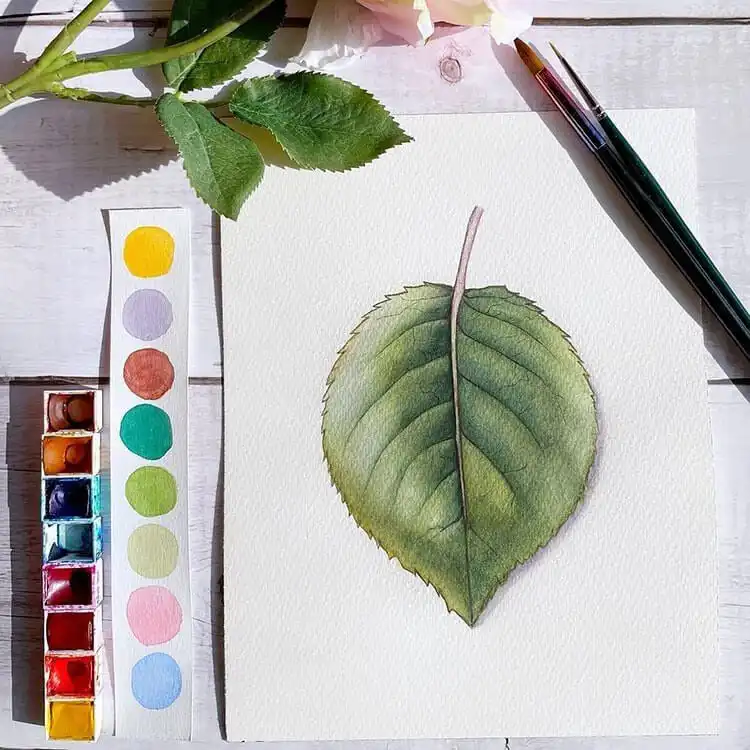
Realistic Leaf
Master the art of hyper-realism in watercolor by using a real leaf as your primary reference, just as this artist has done. This painting demonstrates that watercolors can indeed achieve highly realistic effects, capturing every vein, texture, and subtle color variation of a natural leaf. Focus on observing and reproducing the intricate details.
Employ fine brushes for the veins and layered washes for the main body of the leaf, incorporating slight imperfections and variations found in nature. This exercise is excellent for developing observational skills and precision, proving that even simple subjects can become profound works of art when rendered with care and accuracy.
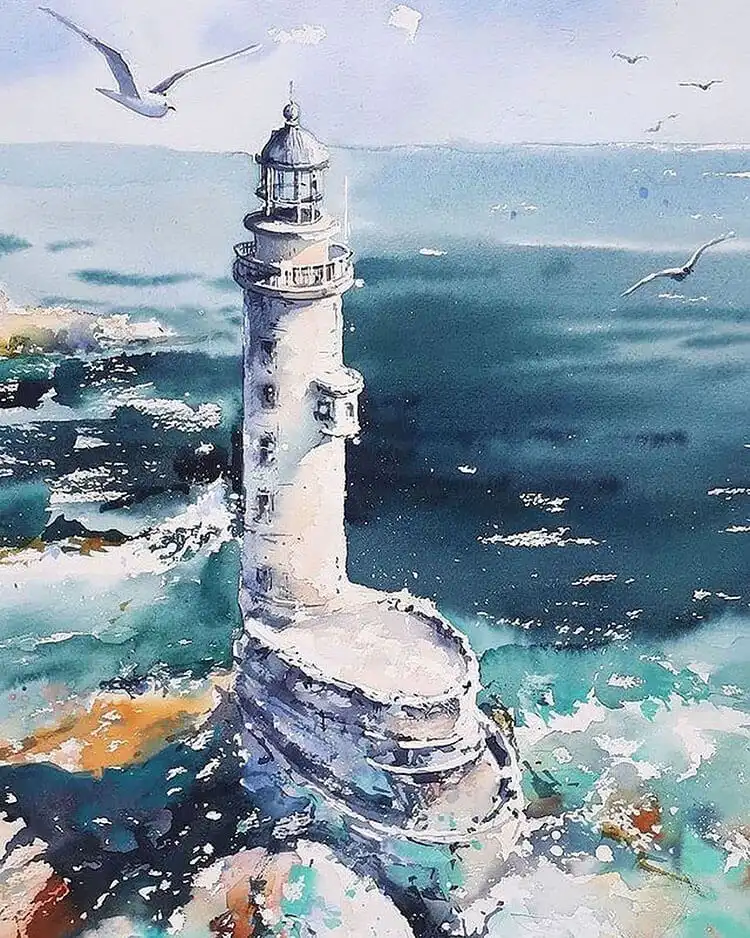
White Lighthouse
Revisit the iconic charm of lighthouses with this serene white lighthouse painting, featuring a lone gull in the sky. Lighthouses hold a special place in watercolor art due to their striking forms against expansive skies and seas. This particular reference offers a clean, crisp depiction, emphasizing architectural beauty and atmospheric lighting.
Use crisp whites and grays for the lighthouse, contrasting with soft blues for the sky and sea. The single gull adds a sense of scale and tranquility to the scene. This reference is perfect for those seeking a classic maritime subject, allowing for practice in rendering both solid structures and fluid elements with equal skill.
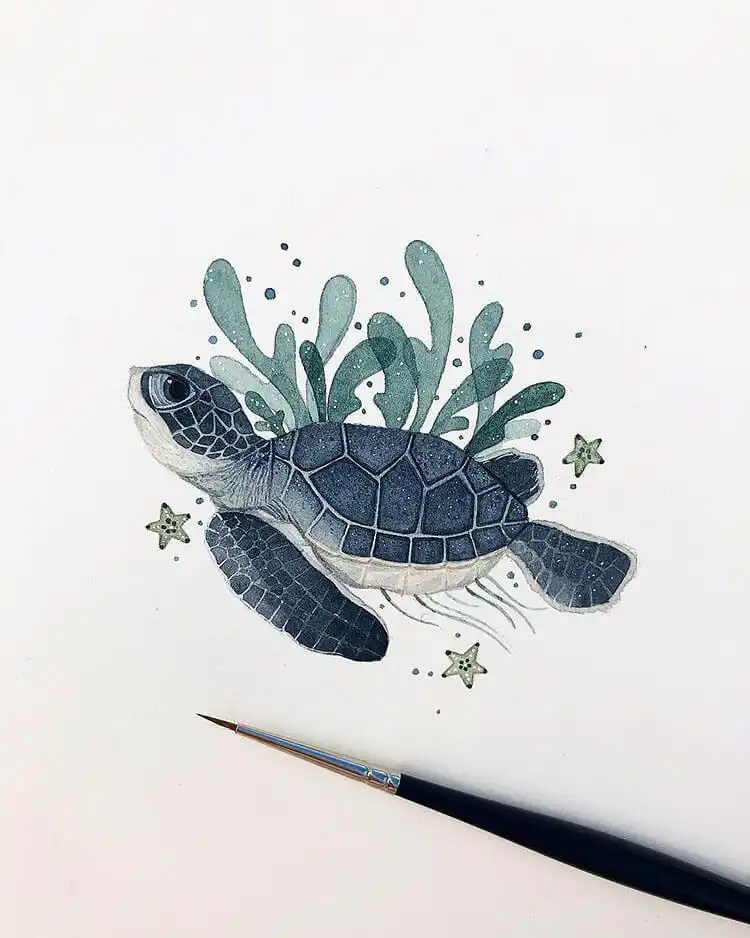
Sea Turtle
Delight in painting the serene beauty of a sea turtle, a beloved creature that translates wonderfully into watercolor. This cute little sea turtle painting captures its gentle essence, making it an ideal subject for animal lovers and a thoughtful gift for friends. Use a palette of tranquil blues and greens for the water, contrasting with earthy tones for the turtle’s shell.
Focus on the organic patterns of the shell and the graceful movement of its flippers, employing soft washes for the underwater environment. This reference is excellent for practicing fluid shapes and creating a sense of underwater serenity. It’s a charming way to bring marine life onto your canvas.
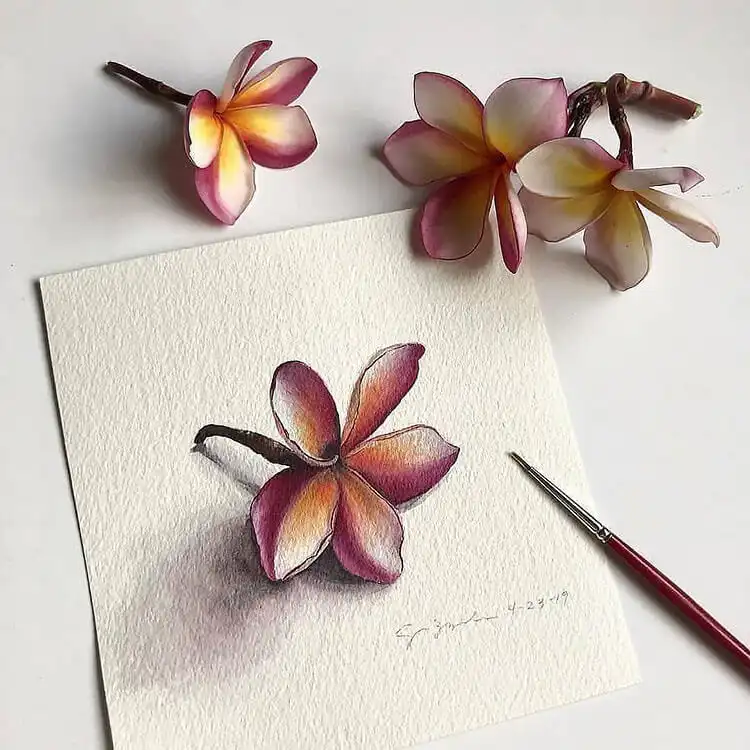
Real Flower Reference
Challenge yourself to use a real flower as a reference for your next watercolor painting, capturing its unique beauty and subtle imperfections. This approach ensures your art feels authentic and deeply personal, as you interpret nature directly from observation. Select a flower from your own garden or a local park to make the connection even stronger.
Observe the way light falls on its petals, the distinct hue variations, and the delicate structure of its stem and leaves. This practice enhances your observational skills and allows for a more expressive and truthful representation, resulting in a painting that truly reflects the individual character of your chosen bloom.
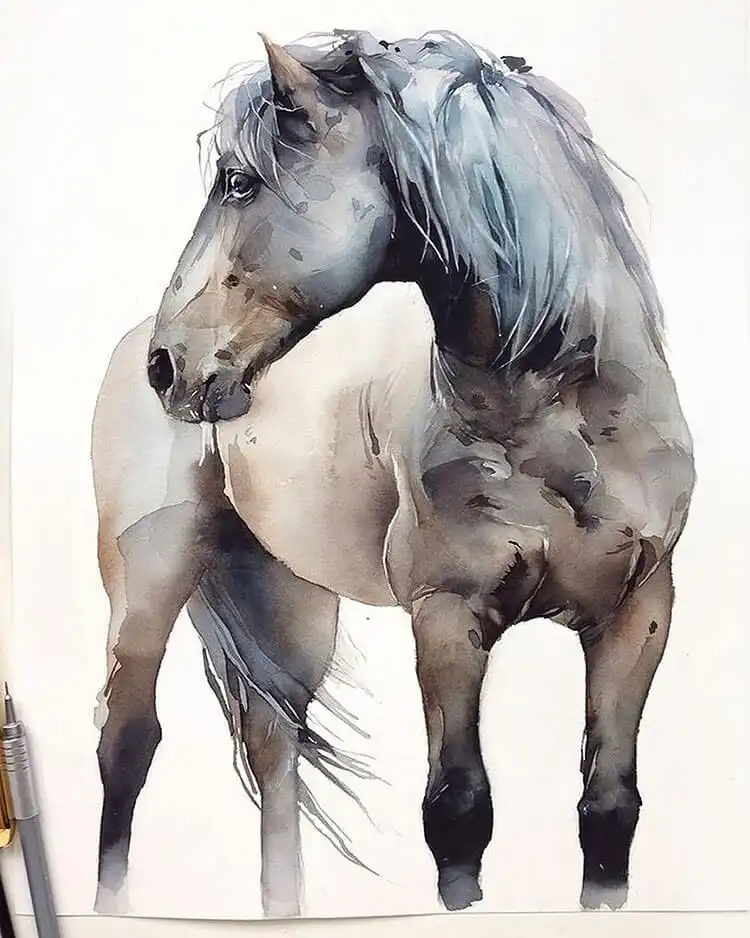
Watercolor Horse
Capture the noble spirit and striking form of horses with this beautiful watercolor painting reference. Horses are magnificent creatures, and rendering them in watercolor allows for a blend of strength and fluidity. This painting serves as an excellent guide for artists looking to depict equine subjects with grace and realism.
Focus on capturing the horse’s musculature and flowing mane, using a range of browns, grays, or even fantastical colors if you prefer. Employ soft washes for the background to keep the focus on the horse, allowing its majestic presence to dominate the canvas. This reference is perfect for practicing animal anatomy and conveying emotion.
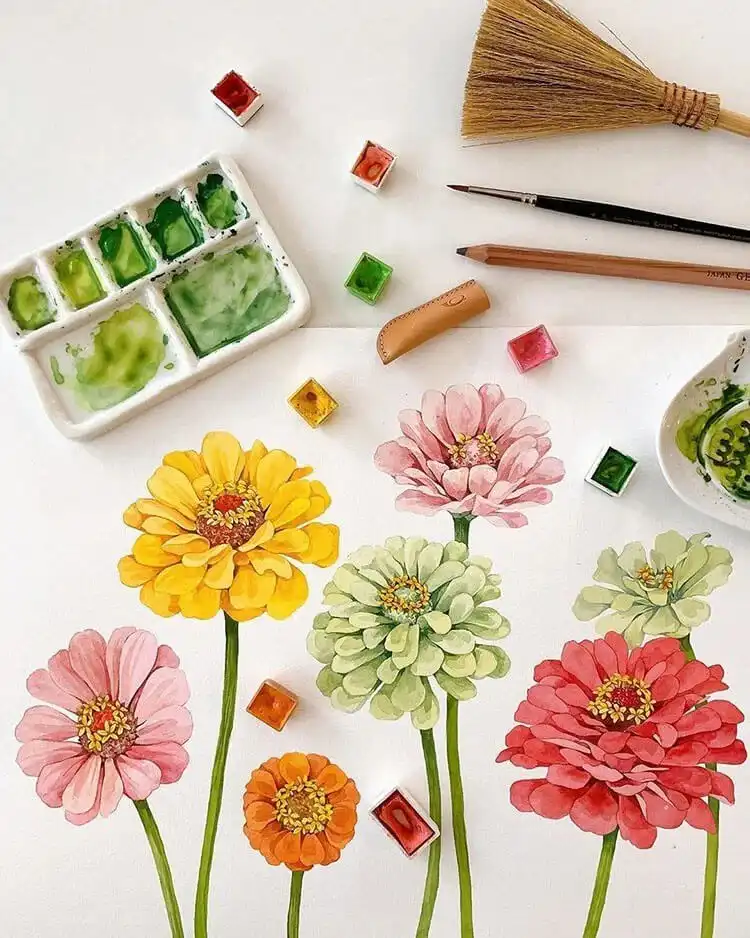
Colorful Flowers
Immerse yourself in a riot of color with this bright and vibrant carnation watercolor painting. The artist’s fearless use of brilliant hues creates an uplifting and joyful piece, making it a wonderful gift or a cheerful addition to any space. Experiment with bold pinks, fiery oranges, and sunny yellows to create an energetic floral display.
Layer your colors intensely to build saturation and depth, ensuring each flower stands out with its unique vibrancy. This reference encourages artists to play with strong color combinations and express joy through their brushstrokes. Create something similar, and you’ll undoubtedly brighten someone’s day.
We hope these watercolor painting references have ignited your imagination and provided ample inspiration for your next artistic endeavor. Don’t forget to save your favorite ideas on Pinterest, share them with fellow art enthusiasts, and leave a comment below with your thoughts!