25 Watercolor Flower Ideas for Beginners: Unleash Your Inner Artist
Welcome to the enchanting world of watercolor painting, a truly rewarding creative outlet for artists of all levels! If you’re eager to dip your brush into this versatile medium, you’ve come to the perfect place. We’ve curated 25 watercolor flower ideas for beginners that promise to inspire and delight, making your artistic journey both fun and accessible. For those looking to expand their creative horizons into other crafts, explore the ElseDigital Amazon storefront here for a wide range of DIY supplies!
Watercolor flowers are a fantastic subject for newcomers, offering endless possibilities from simple washes to more detailed botanical studies. Whether you’re looking to create heartfelt greeting cards or beautiful wall art, these beginner-friendly projects will help you master essential techniques. For those looking to expand their watercolor skills beyond florals, explore our Watercolor Cherry Cheesecake Dessert Tutorial or dive into a new craft like making stylish accessories with yarn and crochet tools.
Purple Flowers
Embrace the serene beauty of simple purple flowers, a wonderful starting point for any beginner. Focus on soft washes and allowing the colors to blend organically on the page. Use a wet-on-wet technique for a dreamy, ethereal effect, letting the pigments mingle to create gentle gradients.
Experiment with different shades of purple, from lavender to deep violet, to add depth without complex detailing. This design emphasizes the beauty of simplicity, making it perfect for practicing basic brush control and understanding watercolor flow. To keep your work surface protected while crafting, consider a self-healing cutting mat.
Single Watercolor Rose
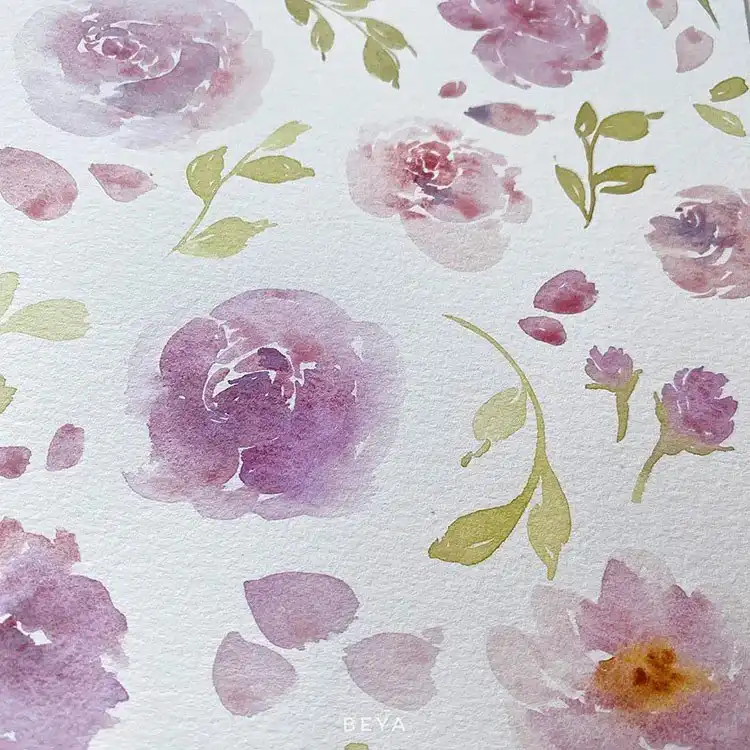
The iconic rose, often perceived as complex, can be simplified into a stunning watercolor for beginners. Focus on its key elements: layered petals and a central form. Start with lighter washes for the under-petals and gradually build up intensity for the outer ones, giving the illusion of volume.
Observe how light hits a real rose to guide your shading. Don’t aim for perfect realism; instead, capture the essence of its delicate beauty with flowing lines and soft color transitions. A limited palette can make this less intimidating, perhaps a single red or pink with a touch of green for the stem. If you’re looking for paper to experiment with, try duo-colored paper for interesting effects.
Blue Watercolor Flower
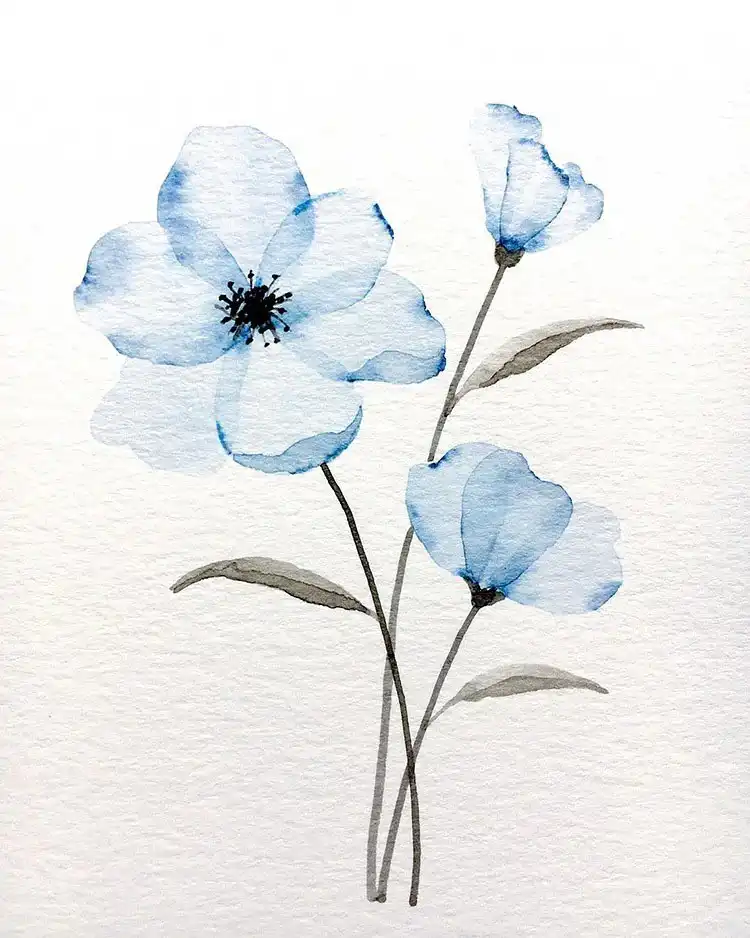
Dive into the calming world of blue with this straightforward floral painting. Its simplicity makes it an ideal quick project for practicing consistent washes and basic flower shapes. Consider a loose, impressionistic style where the edges are not sharply defined, allowing the natural spread of the pigment to create petal forms.
You can use a single shade of blue or introduce a slightly darker tone for the center to add subtle contrast. This project is excellent for getting comfortable with the water-to-paint ratio, a fundamental skill in watercolor. If you’re a beginner looking for other craft challenges, Bead Jewelry Making for Beginners can be a rewarding pursuit.
Wildflowers Painting
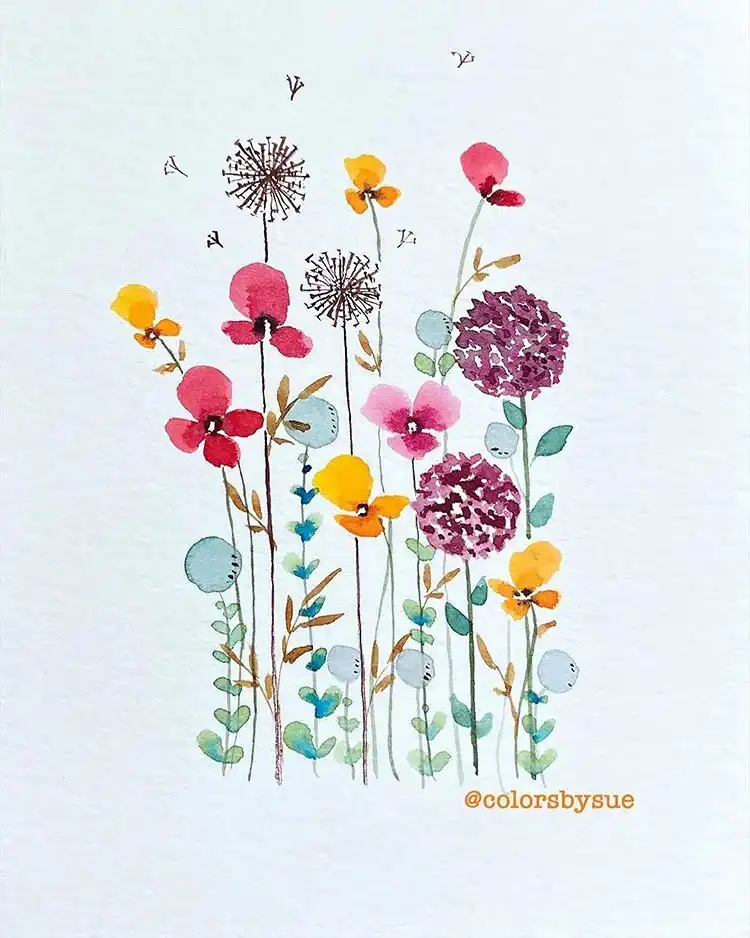
Capture the untamed charm of wildflowers in a loose, expressive watercolor style. This approach encourages freedom and spontaneity, perfect for beginners who might feel constrained by precise outlines. Think about varying heights and shapes to mimic a natural meadow arrangement.
Use small dabs of various colors—pinks, blues, yellows, and purples—to suggest different blooms. The goal isn’t photographic accuracy but rather to evoke the feeling of a vibrant, natural landscape. This makes a beautiful design for handmade cards or journal covers.
Pink and Blue Flowers
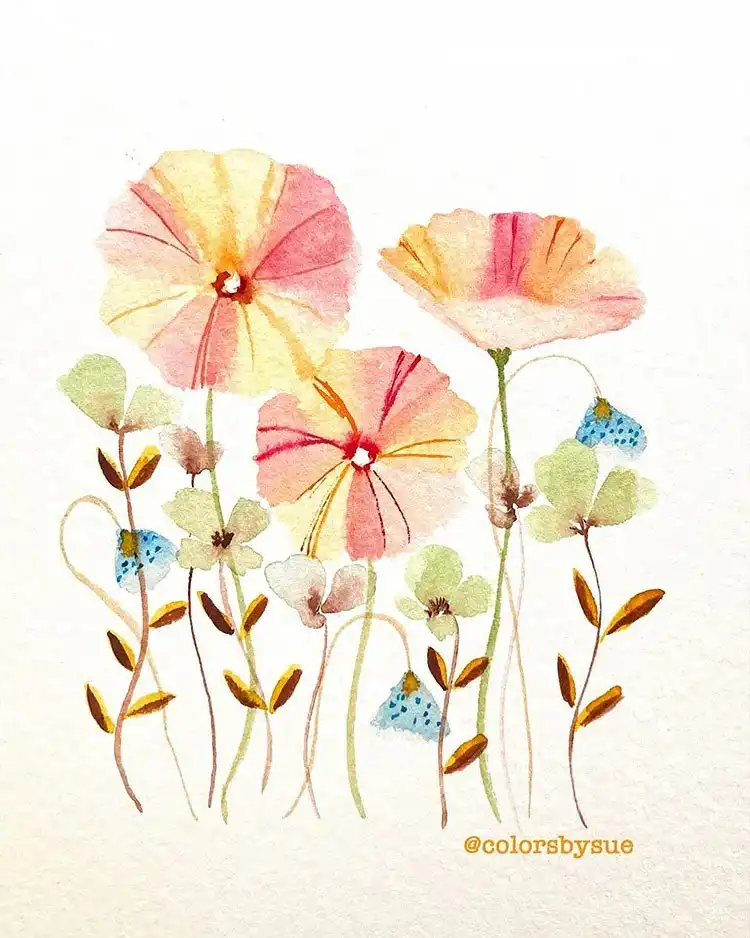
Explore an unexpected yet delightful color combination with pink and blue flowers. This pairing creates a whimsical and soft aesthetic. You might try painting pink petals with blue centers, or alternating between entirely pink and entirely blue blossoms within a single composition.
Focus on keeping the colors somewhat muted or pastel to maintain harmony between these distinct hues. This project is a great way to experiment with color theory and see how different shades can complement each other to create a unique visual story.
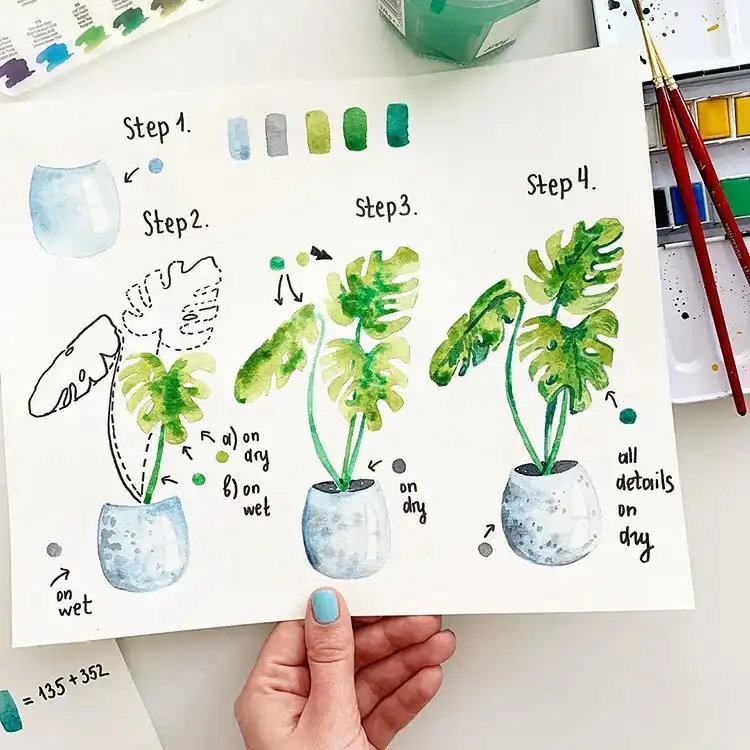
How to Draw a Plant
Before painting, understanding basic plant structure through drawing can be incredibly helpful. This tutorial focuses on simplifying a plant and its pot into fundamental shapes. Start with light pencil sketches to outline the pot and the general form of the foliage.
Once sketched, you can apply light watercolor washes, focusing on shadows and highlights to give the plant dimension. This exercise bridges drawing and painting, strengthening your observational skills. Remember, a solid sketch provides a great foundation for your watercolor layers.
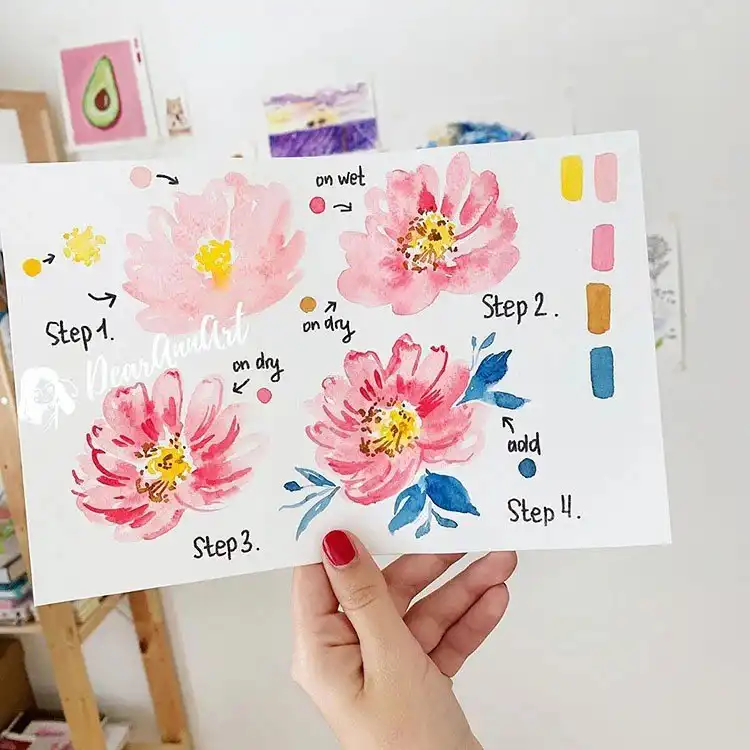
How to Paint a Flower
This step-by-step watercolor tutorial guides you through the process of painting a beautiful flower from start to finish. It’s designed to break down a seemingly complex subject into manageable stages, focusing on layering and building up color.
Typically, you’ll begin with light washes for the initial shape, then add darker tones for depth and detail. Pay attention to how the tutorial suggests brush strokes for petals and leaves, helping you replicate realistic textures. This is an excellent way to learn foundational floral painting techniques. Before starting, grab art supplies for a fun-filled creative time!
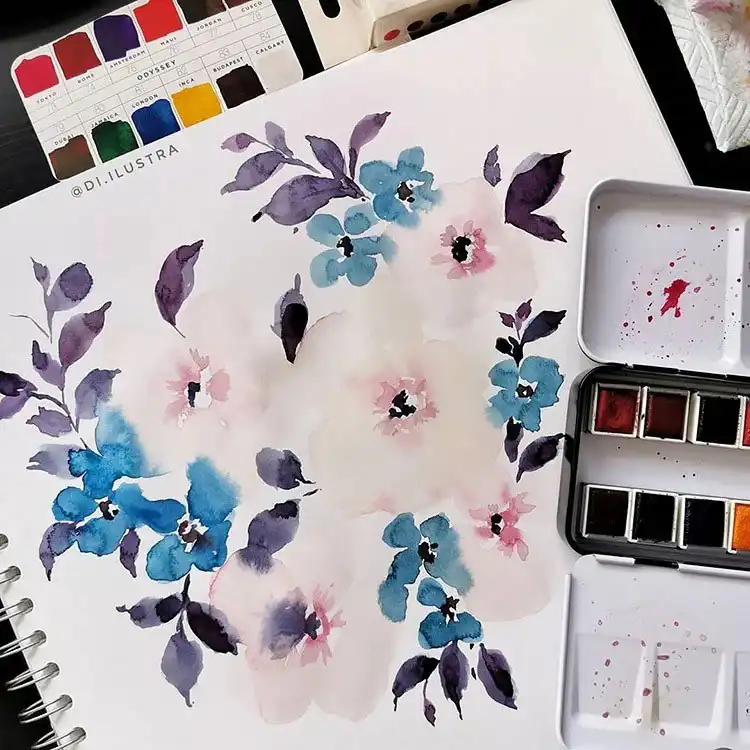
Purple and Blue Flowers
Delight in the harmonious blend of purple and blue flowers, a classic watercolor pairing that evokes a sense of calm and natural beauty. This combination works wonderfully in a loose, expressive style, allowing the colors to bleed into each other for soft transitions.
Consider painting blossoms that feature both hues, perhaps blue flowers with purple accents, or vice versa. The watercolor medium excels at creating these smooth color interactions, resulting in a gentle, artistic look that’s both appealing and beginner-friendly. For other creative endeavors, a complete sewing kit can open up new possibilities.
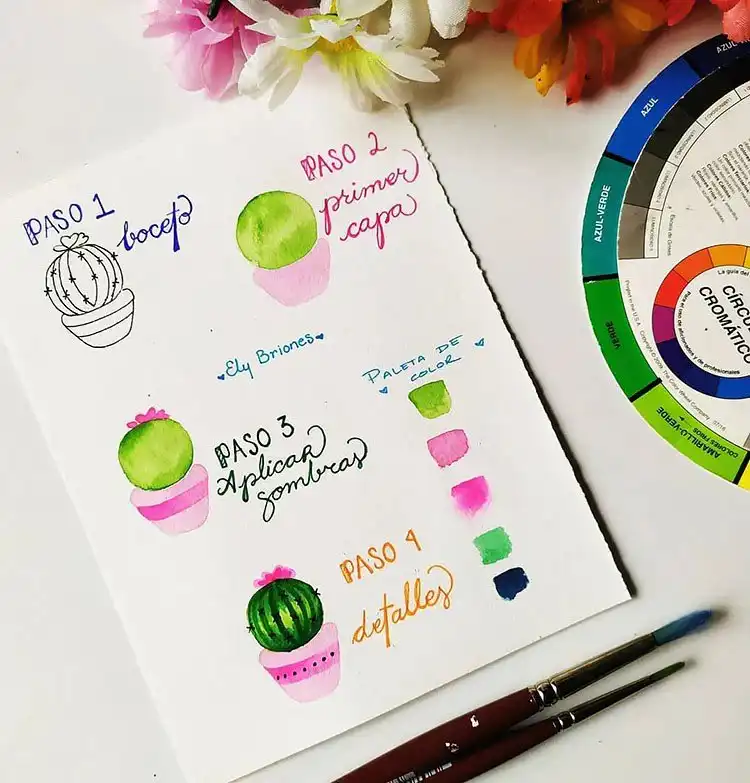
How to Paint a Cactus
Add a touch of desert charm to your watercolor repertoire by painting a cheerful cactus. Cacti are fantastic subjects for beginners due to their relatively simple shapes and textures. Start with a light green wash for the body, then add darker green stippling or lines to suggest spines.
Don’t forget the fun details, like a vibrant pink pot and a small, colorful bloom on top to bring your cactus to life. This quick and enjoyable project allows for practice in textural effects and bold color choices against simpler forms. If you enjoy learning new skills, check out 60 Quick Knits for Beginners.
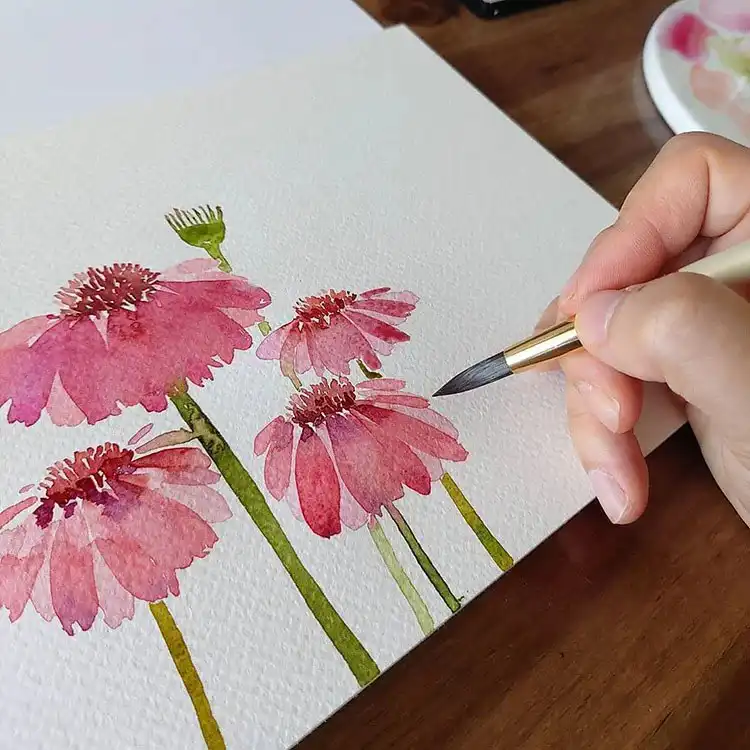
Pink and Red Flowers
Explore the vibrant passion of pink and red flowers, a dynamic color duo that brings warmth and energy to your painting. This combination is excellent for practicing variations in hue and intensity, from soft blush pinks to deep, rich reds.
You can use this reference to focus on a single type of flower, like a rose or peony, and experiment with how these colors interact within its petals. Layering transparent washes will help you achieve luminous depth and a sense of volume. For textile projects, cotton fabric bundles are a versatile material.
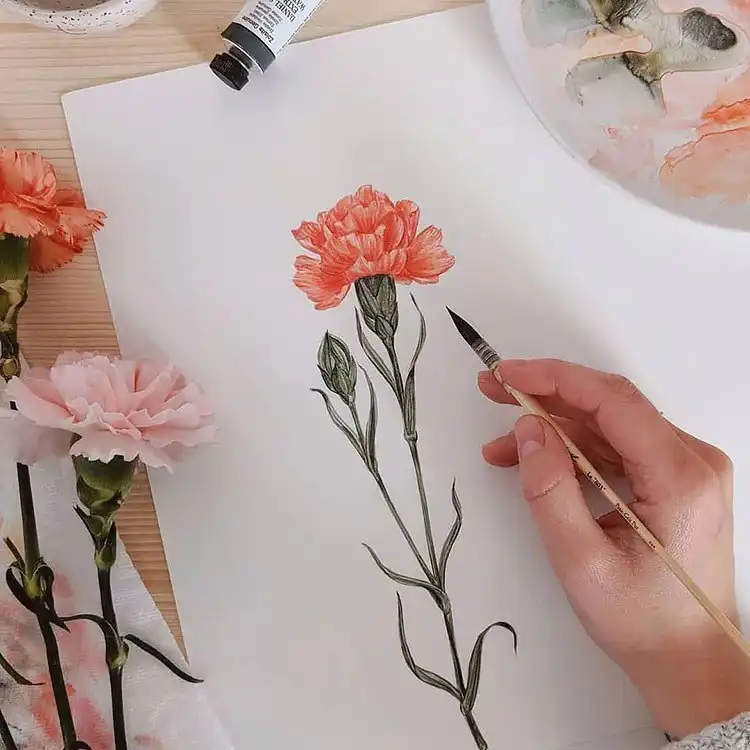
Carnation Flower Painting
Capture the ruffled elegance of a carnation with this straightforward watercolor idea. Carnations, with their numerous layered petals, can be simplified by focusing on the overall texture rather than individual petal detail. Use a slightly dry brush technique for the frilly edges.
Observe how real carnations form their distinct shape; often, they have a sense of fullness and gentle undulation. Playing with light and shadow through varying color intensity will give your painting dimension and life, making it a beautiful subject for practice. Another essential craft material is cotton or canvas fabric.
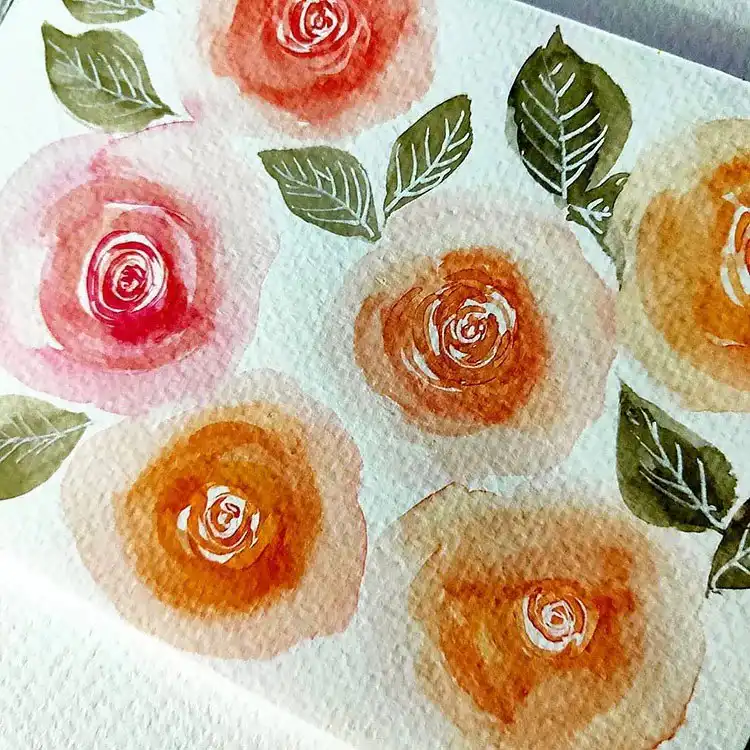
Pink and Orange Watercolor Flowers
Infuse your artwork with a burst of sunshine using pink and orange watercolor flowers. This vibrant and inviting color scheme immediately evokes joy and warmth. Consider painting abstract blossoms where these two colors swirl and blend on the paper.
This combination is perfect for creating energetic pieces for home decor, greeting cards, or simply to brighten your sketchbook. Let the colors lead the way, allowing them to flow and merge naturally for a lively, blossoming effect. For those interested in garment making, the Reader’s Digest Complete Guide to Sewing is a great resource.
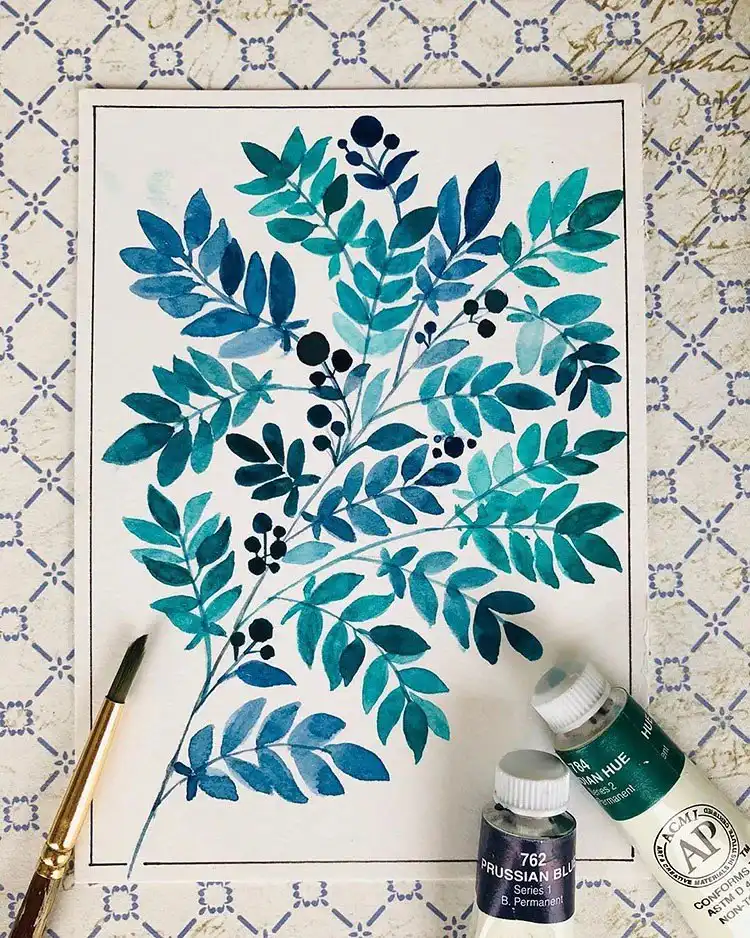
Shades of Blue Watercolor Flowers
Delve into the tranquil depths of blue by painting flowers using various shades. From pale sky blue to deep indigo, exploring a monochromatic palette allows you to focus purely on value and form. This creates a sophisticated and harmonious look.
Experiment with creating contrast using lighter and darker blues to define petals and shadows. This technique can result in a strikingly elegant piece that looks wonderful framed and displayed, showcasing the versatility of a single color family.
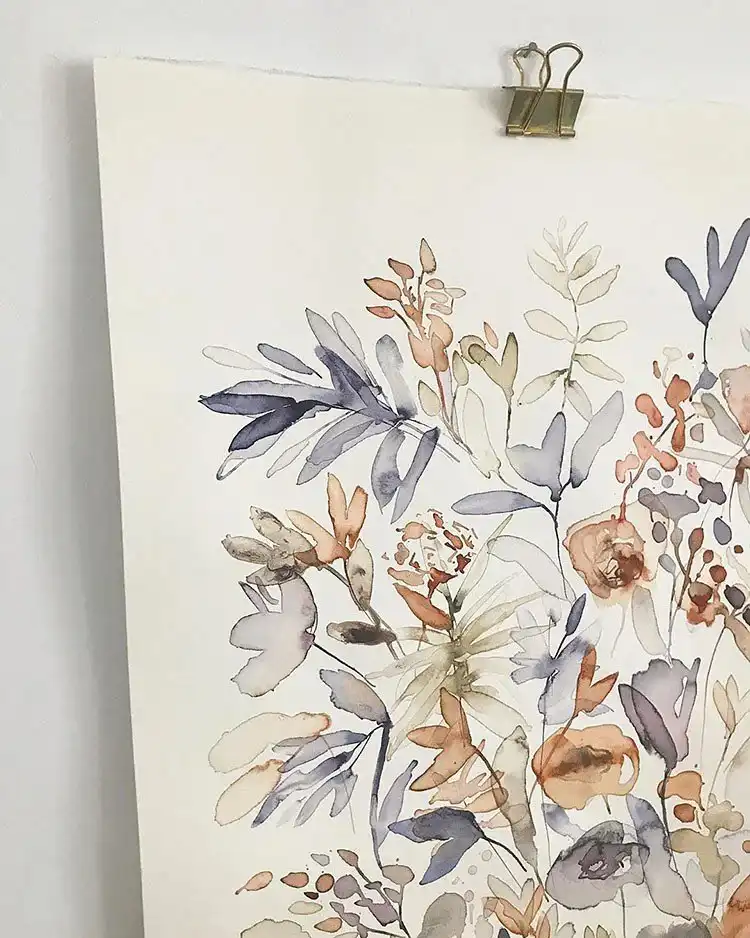
Muted Colors
Discover the understated charm of muted color palettes, featuring earthy browns, soft blues, and subtle greens. This approach creates a sense of calm and vintage appeal. Instead of vibrant hues, focus on desaturated tones that blend seamlessly.
Painting flowers with muted colors challenges you to find beauty in subtlety. It’s an excellent exercise for understanding how colors can create mood and atmosphere without relying on high saturation. This style often results in sophisticated and timeless artwork.
Watercolor Poppy Flowers
Poppy flowers are exceptionally beginner-friendly due to their simple, often crumpled petal structure and vibrant presence. Their delicate, almost translucent petals are perfectly suited for watercolor washes. Start with a light wash for the main petal shape.
Then, add darker hints of red or orange to create depth and suggest the folds. A simple dark center completes the look. Poppies are forgiving and look beautiful even with minimal detail, making them an ideal subject for quick and satisfying paintings.
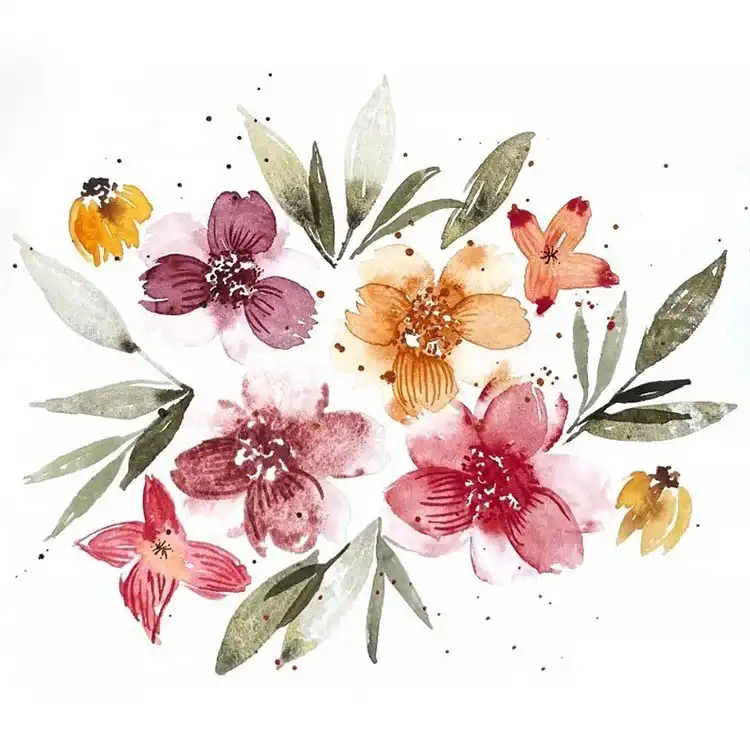
Colorful Flowers
Unleash a spectrum of color with this vibrant arrangement of flowers featuring reds, oranges, and purples. This idea encourages you to play with a broader palette and understand how different bright colors can coexist harmoniously in a single composition.
Focus on creating clear individual blooms while letting the colors pop. You can use this as an opportunity to practice painting various flower shapes within one piece. The result is a joyful and eye-catching artwork that celebrates the beauty of diverse hues.
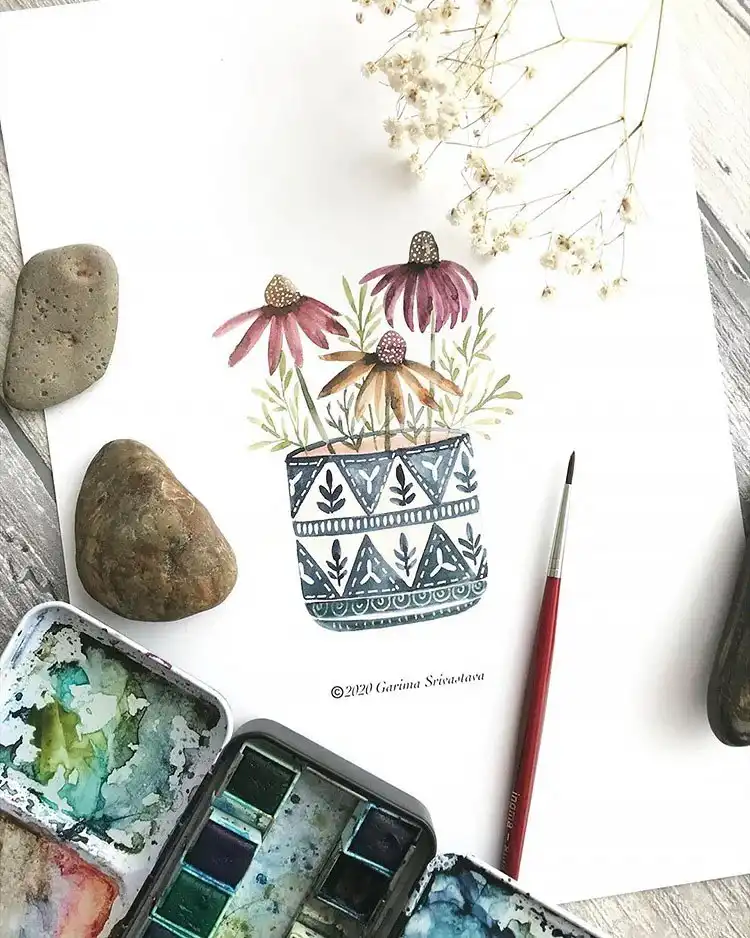
Flowers in a Pot
Adding a pot to your floral painting introduces an element of still life and grounding. This composition allows you to practice painting both organic flower forms and structured elements like a terracotta or ceramic pot. Pay attention to how the flowers sit within the pot.
Detailing the pot with simple shading or a textured wash can add considerable charm to your piece. This setup offers a complete scene, making your artwork feel more complete and ready for display.
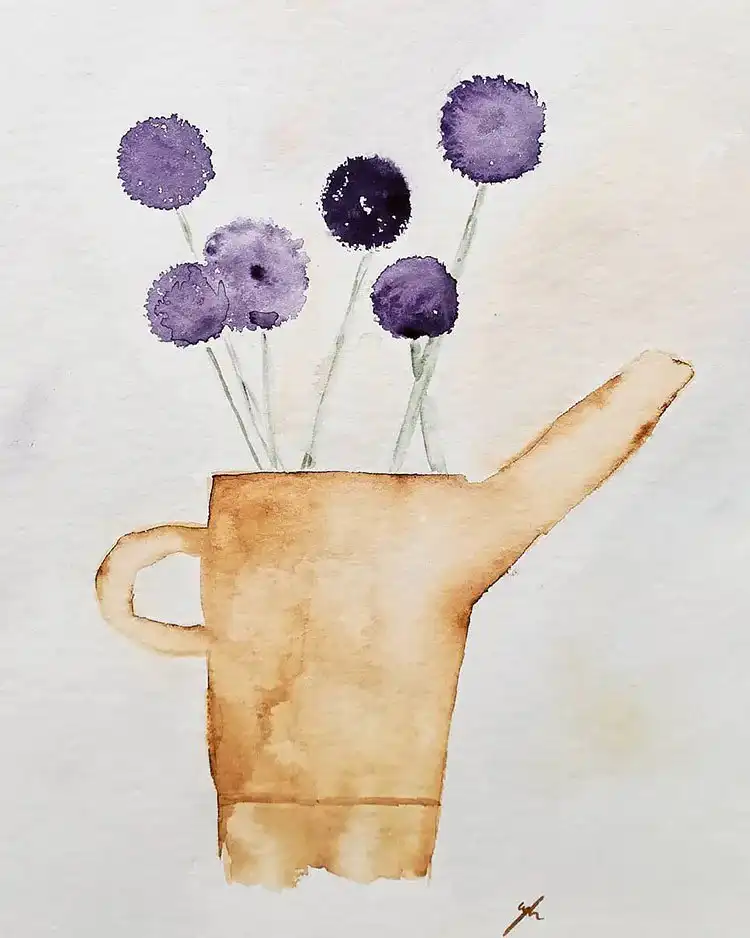
Watering Can with Purple Flowers
Combine functional garden charm with delicate blooms by painting purple flowers spilling out of a vintage watering can. This composition adds a narrative element to your artwork, creating a delightful scene perfect for home decor.
Focus on the contrast between the metallic or rustic texture of the watering can and the soft, organic feel of the flowers. This idea allows you to practice different textures within a single painting, enhancing your versatility as an artist. If you’re looking for a new hobby, a beginner’s crochet kit is a great way to start.
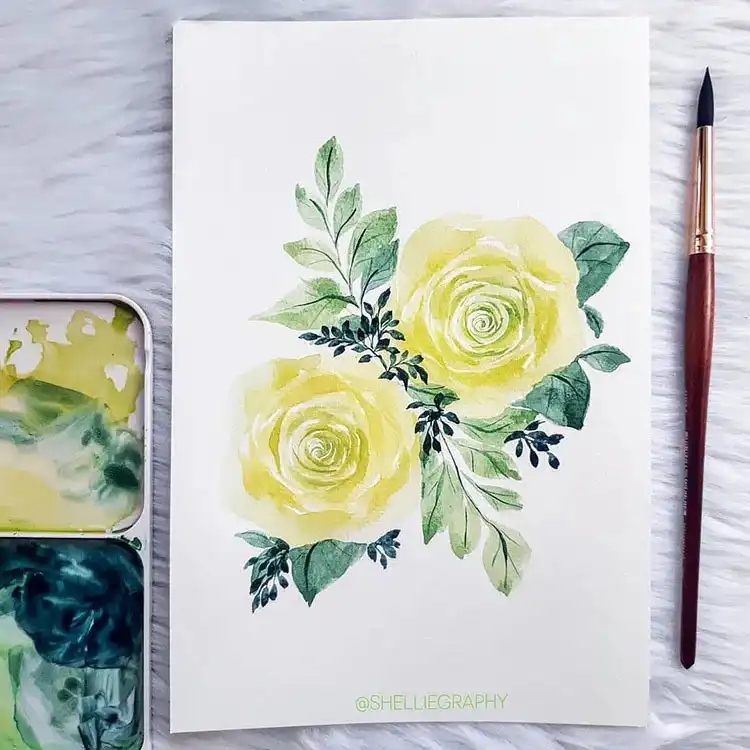
Shades of Green Flowers
Explore an unconventional yet refreshing palette by focusing on shades of green for your flowers, perhaps with hints of yellow. This monochromatic approach highlights form and texture, creating a sophisticated and unique botanical study.
Different greens can create depth and interest, from pale lime to deep emerald. This is an excellent exercise in seeing color in a new light and appreciating the subtle variations within a single hue. The simplicity can be surprisingly elegant. For complete creative projects, try a Craftwiz Learn to Crochet Kit.
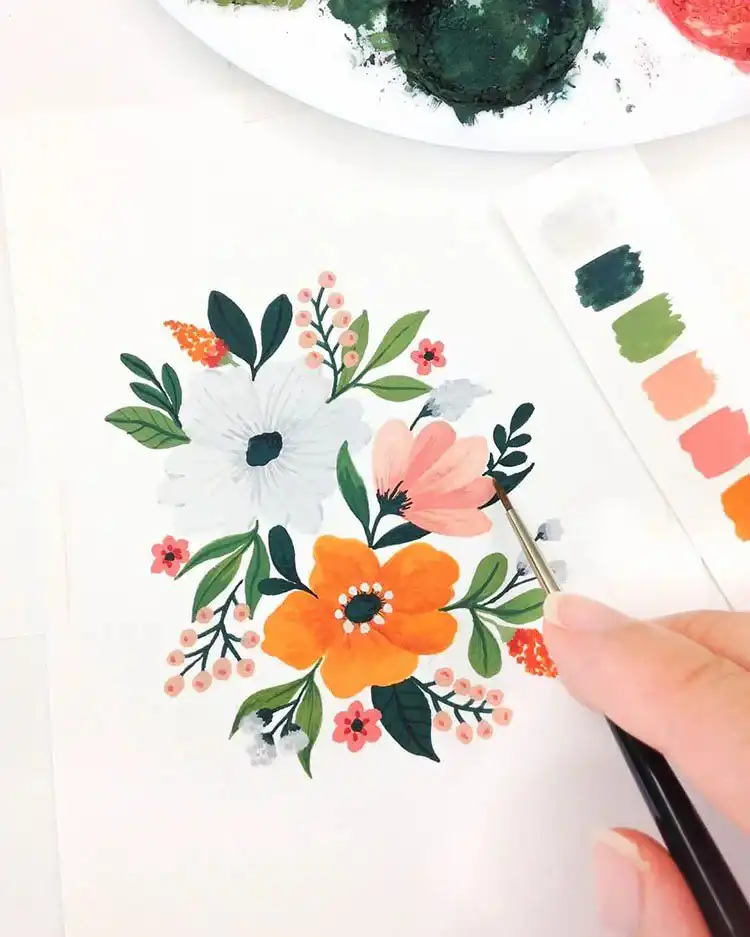
Vibrant Colored Flowers
If you love bold and bright, this reference for vibrant orange, green, and pink flowers is perfect. It shows how these energetic colors can be combined to create a truly lively and cheerful painting. Don’t shy away from saturation; let the colors sing!
This project encourages you to experiment with strong contrasts and dynamic compositions. Observe how the artist has balanced these intense hues. It’s a fantastic way to inject personality and joy into your watercolor practice. You can find more beginner-friendly projects with The Wobbles Kit.
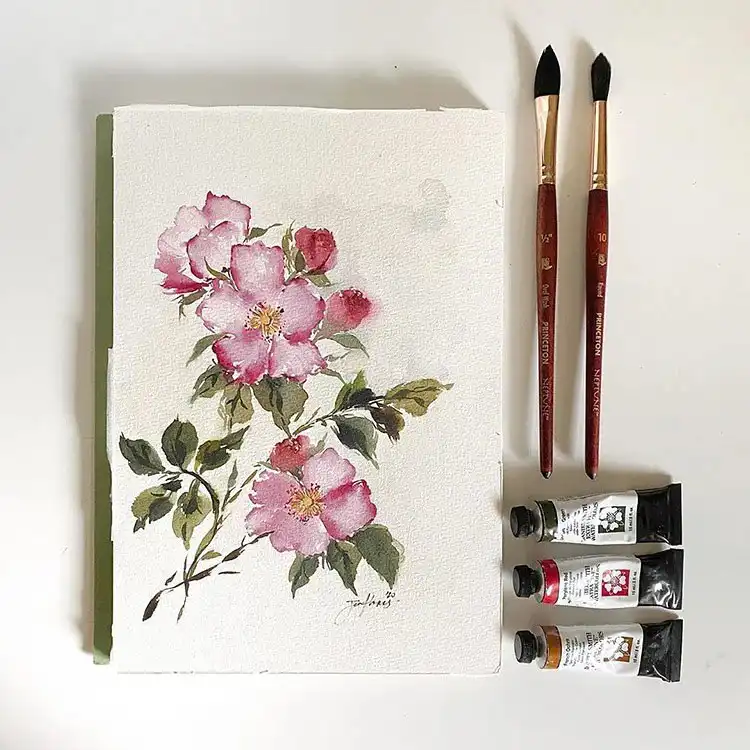
Vintage Floral Painting
Create a timeless piece with a vintage floral painting style. This often involves softer, slightly desaturated colors, delicate details, and a classic arrangement. Think about compositions that evoke a sense of nostalgia and elegance.
Achieve this look by using muted tones and allowing colors to bleed softly, creating a dreamlike quality. This reference can inspire a beautiful piece of art suitable for hanging on your wall, offering a classic aesthetic that never goes out of style.
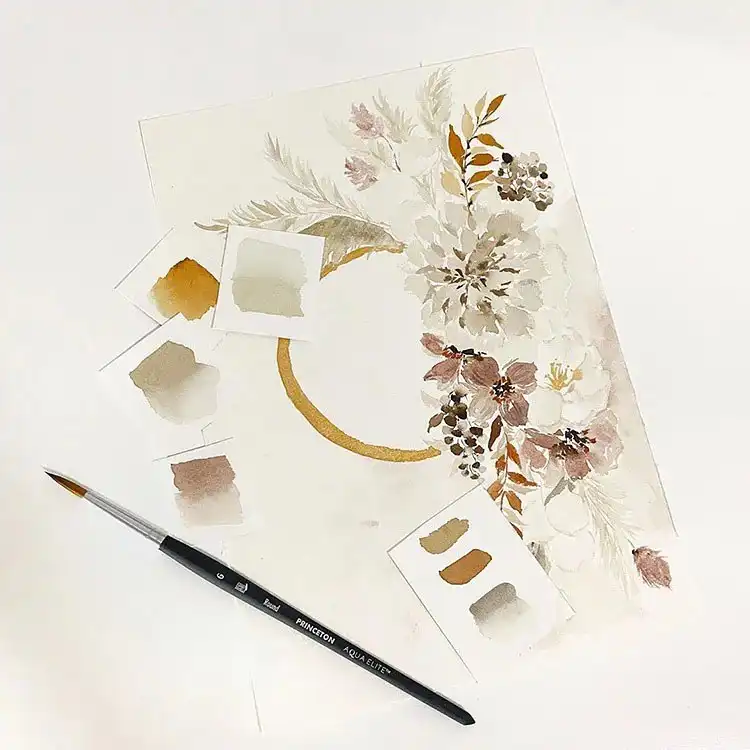
Elegant Flowers
Step into the realm of refined beauty with elegant flowers depicted in muted colors. This style focuses on grace and sophistication rather than bold statements. Think soft pastels, earthy tones, and subtle transitions.
The beauty of this approach lies in its subtlety and the delicate handling of wash and line. It’s an exercise in restraint and understanding how less can be more, resulting in a painting that exudes calm and artistic maturity.
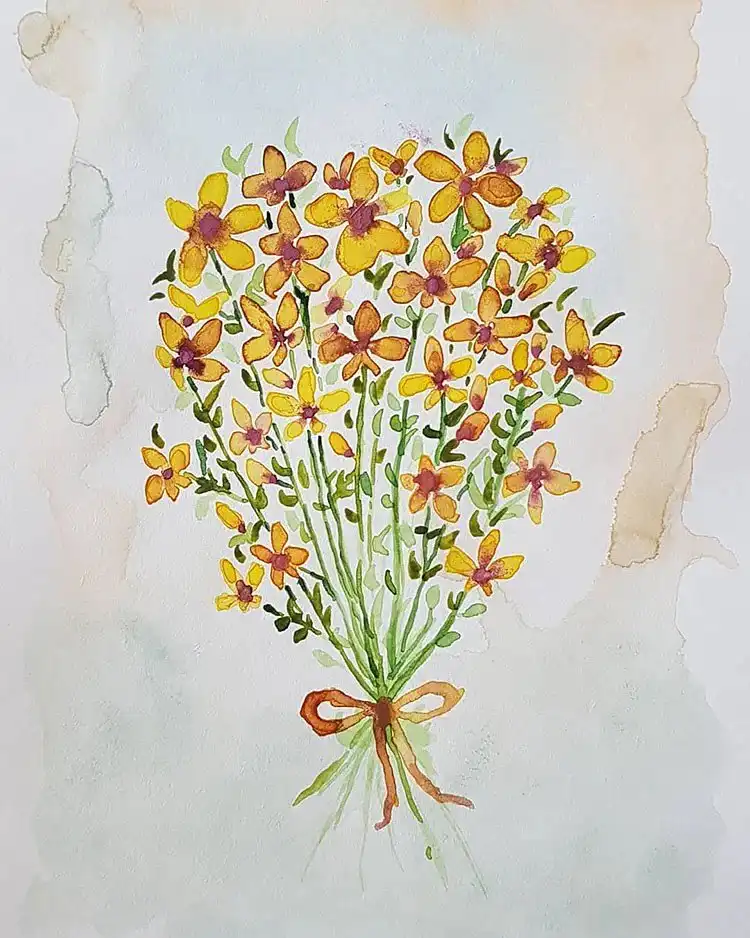
Marigold Bouquet
Capture the cheerful spirit of a marigold bouquet in watercolor. Marigolds, with their dense, layered petals and warm orange and yellow hues, are wonderfully expressive subjects. Focus on building up their ruffled texture with overlapping washes.
Their bright, sunny disposition makes them a delightful subject to paint. This particular reference showcases how to group them into a visually appealing bouquet, giving you a chance to practice composition and creating a sense of abundance.
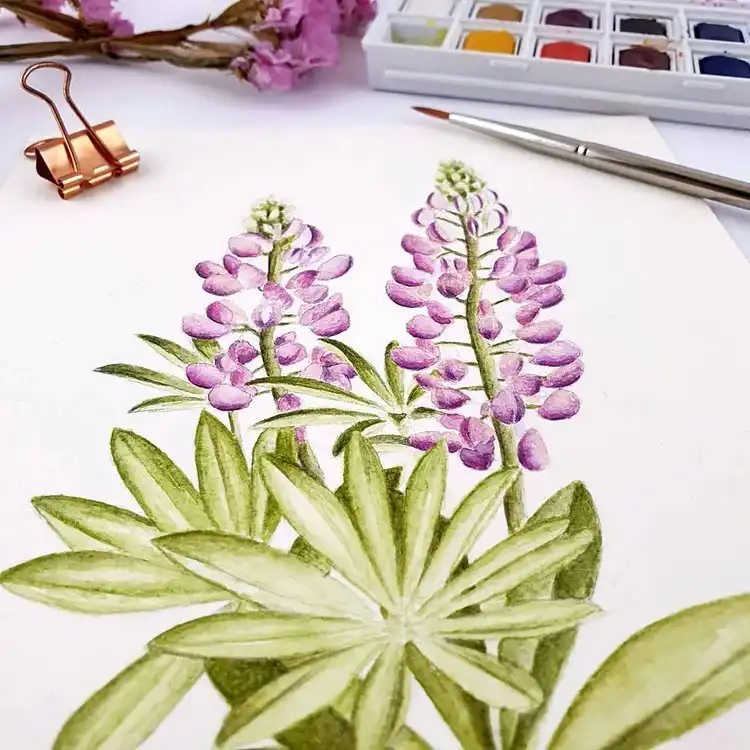
Lavender Flowers
Immerse yourself in the calming beauty of lavender flowers. Their distinctive shape and delicate purple hue make them a popular and relatively simple subject for watercolor beginners. Focus on painting individual delicate florets along a central stem.
Use a light touch to create the airy, textural feel of lavender. This painting is wonderfully relaxing to create and results in a serene piece of art, perfect for practicing fine brush strokes and soft color application. For other DIY projects, the DIY Rope Canvas Kit for Beginners offers a different kind of creative outlet.
Flowers with Soft Pastels
Embrace the gentle charm of soft pastel colors—pinks, purples, and yellows—in your floral watercolor painting. This palette creates an ethereal and delicate look that is inherently pleasing and easy on the eyes. Use plenty of water to keep the colors transparent and luminous.
Focus on blending these soft hues seamlessly, allowing them to merge on the paper for a dreamy effect. This approach is fantastic for beginners as it minimizes harsh lines and celebrates the fluid nature of watercolor.
Bees and Beetles Painting
Add a playful and whimsical touch to your floral art by incorporating small creatures like bees and ladybugs. These little doodles can bring a scene to life and add an element of storytelling to your painting. Keep them simple and stylized to match a beginner-friendly approach.
Place them playfully among your flowers, perhaps a bee hovering near a bloom or a ladybug crawling on a leaf. This is a fun way to practice small details and add personality to your botanical compositions. To keep your fabric taut while stitching, shop Embroidery Hoop Sets.
Large Roses
Explore the majestic presence of large watercolor roses. While the basic rose shape is simple, scaling it up allows for more expressive brushwork and nuanced color blending within the petals. Focus on broad washes for the main forms and subtle darker tones for shadows.
Painting on textured paper can enhance the vintage feel of such large, expressive blooms, adding character to your artwork. This project is great for developing confidence with larger brush strokes and creating impactful floral pieces.
Floral Doodles
Sometimes, the most fun comes from creating a collection of small, varied floral doodles rather than a single grand piece. This approach encourages experimentation with different flower shapes, petal styles, and color combinations without the pressure of a finished masterpiece.
Dedicate a page in your sketchbook to various little blooms. It’s an excellent way to practice different techniques, discover what you enjoy painting most, and build a repertoire of floral elements for future projects.
Cactus in Flower Pot
Revisit the beginner-friendly cactus, this time focusing on its presentation within a charming flower pot. Cacti are forgiving subjects due to their distinct, often geometric shapes, making them an ideal plant for new watercolor artists.
Adding the pot allows you to integrate different textures and forms into one piece. Consider a patterned pot or one with subtle shading to add dimension. This creates a complete and appealing miniature scene.
Poppy Field and Blue Skies
Expand your poppy painting skills by envisioning an entire field under a clear blue sky. This idea allows you to practice landscape elements alongside your florals. Focus on creating a sense of depth by making distant poppies smaller and less detailed.
The expanse of a blue sky with a few wispy clouds provides a beautiful backdrop. This composition is perfect for a greeting card or a small framed piece, capturing the expansive beauty of nature.
Watercolor Leaves
Mastering leaves is just as important as mastering flowers. This reference provides an excellent opportunity to practice various leaf shapes, veins, and the beautiful array of greens that watercolor can produce. Leaves add essential context and balance to floral compositions.
Experiment with different shades of green, yellow-greens, and blue-greens, and practice wet-on-wet techniques for natural variations. Understanding how to paint convincing foliage will elevate all your floral paintings.
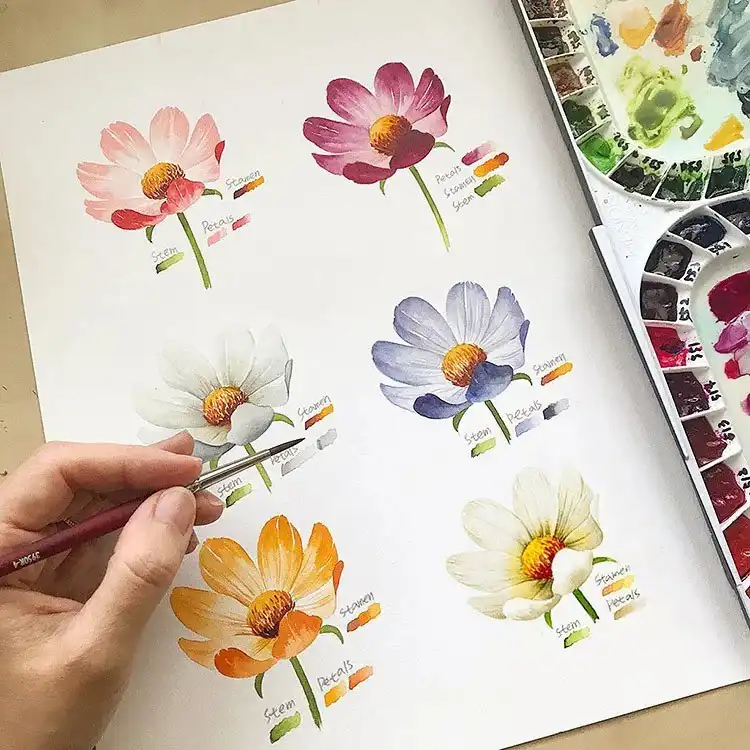
Six Flowers
Challenge yourself by painting a collection of six different watercolor flower doodles on a single page. This exercise is fantastic for practicing variety in your floral repertoire and developing your observational skills.
Each flower can be a distinct study, allowing you to focus on unique petal formations, stamens, and color schemes. It’s like a mini floral workshop in one painting, perfect for building confidence and exploring diverse botanical forms. If you’re looking for a different kind of challenge, Yarniss Crochet Kit for Beginners offers a fun introduction to yarn crafts.
White Orchid Painting
Capture the ethereal elegance of a white orchid. Painting white flowers in watercolor is a unique challenge, as it’s more about painting the shadows and surrounding light than the actual white pigment. Use subtle grays, blues, or purples in the shadows to define the petals.
Focus on delicate details and minimal color to achieve a sophisticated, clean look. The goal is to convey purity and form through careful shading and precise brushwork, resulting in a stunningly simple yet impactful flower.
Sakura’s in a Heart
Combine the delicate beauty of Sakura (cherry blossom) flowers with a symbolic heart shape. This romantic and whimsical concept makes for a charming painting, perfect for gifts or personal expression. Outline a heart shape lightly in pencil as your guide.
Then, paint soft, fluttering Sakura blooms and branches within or around the heart. The gentle pinks and whites of cherry blossoms are beautifully rendered with watercolor, creating a light and airy composition.
Abstract Watercolor Flower
Unleash your creativity with an abstract watercolor flower. This style encourages freedom and personal expression, allowing you to use color and form in a non-representational way. Forget strict rules and let your imagination guide the brush.
Experiment with bold color splashes, unexpected blending, and dynamic shapes. Use this reference as a starting point, but don’t be afraid to make it uniquely yours. Abstract art is a fantastic way to explore the pure joy of watercolor.
Tall Roses
Depict roses with elongated stems, giving them a statuesque and elegant appearance. While roses can seem intricate, their basic structure is quite simple once you understand the layering of petals. Focus on the graceful curve of the stems and the delicate balance of the bloom.
This composition emphasizes the height and individual beauty of each rose. It’s a great way to practice depicting a full flower from stem to petal, offering a more complete botanical study. For more drawing practice before painting, check out how to draw various character features.
Long Lavender Branch
Focus on the graceful simplicity of a long lavender branch. This minimalist painting idea highlights the plant’s elegant form and delicate florets without complex backgrounds or additional elements. It’s a wonderful project for moments of quiet artistic meditation.
Use light, feathery strokes to capture the texture of the lavender buds and a smooth, confident line for the stem. This simple composition allows you to concentrate on precise brush control and creating a sense of airiness.
Elegant Flowers
For those seeking a slight challenge, these elegant flowers offer an opportunity to refine your watercolor skills. This style often involves more detailed petal structures, subtle shading, and a sophisticated color palette. Consider flowers like carnations or camellias for this approach.
Pay attention to the interplay of light and shadow, using glazing techniques to build up depth. The reward is a truly beautiful and refined floral painting that showcases your growing mastery of the medium.
Flower Sketch (In Progress)
Gain insight into the artistic process by observing a flower sketch in progress. This type of reference shows the initial pencil lines and the first washes of color, demonstrating how a painting is built up layer by layer. It demystifies the creation process for beginners.
Understanding the stages—from basic sketch to final details—can help you plan your own paintings more effectively. It’s a valuable lesson in patience and the iterative nature of art.
Soft Watercolors
Embrace the inherent gentleness of watercolor by creating a painting using light, translucent washes. This style emphasizes the medium’s luminosity and delicate quality, perfect for capturing the ephemeral beauty of flowers. Keep your paint-to-water ratio high for transparent results.
The goal is to create a piece that feels airy and light, allowing the white of the paper to shine through. This approach is very forgiving for beginners and produces beautiful, subtle works of art.
Two Paintings Same Flower
Explore the fascinating concept of painting the same flower twice, but with different color schemes or moods. This comparison exercise highlights how color choices drastically alter the perception and feeling of a subject. For instance, paint one rose in vibrant red and another in soft pastel pink.
This is a brilliant way to experiment with your palette and understand the emotional impact of different hues. The two pieces can be displayed side by side, offering a unique artistic statement.
Colorful Flowers
Indulge in the sheer joy of painting bright and colorful flowers. This reference encourages a playful approach, using a wide array of vibrant pigments to create a lively and energetic composition. Let your creativity flow with bold choices.
Think about how different colors interact and complement each other. This project is about celebrating color in its purest form, resulting in a cheerful and uplifting piece of art. For more general art inspiration, consider exploring cute female sketch ideas.
Pink and Blue Flowers
Revisit the lovely combination of pink and blue flowers, but with a unique artistic style. This particular reference might feature distinct brushwork, abstract elements, or an unusual composition. It encourages you to think beyond traditional representations.
The blend of pink, blue, and green often creates a refreshing and harmonious palette. Observe the unique qualities of this art style and try to incorporate elements that resonate with your own creative vision.
A Bunch of Lavender
If you adore lavender, this painting featuring a full bunch of these fragrant flowers will surely inspire you. Moving beyond a single branch, painting a bunch allows you to practice creating volume and texture through repetition and layering.
Focus on conveying the dense, yet airy quality of a lavender bouquet, using varying shades of purple and subtle green stems. This creates a rich and inviting composition that captures the essence of this beloved flower.
Bee and Flowers
Enhance your floral scene by adding a charming element like a bumblebee. These tiny details can bring life and movement to your painting, suggesting a vibrant ecosystem. Consider adding other garden visitors like hummingbirds for variety.
Painting small creatures requires a steady hand but can be simplified for beginners. A few well-placed dots and lines can beautifully represent a bee, adding an extra layer of interest to your floral artwork.
Simple Red Flower
Sometimes, the most impactful art is the simplest. This straightforward red flower painting is perfect for beginners or anyone seeking a quick, relaxing project. Focus on the core shape of the flower and its vibrant color.
A single, well-executed red bloom can be incredibly striking. This project is excellent for practicing a confident wash and understanding how to make a single color shine without the need for complex details.
Orange and Blue Flowers
Dare to explore a less common, yet strikingly beautiful, color palette with orange and blue flowers. These complementary colors create a dynamic contrast that makes both hues pop. The warmth of orange against the coolness of blue is captivating.
This pairing encourages you to step outside your comfort zone and experiment with bold color combinations, resulting in a unique and memorable floral painting that truly stands out.
Purple Tulips
Celebrate the elegant form of tulips with a beautiful purple tulip painting. Tulips, with their distinct cup-like shape, are a joy to render in watercolor. Their smooth petals lend themselves well to soft, continuous washes.
Focus on capturing the characteristic silhouette and the subtle curves of the petals. Purple tulips, in particular, offer a regal and sophisticated subject, allowing for exploration of various violet and plum tones.
Vibrant Colors
If you’re drawn to powerful, lively hues, let this floral piece inspire you to work with vibrant colors. This reference showcases how a variety of bright shades can come together to create an energetic and joyful artwork. Challenge yourself to develop your own vibrant palette.
Experiment with mixing intense pigments and allowing them to interact on the paper. The goal is to create a painting that radiates energy and enthusiasm, celebrating the full spectrum of watercolor possibilities.
Simple Purple Flower
For those moments when you desire a laid-back, quick painting project, this simple purple flower is ideal. It distills the essence of a bloom into its most basic form, focusing on color and minimal shape.
Projects like this are perfect for practicing mindfulness and enjoying the process of painting without pressure. A few confident strokes can create a surprisingly charming and satisfying piece of art.
Colorful Flowers
Discover the captivating work of talented artists like @matilda.magdalena on Instagram, whose beautiful floral watercolor paintings often feature a rich array of colors. This reference serves as a testament to the beauty that can be achieved with a thoughtful palette.
Use such inspirations to analyze color choices and composition, then apply what you learn to develop your own unique style. It’s a wonderful way to expand your artistic vocabulary.
Simple Yet Beautiful
This flower painting exemplifies the adage that beauty often lies in simplicity. For beginner artists, it’s a crucial reminder that you don’t need to create something overly complicated to produce wonderful art. A few well-placed strokes and harmonious colors can be incredibly effective.
Focus on the fundamental elements: clean shapes, pleasing colors, and a balanced composition. This approach builds confidence and allows you to appreciate the inherent elegance of minimalist floral art.
We hope these 25 watercolor flower ideas for beginners have sparked your imagination and encouraged you to pick up a brush! Don’t forget to save your favorite ideas to Pinterest, share this article with a fellow art enthusiast, and let us know in the comments which flower you’re excited to paint first!