21 Human Anatomy Drawing Tutorials and References – How to Draw Feet & Full Forms
If you’re eager to improve your figure drawing skills, these 21 Human Anatomy Drawing Tutorials and References – How to Draw Feet and other body parts offer a fantastic starting point. As artists, we constantly seek inspiration and methods to enhance our craft, making consistent practice an indispensable part of the journey. For even more resources and inspiration, consider exploring Kindle Unlimited for a vast library of art and anatomy books.
I’ve been immersing myself in sketching lately, and the progression I see with every stroke is truly rewarding. This collection will guide you through diverse anatomical studies, from intricate facial features to dynamic full-body poses, helping you master the human form with confidence. Mastering elements like eyes is crucial, so consider exploring tutorials on how to draw eyes as you progress.
For those who enjoy combining art with daily planning, our November bullet journal cover page ideas might also spark creativity. This curated list provides detailed insights into proportions, musculature, and movement, ensuring you have ample resources to refine your artistic techniques. You can even try applying these skills to broader subjects like watercolor painting ideas for varied artistic exploration.
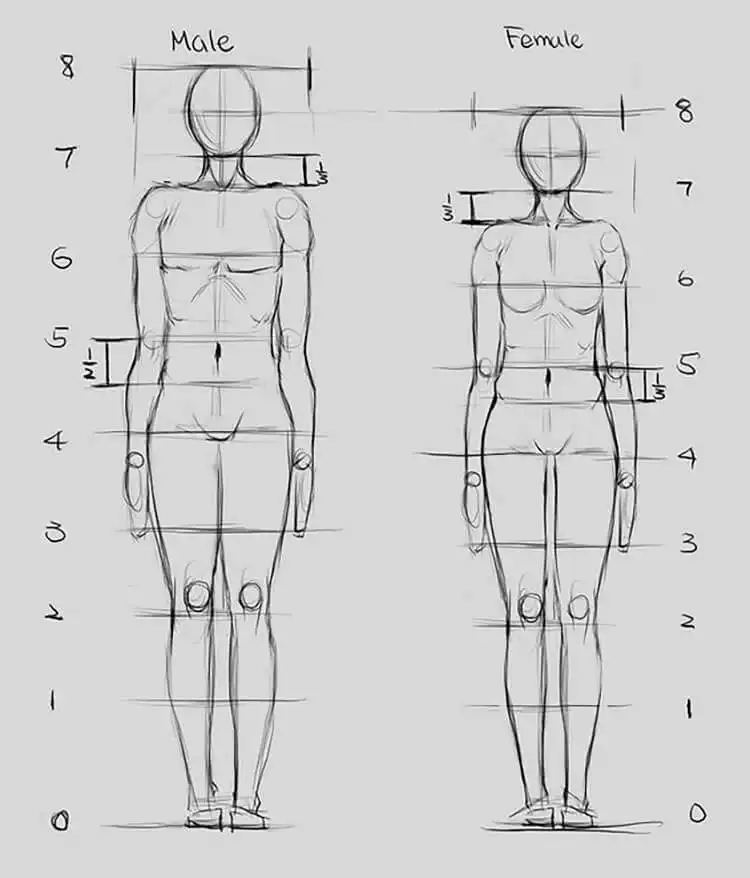
Male and Female Anatomy
Understanding the fundamental differences in male and female body proportions is crucial for accurate figure drawing. This foundational sketch highlights key distinctions in bone structure, muscle mass distribution, and overall silhouette. Pay attention to the broader shoulders and narrower hips often found in male figures versus the more pronounced curves and wider hips in female forms.
Practice sketching these basic structural variations from various angles to build a strong anatomical vocabulary. Use light pencil strokes to establish the initial forms, gradually adding more detail as you become comfortable with the general shapes. This simple exercise helps you develop an intuitive sense for dynamic poses and realistic figures.
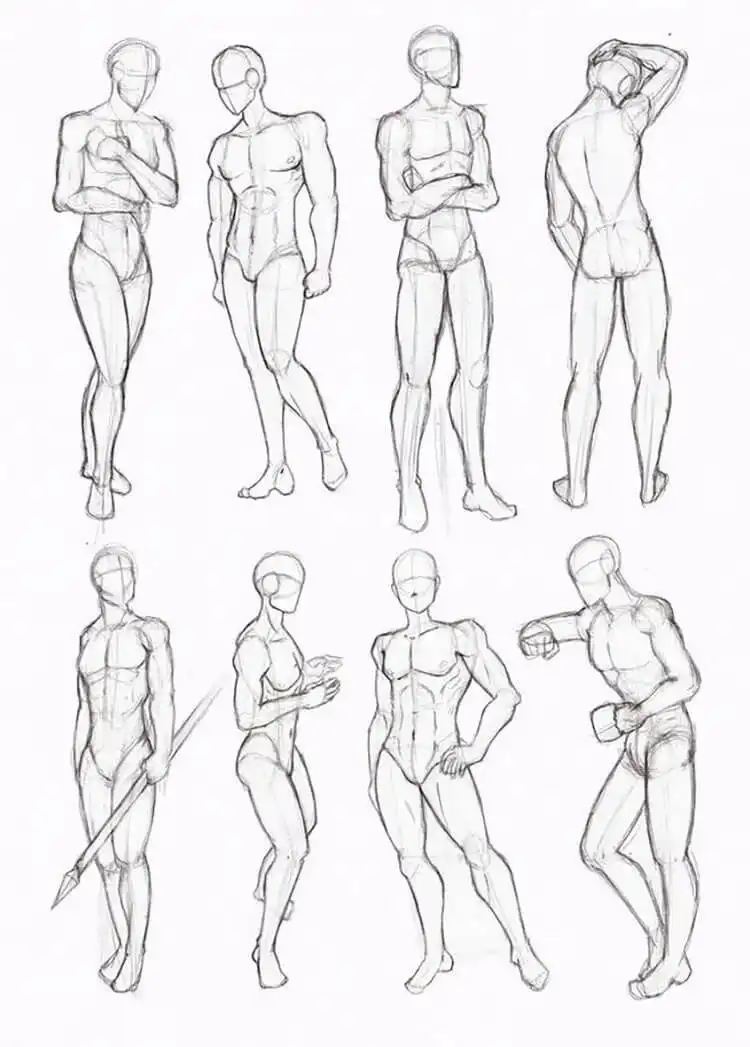
Muscular Male Anatomy
Delve into the intricate world of male musculature with these detailed reference sketches. Observing how muscles attach to bones and overlap each other provides invaluable insight into form and volume. The inclusion of everyday items like a coffee mug or spear helps ground the anatomy in real-world context, showcasing how muscles engage during action and rest.
Focus on identifying major muscle groups such as the deltoids, pectorals, and biceps, understanding their shape and how they influence the overall silhouette. Use shading techniques to emphasize the contours and depth of the muscles, bringing a three-dimensional quality to your drawings. For refining subtle transitions and creating smooth surfaces, silicone sculpting tools with ball styluses can be invaluable. Sketching from these references will significantly enhance your ability to render dynamic and powerful male figures.
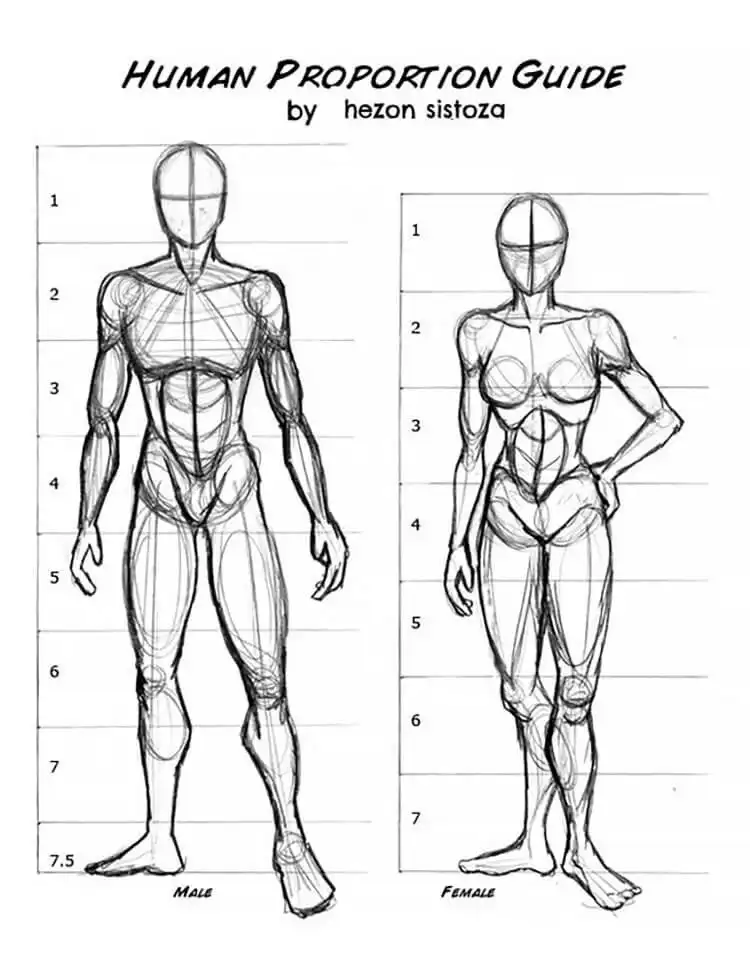
Human Proportion Guide
A solid understanding of human proportions is the cornerstone of realistic figure drawing. This guide specifically illustrates the common proportional differences between male and female figures, often using head-lengths as a measuring unit. Learning these ratios helps you establish a balanced and believable framework before adding details.
Practice blocking out figures using simple geometric shapes and proportional guidelines to ensure accuracy. Pay close attention to the relative lengths of limbs, the placement of joints, and the overall height comparison. Regularly referencing proportion guides builds muscle memory and a keen eye for anatomical accuracy, making your figures appear more natural and lifelike.
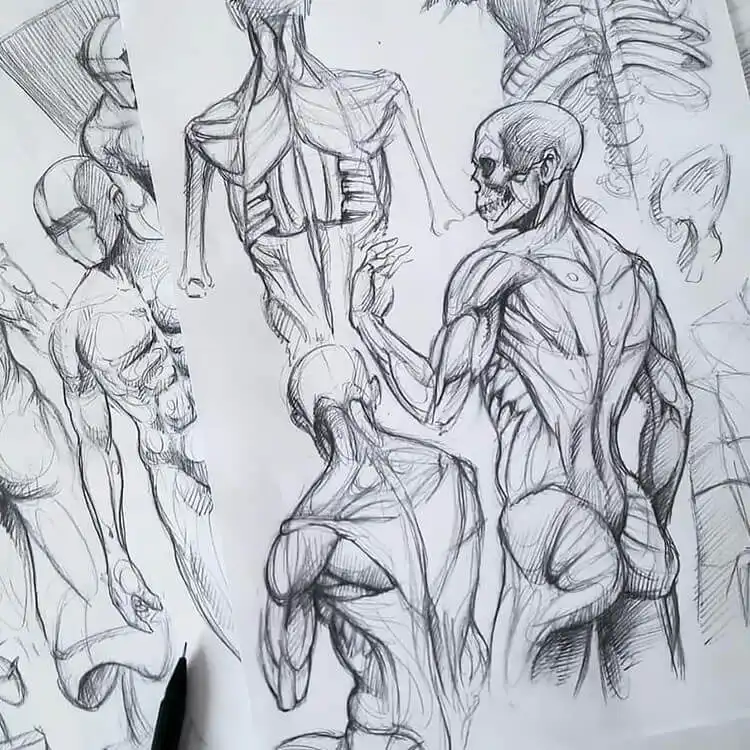
Muscular Anatomy
This reference image offers a creative and imaginative approach to understanding muscular human anatomy. It moves beyond rigid academic diagrams, inspiring artists to visualize the underlying structure with artistic flair. Such conceptual drawings help connect the scientific aspect of anatomy with the expressive possibilities of art, fostering a deeper understanding.
Experiment with exaggerating certain muscle groups or focusing on the flow of the body’s energy to capture dynamic movement. Use varied line weights to define muscle boundaries and subtle cross-hatching to indicate texture and tension. For adding soft, nuanced shading and color, consider exploring dry pastels. This type of study encourages both technical skill development and artistic interpretation, making the learning process more engaging.
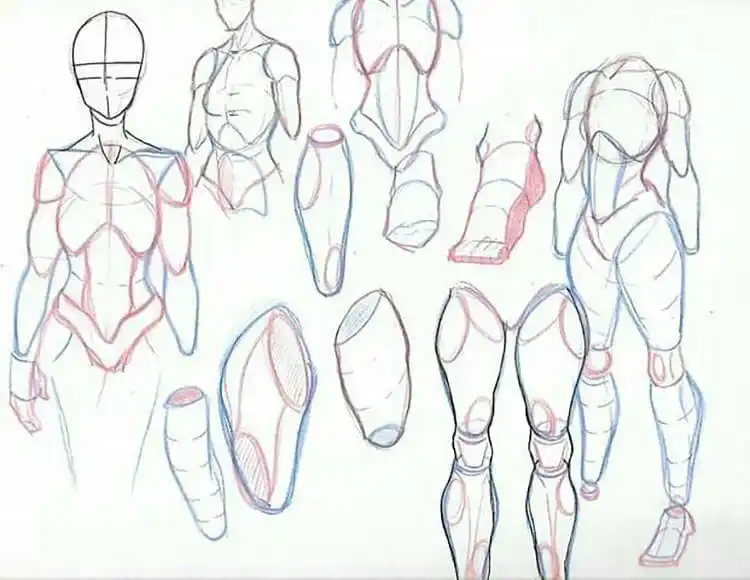
Different Parts of the Body
To truly master human drawing, it’s essential to dedicate focused practice to individual body parts. This approach allows you to break down complex forms into manageable studies, ensuring each component is understood in detail before reassembling them into a complete figure. From torsos to limbs, each section presents unique challenges and learning opportunities.
Spend time isolating areas like the torso, arms, or legs, observing their structure, movement, and interaction with clothing or environment. Utilize contour drawing to capture the overall shape and gesture, then build up details with anatomical landmarks. This methodical practice gradually builds confidence and accuracy across all aspects of figure drawing, preparing you for more complex poses.
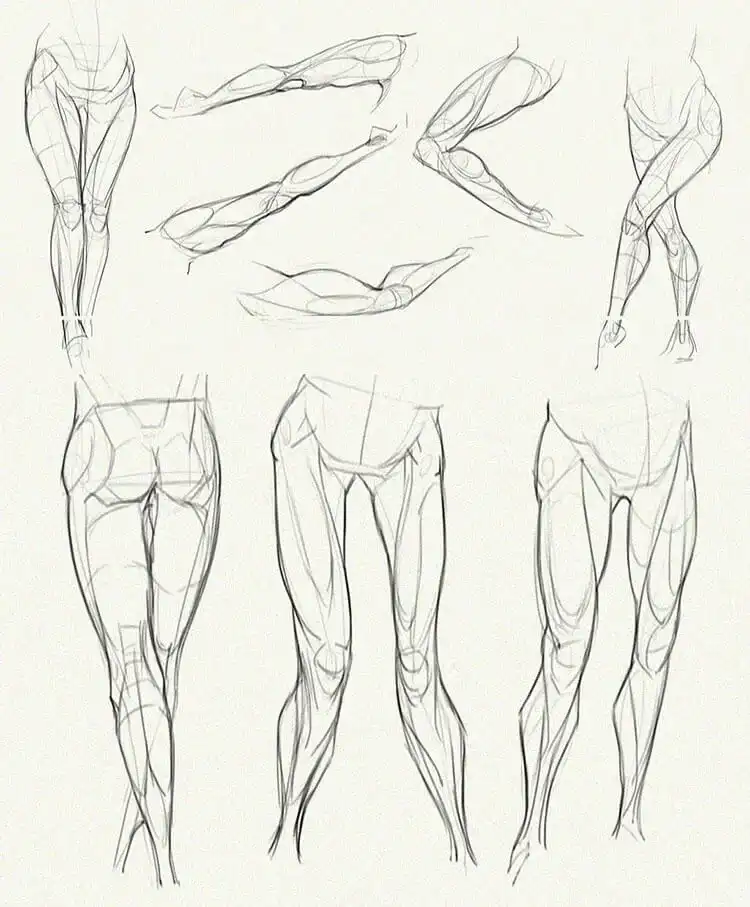
Leg Anatomy
The legs are a complex and dynamic part of the human anatomy, essential for conveying movement, balance, and weight. These drawings provide excellent practice for rendering the lower half of the body from various angles and in different pose references. Observe how muscles flex and extend, and how bones dictate the overall form, from powerful strides to subtle shifts in weight.
Focus on the major muscle groups like the quadriceps, hamstrings, and calves, understanding their attachment points and how they change shape with movement. Practice drawing the legs in action, paying attention to the knee joint and ankle structure. This dedicated study will enable you to create more expressive and anatomically sound figures, whether standing, running, or leaping.
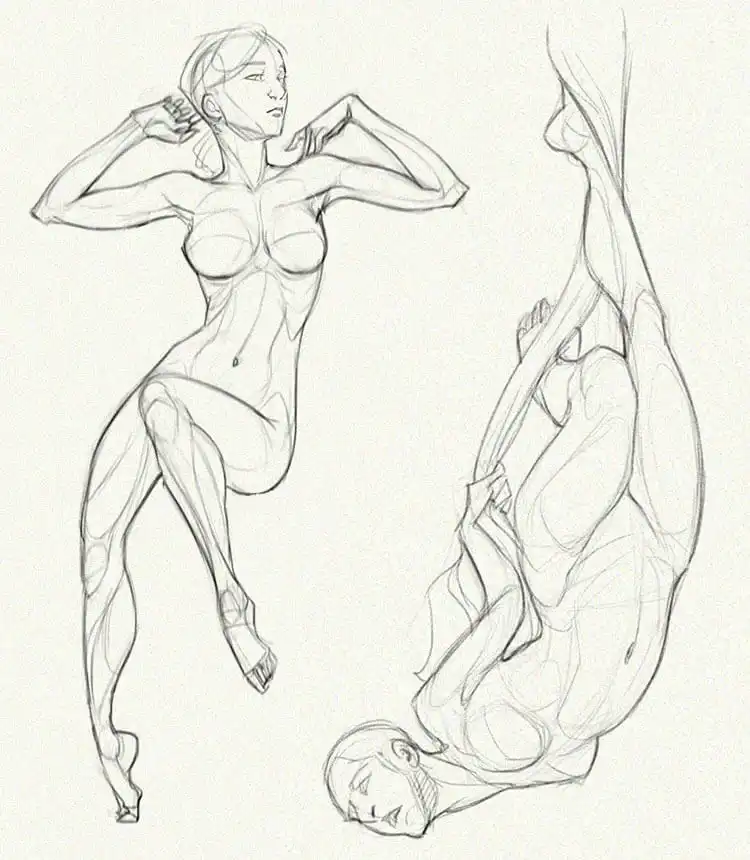
Woman’s Body in Motion
Capturing the female body in motion is a challenging yet incredibly rewarding aspect of figure drawing. This sketch offers dynamic references for practicing female anatomy as it moves through various actions. Pay close attention to how the torso twists, limbs extend, and weight shifts, creating a sense of energy and fluidity.
Focus on gesture drawing to quickly capture the essence of the pose and the flow of movement. Observe how the natural curves and proportions of the female form are influenced by activity, from graceful leaps to subtle leans. These studies help develop your ability to convey narrative and emotion through dynamic figure compositions, bringing your artwork to life.
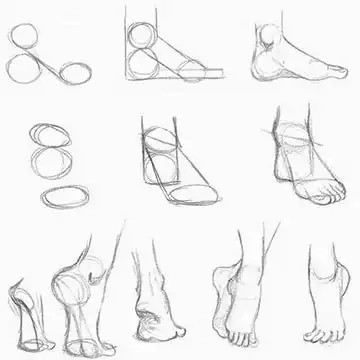
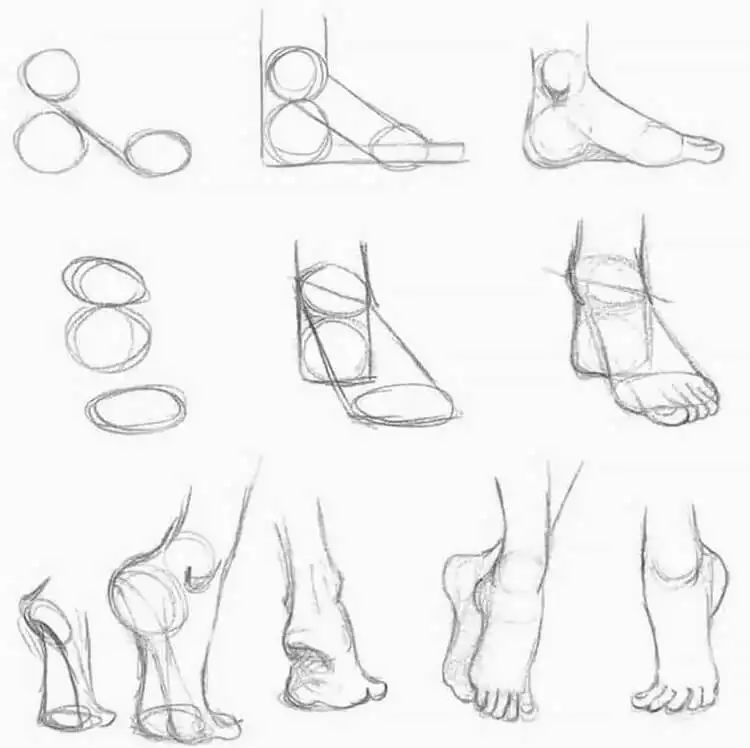
Foot Anatomy
Drawing feet is notoriously difficult for many artists, making this detailed reference invaluable. It provides comprehensive views of the foot from the front, side, and even standing on the toes, offering crucial insights into its complex bone structure and muscle groups. Understanding the arches, tendons, and how weight is distributed is key to realistic depiction.
Practice sketching the foot as a series of connected planes and forms, focusing on the ankle joint and the various phalanges. Observe how the foot interacts with the ground, creating subtle shifts in pressure and contour. Regular study of these challenging structures will significantly improve your ability to draw convincing and anatomically accurate feet in any pose.
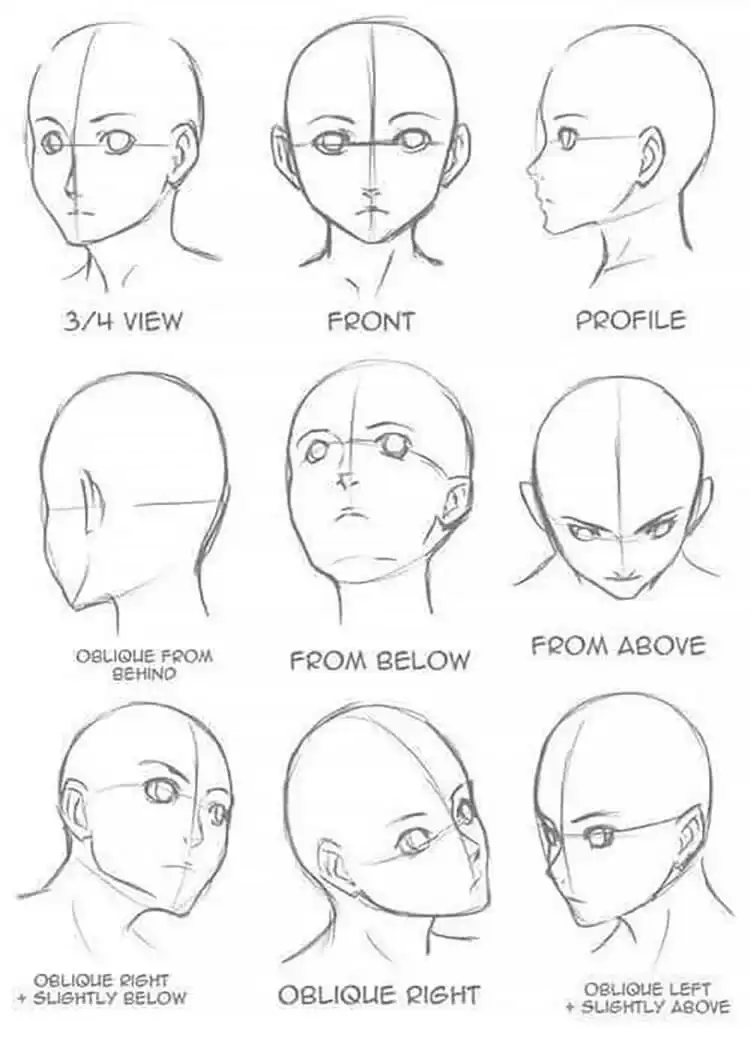
Facial Viewpoints
The human face is the focal point of many portraits and figures, and mastering its various angles is paramount. This drawing demonstrates how to render the face from a wide array of viewpoints, including the front, profile, three-quarter, and even above or below eye-level. Each angle presents unique challenges in perspective and proportion.
Practice blocking out the basic skull structure and placing features like eyes, nose, and mouth accurately within that framework for each viewpoint. Pay attention to how perspective foreshortens elements and shifts their apparent position. Consistent study of these facial viewpoints will enhance your portraiture skills, allowing you to capture expressions and likenesses with greater precision.
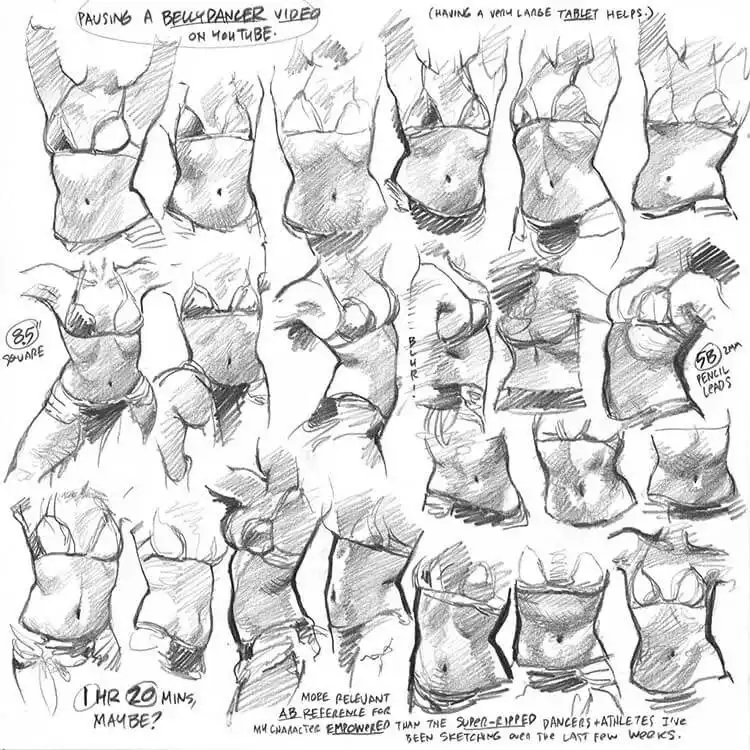
Belly Dancer Anatomy
Exploring specialized poses like a belly dancer’s form adds a unique dimension to anatomical study, focusing on fluid, rhythmic movement. This reference helps you sketch how the female body articulates during intricate dance, emphasizing the torso’s flexibility and the harmonious interplay of core muscles. Observing videos can further enhance your understanding of the dynamic flow.
Concentrate on the subtle shifts in the abdominal muscles, the natural sway of the hips, and the expressive positioning of the arms. Use flowing lines to capture the dancer’s grace and energy, allowing the anatomy to serve the motion. This creative study not only improves your anatomical knowledge but also your ability to convey elegance and dynamism in your figure drawings.
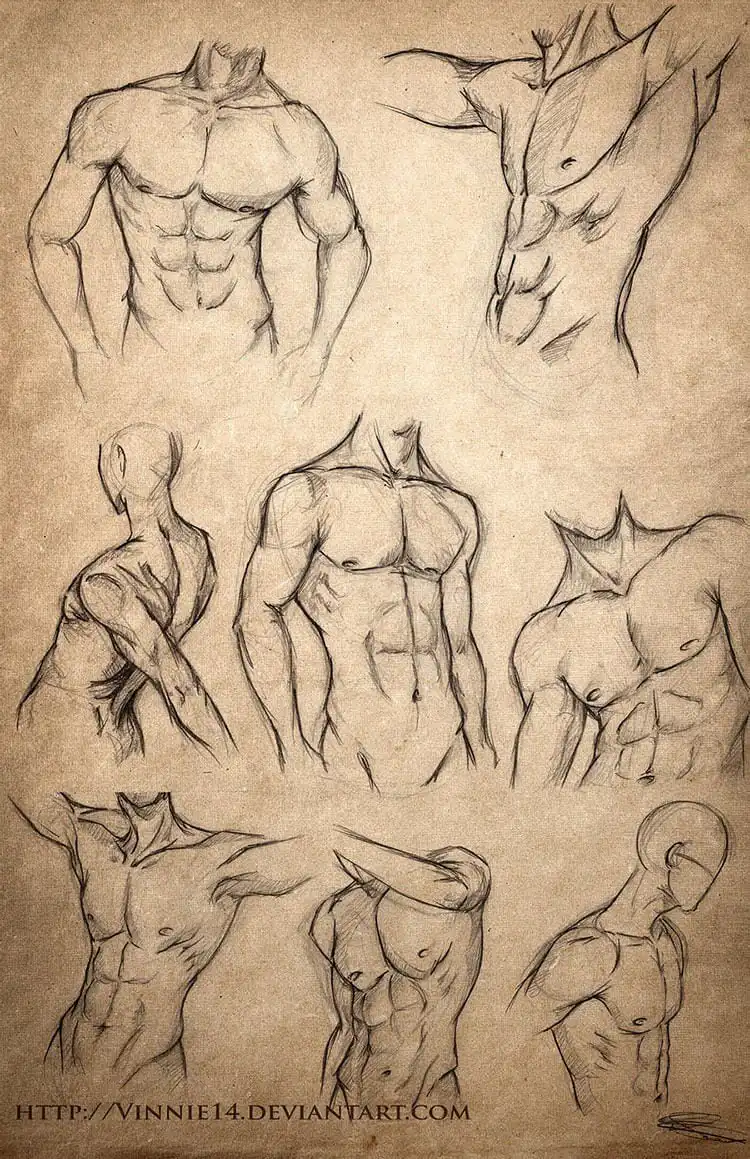
Male Physique
Refining your understanding of the male physique is crucial for creating powerful and realistic figures. This reference focuses on the overall form and structure, providing an excellent opportunity to practice rendering various body types and muscle definitions. Observe the interplay between bone structure and muscle mass, and how these elements define the figure’s strength and stance.
Concentrate on blocking out the primary masses of the torso, limbs, and head, ensuring proportional accuracy. Use light and shadow to define the contours and depth of the muscles, bringing volume to your drawings. For bold outlines or emphasizing deep shadows, a tube of black acrylic paint can add powerful contrast. Consistent practice with male physique studies will enhance your ability to convey character and vitality in your artwork, making your figures more expressive.
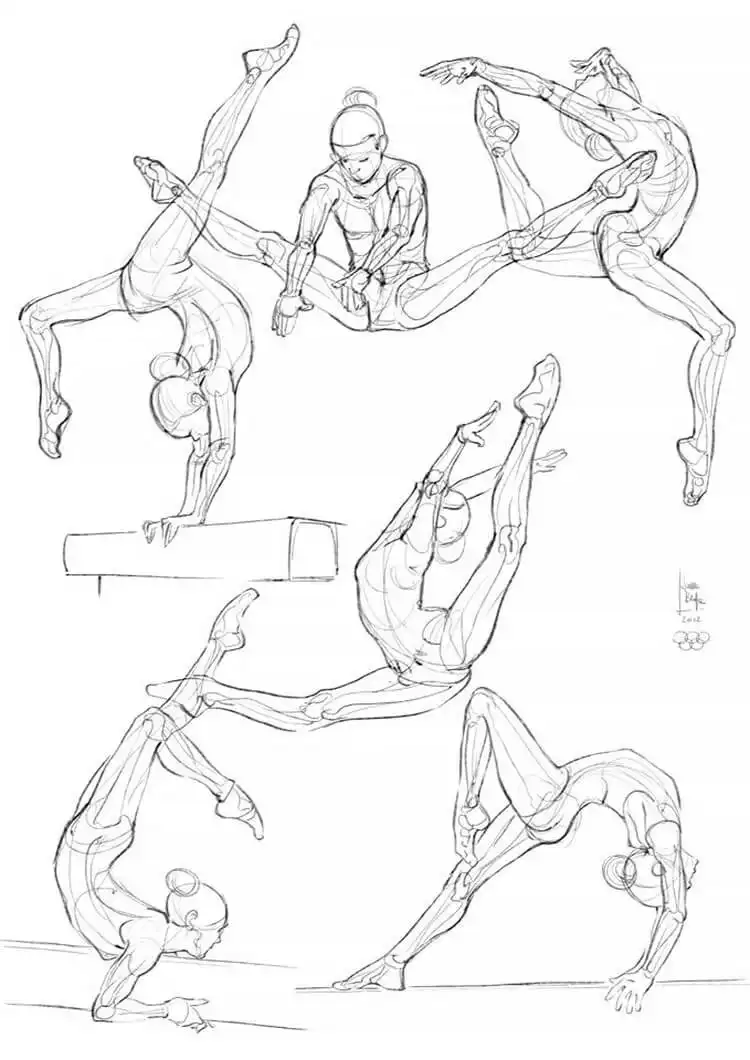
Gymnastics
Gymnastics offers a fascinating subject for anatomical study, showcasing the human body at the peak of its flexibility, strength, and balance. This creative anatomy drawing illustrates a woman performing gymnastics, providing dynamic and often complex poses that challenge an artist’s understanding of form, tension, and weight distribution in extreme positions.
Focus on capturing the dramatic foreshortening and extension of limbs, and how the core muscles engage to maintain stability. Observe the graceful lines created by the body under strain and the expressive tension in every pose. Sketching gymnastic figures hones your ability to depict the body in unconventional ways, pushing your anatomical and dynamic drawing skills to new heights.
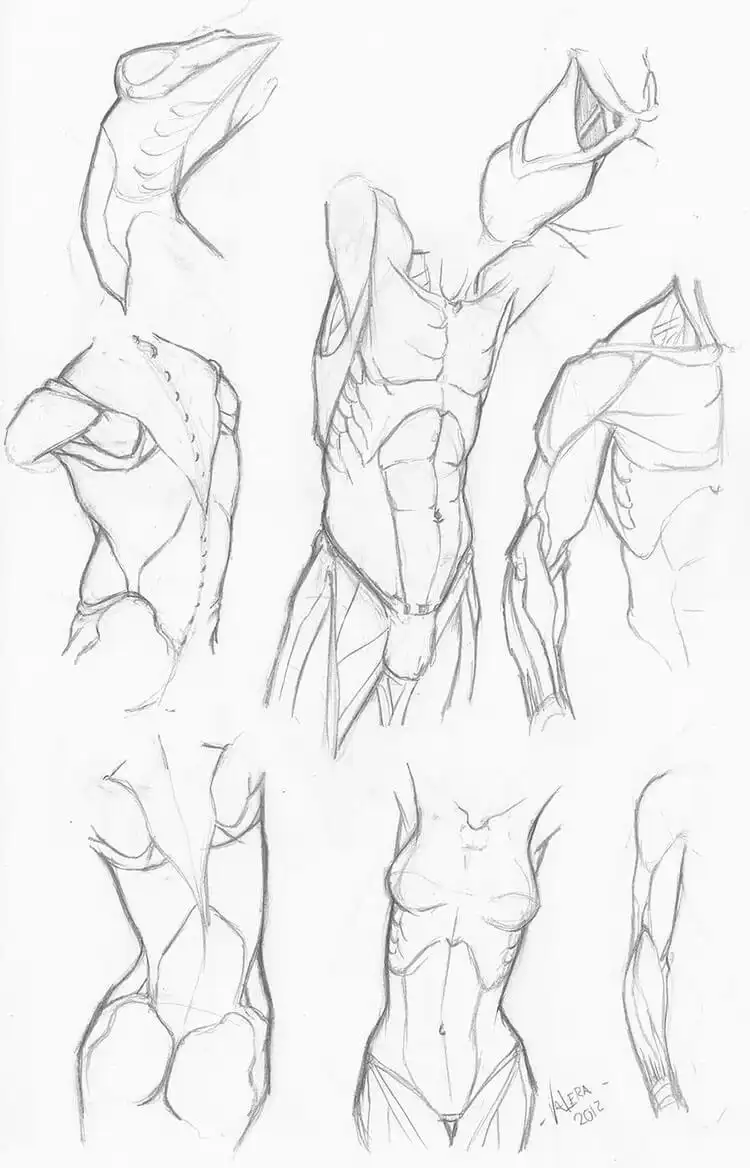
Muscle Drawing
For artists new to rendering detailed musculature, this reference serves as an excellent beginner’s guide. It simplifies complex muscle groups into more understandable forms, making the initial learning process less daunting. Understanding the primary muscle masses and their general direction is more important than memorizing every single muscle fiber at first.
Start by identifying and sketching the larger muscle groups on the torso, arms, and legs, focusing on their basic shapes and how they contribute to the body’s silhouette. Use broad strokes to establish form, then gradually add subtle contour lines to indicate muscle separation. When moving from pencil to ink or color, a versatile paintbrush can help with washes and detailing. This foundational approach builds a strong understanding before moving on to more intricate anatomical details.
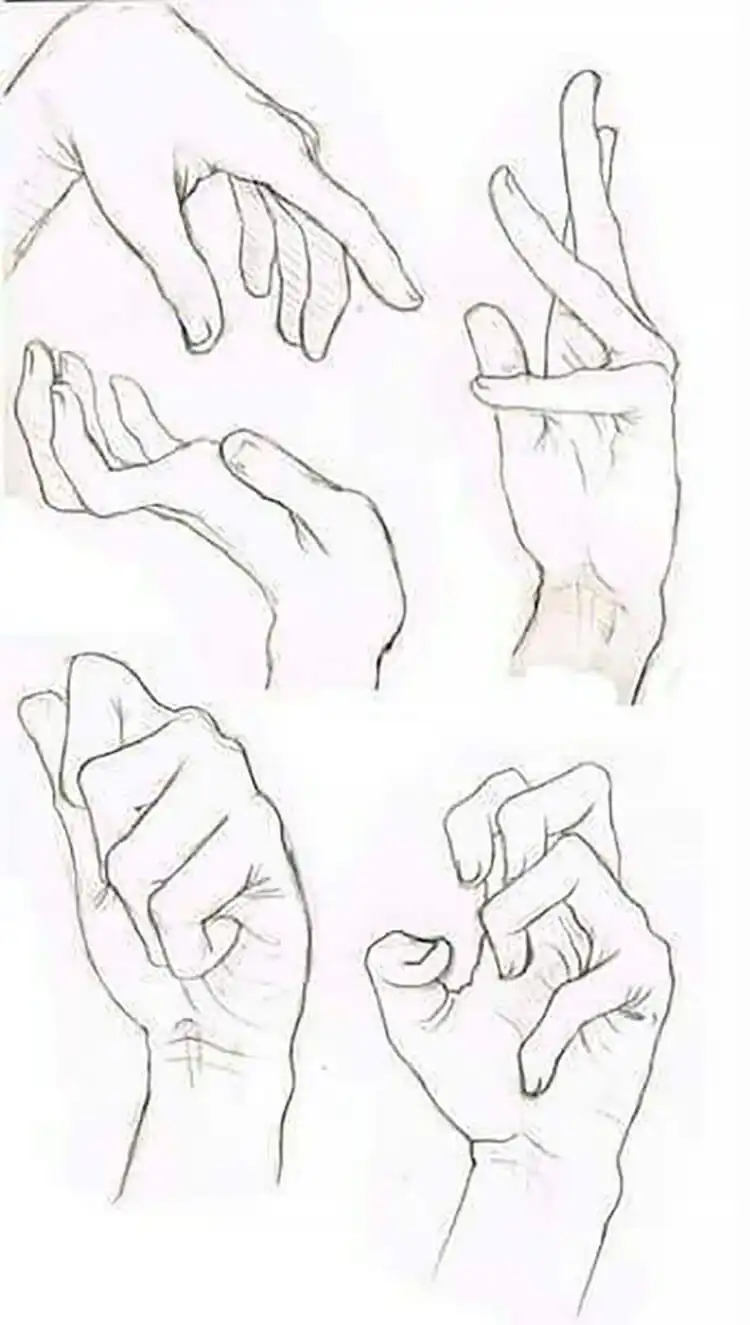
Hand Anatomy
Hands are among the most challenging body parts to draw due to their intricate structure and expressive capabilities. This anatomy reference is vital for consistent practice, which is the only way to improve your technique. The hand’s complex network of bones, tendons, and muscles allows for an incredible range of motion and gesture.
Dedicate time to understanding the underlying bone structure of the palm, fingers, and thumb, and how they connect. Practice drawing hands in various positions—gripping, resting, pointing, or gesturing—paying close attention to foreshortening and overlapping forms. Regular, deliberate practice with hand anatomy will transform this often-feared subject into a confident skill.
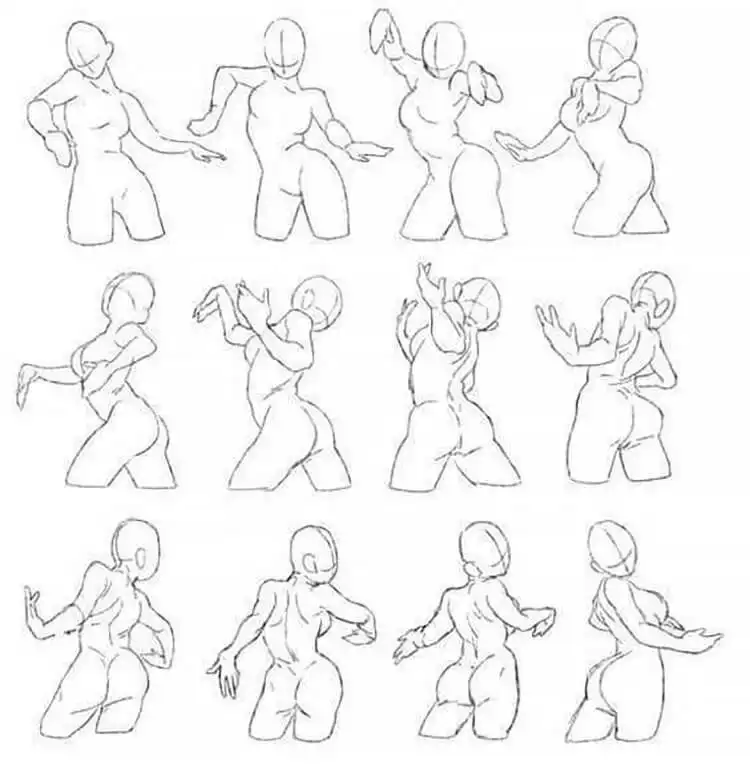
Female Body Form
These female body forms are designed to be relatively simple to draw, making them excellent references for beginners. They focus on capturing the essential curves, proportions, and grace of the female figure without getting bogged down in excessive detail. This simplified approach helps artists build confidence in their foundational understanding of anatomy and gesture.
Start by outlining the basic silhouette and establishing key landmarks like shoulders, hips, and knees. Focus on conveying the natural flow and rhythm of the body, using smooth, confident lines. These exercises are perfect for developing an eye for overall form and proportion before delving into more complex muscular and skeletal structures, setting a strong base for future studies.
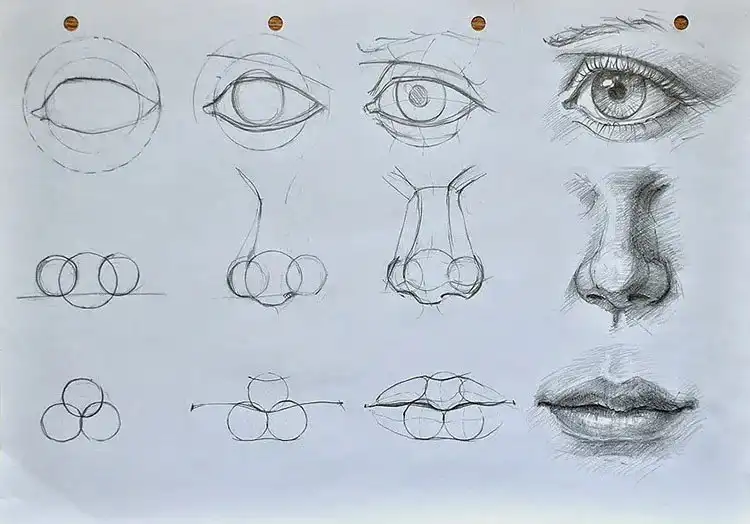
Eyes, Nose, and Mouth
If you find drawing the key facial features—eyes, nose, and mouth—challenging, this step-by-step tutorial is an invaluable aid. It breaks down these complex elements into manageable stages, guiding you through their construction and placement. Mastering these features individually is crucial for creating expressive and realistic portraits.
Practice each feature separately, paying close attention to their unique anatomical structure and how they interact with the surrounding bone and muscle. Observe how light and shadow define their form and texture. Consistent application of this tutorial will lead to significant improvements in your ability to render convincing and emotionally resonant facial expressions.
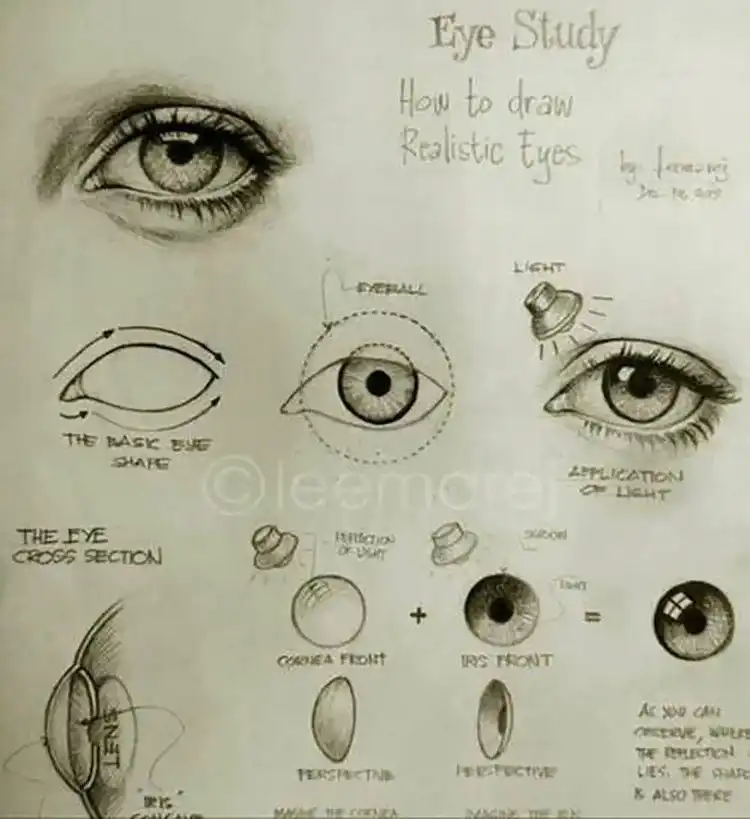
How to Draw Eyes
For those new to drawing eyes or struggling with their accurate depiction, this eye study offers comprehensive guidance. It breaks down the basic eye shape, illustrates how light interacts with the iris and pupil, and explores the subtle nuances of eyelids and tear ducts. Understanding these components is vital for conveying depth and emotion.
Focus on the spherical nature of the eyeball within its socket, and how the eyelids wrap around it. Experiment with shading to create the illusion of roundness and to highlight the reflective qualities of the cornea. This dedicated eye study will equip you with the techniques needed to draw captivating and lifelike eyes that convey character and feeling.
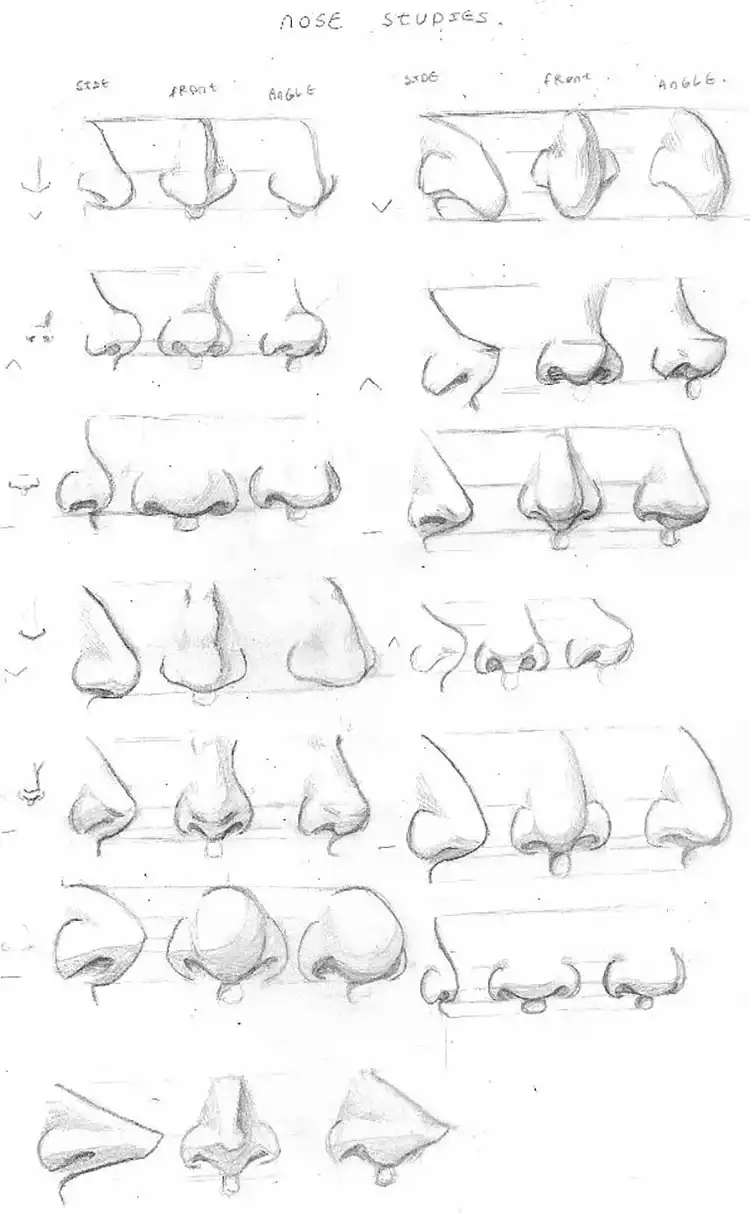
Nose Studies
Noses come in an astonishing variety of shapes and sizes, and these nose studies are perfect for understanding this diversity. While not a step-by-step tutorial, this reference illustrates how differently shaped noses appear from the front, side, and various angles. It’s an excellent tool for developing an eye for structural variation.
Practice sketching these different nose types, focusing on the cartilage and bone structure that define their unique forms. Observe how light and shadow play across the planes of the nose, creating its distinct contours. This exploration into various nose shapes will broaden your repertoire, allowing you to draw a wider range of realistic and individualistic faces.
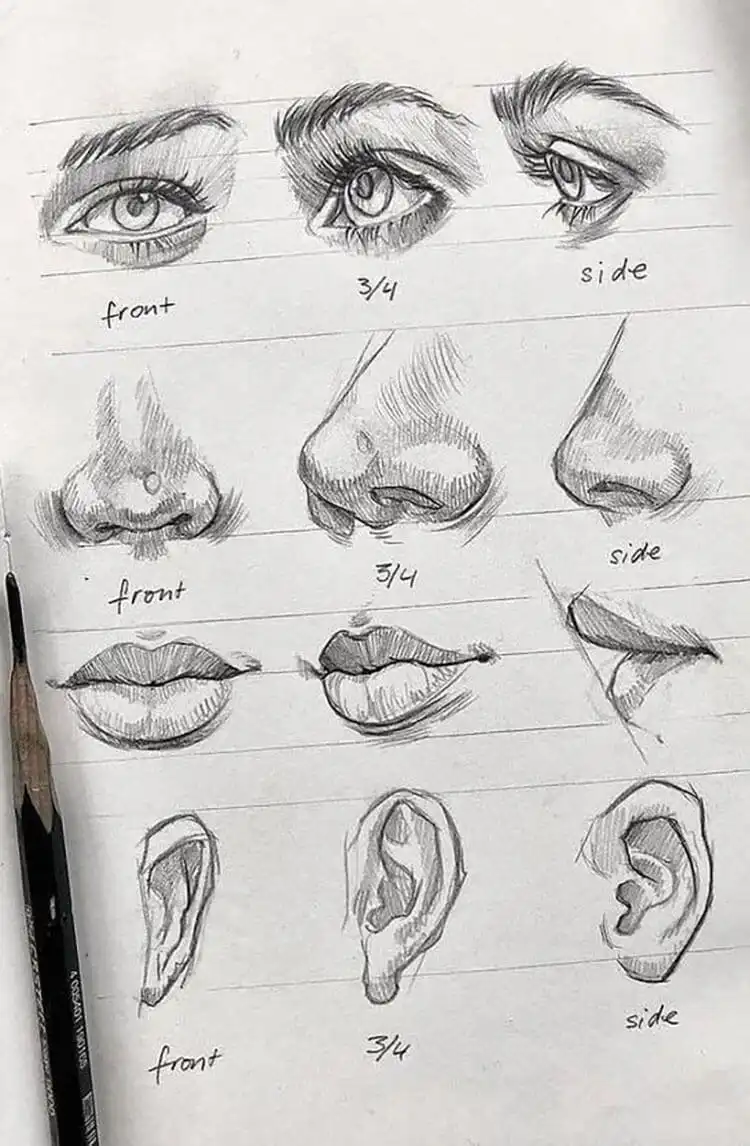
Eyes, Nose, Mouth, and Ears
This comprehensive reference brings together the essential facial features—eyes, nose, mouth, and ears—showing how they appear from different angles. It specifically covers the front view, the three-quarters view, and the side view, which are critical for constructing a complete and coherent human head. Understanding their relational placement is key.
Practice combining these features within a unified head structure, paying close attention to their alignment and perspective shifts as the head turns. Observe how the ears change shape and position relative to the other features in different views. This integrated approach ensures your facial constructions are anatomically sound and portray depth and dimension accurately.
Drawing accurate human anatomy can be a challenging but incredibly rewarding endeavor. With these comprehensive reference images and tutorials, you have the tools to embark on a journey of artistic improvement. Don’t forget to save these valuable tips to your Pinterest board, share them with fellow artists, and leave a comment below to let us know which tutorial helped you the most!