Unleash Your Creativity: One Piece Monkey D. Luffy Drawing Ideas
Dive into the vibrant world of One Piece with our ultimate guide to captivating Monkey D. Luffy drawing ideas. Whether you’re a seasoned artist or just starting your journey, Luffy’s dynamic poses and expressive personality offer endless inspiration. Discover various styles and techniques to bring the future Pirate King to life on your canvas or sketchbook.
From quick sketches to detailed illustrations, these One Piece Monkey D. Luffy drawing ideas will ignite your artistic passion. We’ll explore different artistic interpretations and the core elements that make Luffy such a beloved character to draw, offering insights for every skill level. Get ready to draw your favorite rubber pirate!
Luffy Raising His Hand Sketch
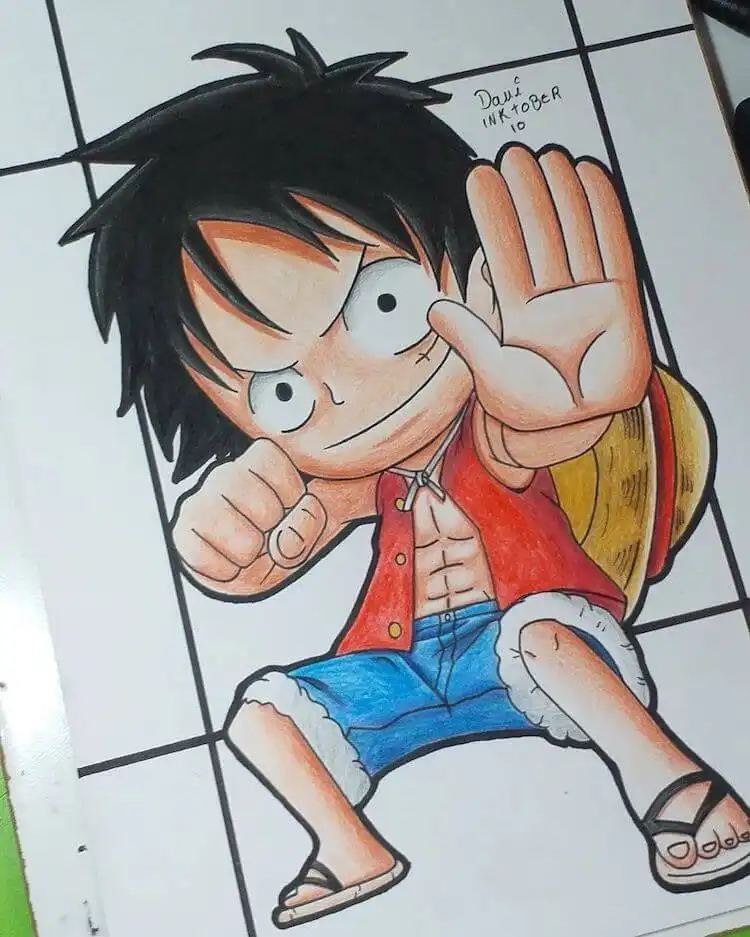
This drawing captures Luffy in a classic, assertive pose, hand raised as if making a declaration or rallying his crew. Focus on conveying motion and energy through dynamic lines. Use varying line weights to emphasize his arm and hand, making them appear ready for action. Experiment with cross-hatching for subtle shading on his vest and arms, adding depth to his powerful stance.
Consider using a mechanical pencil for fine details on his facial expression and the wrinkles in his clothing. A light touch for initial outlines, followed by firmer pressure for defining features, will create a clean and impactful sketch. Pay attention to his confident gaze, which is crucial for capturing his determined spirit.
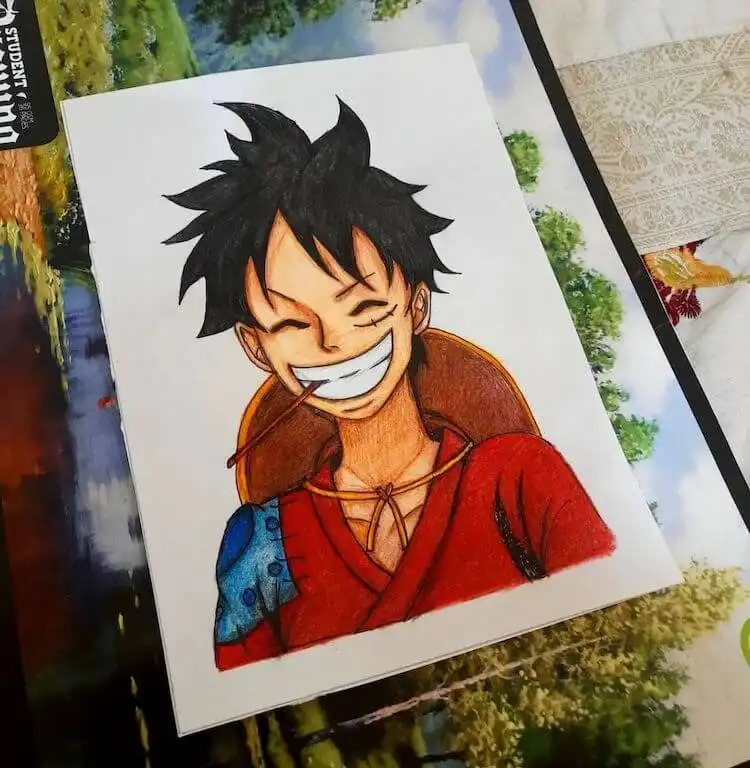
Joyful Luffy Smile Drawing
Nothing embodies Luffy’s spirit quite like his infectious smile. This piece focuses on that wide, uninhibited grin, radiating pure joy and a hint of mischief. When drawing, pay close attention to the curve of his mouth and the crinkling around his eyes. These details are essential for conveying genuine emotion and his carefree personality.
Use soft graphite pencils (like 2B or 4B) to create gentle shadows under his chin and around his hair, adding volume without losing the lightness of the expression. This drawing is perfect for practicing expressive facial features and capturing the essence of character through simple, powerful emotions. Emphasize the highlight in his eyes to make them sparkle with life.
What is One Piece?
One Piece is a globally acclaimed Japanese manga series, brought to life by the imaginative Eiichiro Oda. Since its serialization in 1997, it has captivated millions with its rich world-building, compelling characters, and epic narrative. Drawing from the One Piece universe offers artists a chance to connect with a story filled with adventure, friendship, and the pursuit of dreams.
Understanding the series’ core themes—freedom, loyalty, and facing insurmountable odds—can deeply inform your artistic interpretations of characters like Luffy. When sketching scenes or portraits, think about the underlying narrative and how Luffy embodies the spirit of exploration and resilience. His journey to become the Pirate King is a testament to perseverance, which can be subtly reflected in his determined expressions and dynamic poses. Consider the vast array of characters and settings that can serve as inspiration for your background elements or accompanying figures.
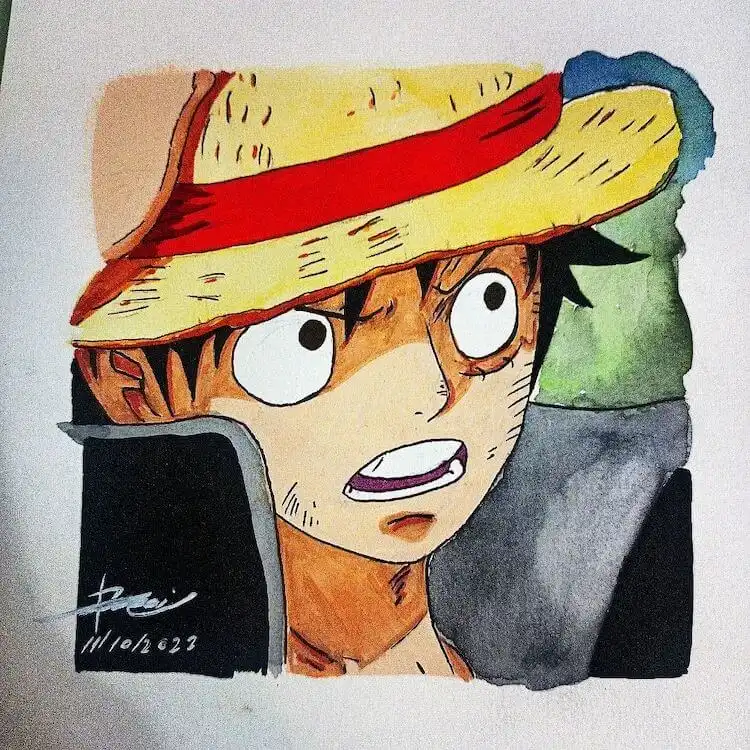
Confused Luffy Expression Art
This drawing showcases Luffy’s often-humorous confused expression, a common sight when he’s trying to grasp complex ideas or reacting to unexpected events. Capturing this look requires careful attention to his slightly furrowed brow, the tilt of his head, and the particular shape of his mouth. It’s a fantastic exercise in conveying specific emotions through subtle facial shifts.
To enhance the confusion, you might use lighter shading around his eyes and a slightly open mouth, suggesting a moment of bewilderment. This piece allows artists to practice drawing nuanced emotions beyond his typical joyous or determined states. A clean linework approach will keep the focus on his face, highlighting the amusing aspects of his personality.
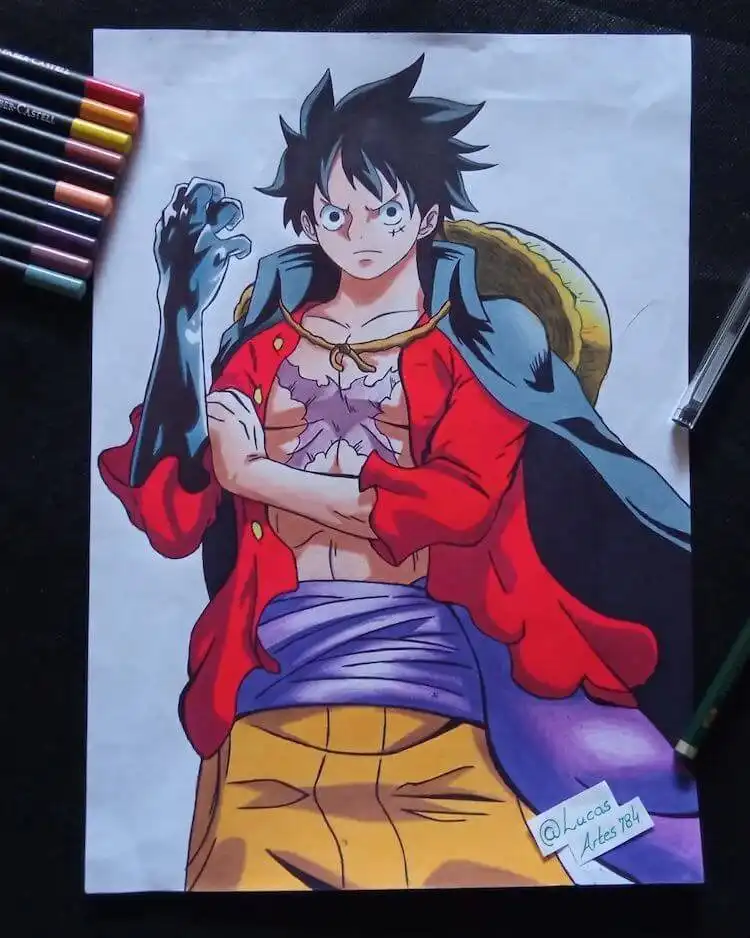
Luffy’s Metal Fist Power Drawing
Here, Luffy is depicted in a moment of intense action, possibly mid-Gear Second or Gear Third, with his fist transformed into a formidable weapon. This drawing demands a strong understanding of dynamic anatomy and motion lines. Focus on the exaggerated size and power of his fist, using bold, thick lines to define its outline and internal details.
The contrast between his regular arm and the enhanced fist should be evident, perhaps through shading or line density. Consider adding subtle speed lines or impact effects around the fist to amplify the sense of power and force. This drawing is an excellent opportunity to experiment with foreshortening and capturing explosive energy on paper, making the viewer feel the impact of his punch.
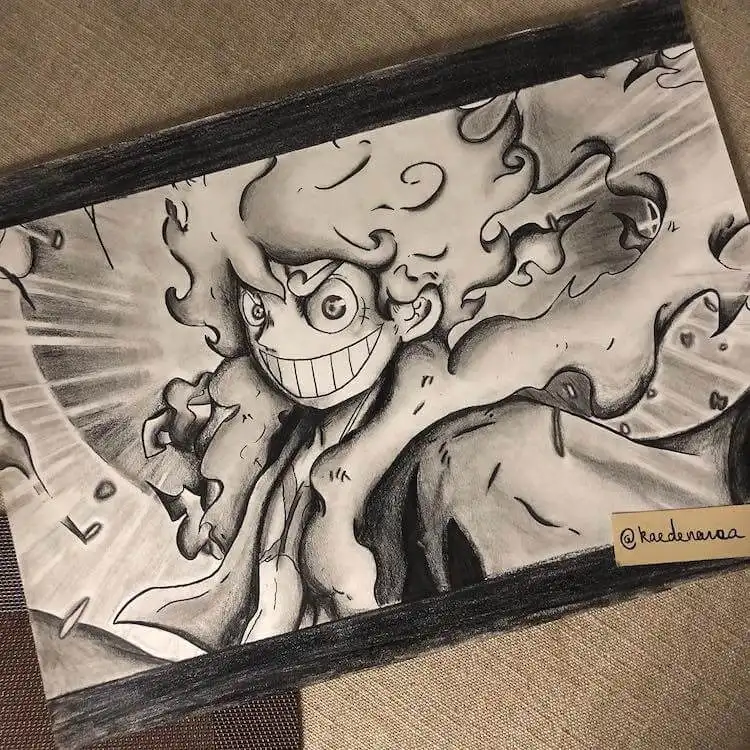
Monochrome Luffy Sketch
This black and white drawing highlights the power of value and contrast in character portrayal. Without color, the artist relies entirely on shading to create depth, form, and mood. Focus on strong darks for shadows, mid-tones for volume, and whites for highlights, especially on Luffy’s hair, hat, and clothing.
Experiment with different pencil grades, from 2H for light initial sketches to 6B or 8B for deep, rich blacks. The stark contrast can emphasize Luffy’s determined expression and the ruggedness of his attire. This approach is fantastic for understanding how light interacts with a character, making every stroke meaningful in defining form and texture.
Luffy with Water Background Illustration
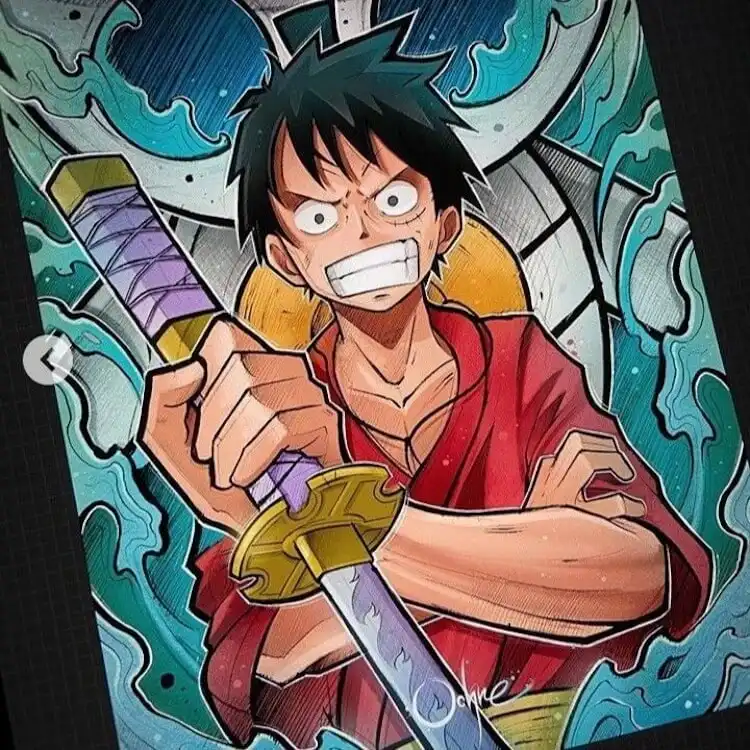
This illustration places Luffy against a watery backdrop, creating a dynamic scene that hints at his adventures on the Grand Line. The challenge here is rendering both the character and the environment cohesively. Focus on contrasting Luffy’s solid form with the fluid, reflective nature of water.
When drawing the water, use curved lines and varied shading to suggest movement and depth, perhaps with hints of reflections or ripples. Luffy himself should remain the focal point, with his expression and pose conveying his interaction with the environment. This type of drawing is great for practicing environmental storytelling and integrating characters into their world.
Why Draw Anime Characters?
Drawing anime characters offers a unique blend of challenge and reward for artists. The distinctive style, characterized by expressive eyes, dynamic poses, and stylized anatomy, provides a rich field for skill development. Artists often find joy in replicating their favorite characters, building a deeper connection with the stories they love. It’s an excellent way to practice capturing emotion and movement in a visually distinct manner.
Moreover, the intricate details and varied designs of anime characters push artists to refine their observational skills and master diverse drawing techniques. From mastering hair flow to rendering complex outfits, each character presents new learning opportunities. Drawing anime can also be a gateway to developing your own unique style, as you adapt and interpret existing designs. For inspiration beyond One Piece, you might explore other anime-themed art forms to broaden your creative horizons.
Straw Hat Luffy Portrait
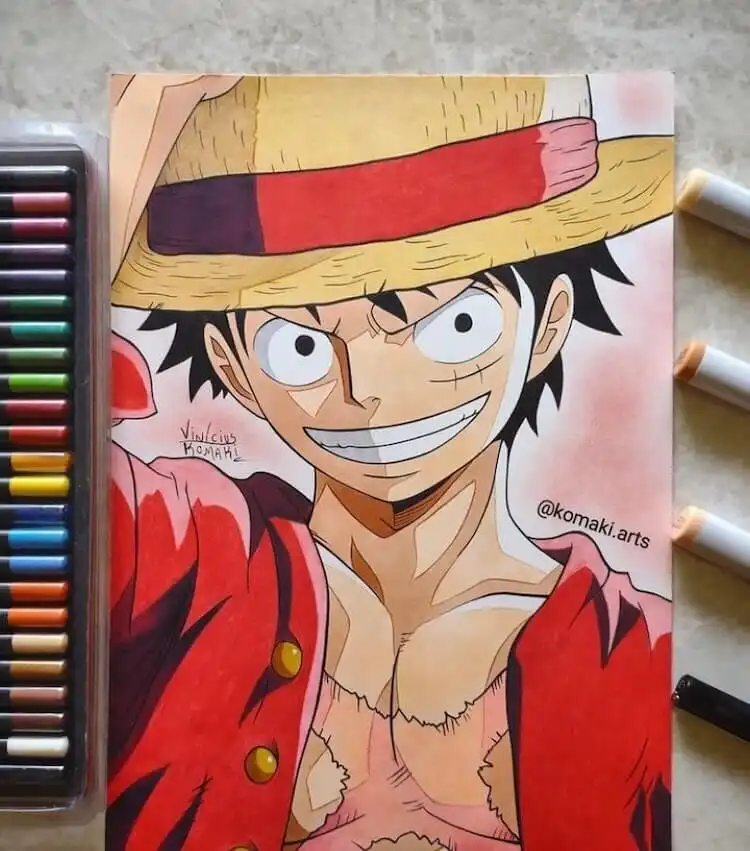
This drawing focuses on Luffy’s iconic straw hat, a symbol of his dreams and a cherished gift from Shanks. The hat itself becomes a central element, framing his face and adding character. Pay attention to the texture of the straw, using short, directional strokes to suggest its woven nature, and subtle shading to give it volume.
Luffy’s expression under the hat should convey his adventurous spirit and determination. This portrait is an excellent study in rendering textures and focusing on key character accessories. The interplay of light and shadow on the hat and his face can create a powerful and iconic image, emphasizing his role as the Straw Hat Pirate captain.
Luffy Unleashing Powers Artwork
This dynamic piece depicts Luffy actively using his Devil Fruit abilities, perhaps stretching an arm or preparing for a Gum-Gum attack. The key is to convey the elasticity and power of his rubber body. Use flowing, exaggerated lines for his limbs, suggesting extension and recoil. Motion lines around his body can further enhance the sense of speed and force.
Consider the distortion of his body parts as he stretches, pushing the boundaries of anatomy to fit his unique powers. This is a fantastic opportunity to practice drawing dynamic action poses and understanding how to illustrate supernatural abilities. Emphasize the energy emanating from his movements to make the artwork truly pop.
Mischievous Luffy Sketch
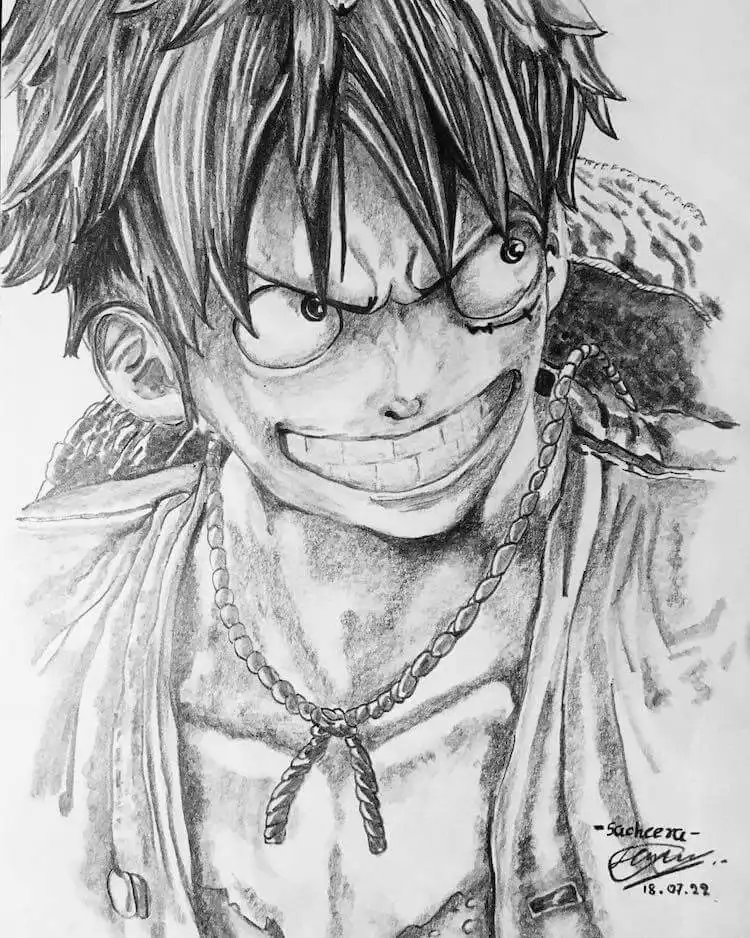
This drawing captures Luffy’s playful and often mischievous side, a look he often wears when embarking on a new adventure or planning something daring. His smirk and the glint in his eye are crucial details. Focus on asymmetrical facial features—one eyebrow slightly raised, a sly curve to his mouth—to convey this specific emotion.
The lightheartedness of the expression can be enhanced with a less rigid drawing style, perhaps with slightly looser lines. This sketch allows artists to explore the subtler aspects of Luffy’s personality, moving beyond just his heroic or comedic traits to capture his innate sense of fun and adventure. A slight head tilt can also add to the mischievous vibe.
Young Luffy Childhood Drawing
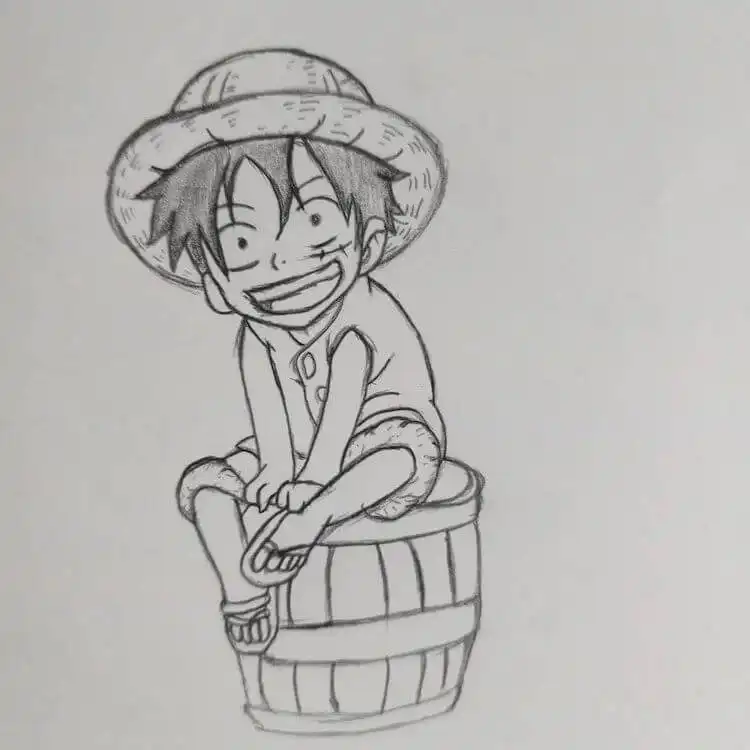
A heartwarming depiction of Monkey D. Luffy during his childhood, before he became the notorious pirate captain. This drawing offers a chance to explore a more innocent and less battle-hardened version of the character. Focus on softer facial features, larger eyes, and a more rounded silhouette to convey his youth.
His expression might be one of wide-eyed wonder, determination, or even a hint of future ambition. Pay attention to the simpler clothing style he wore as a child. This piece is excellent for studying character evolution and drawing younger versions of established figures, highlighting how early experiences shaped the hero we know.
What is Devil Fruit?
Devil Fruits are mystical fruits found in the world of One Piece that, when consumed, grant extraordinary supernatural powers to the eater. However, this immense power comes with a significant drawback: the user loses the ability to swim, becoming like a hammer in water. This unique concept provides a rich source of inspiration for artists depicting Luffy’s abilities.
When drawing Luffy utilizing his rubber powers, consider how the Gum-Gum Fruit affects his body’s physics. His elasticity allows for incredibly dynamic and often exaggerated poses. Understanding the limitations and strengths of Devil Fruit users can help you illustrate battle scenes, power-ups, and the sheer creativity of his fighting style. Think about how the “rubberiness” can be conveyed through fluid lines and distorted forms, making his attacks visually impactful.
Shaded Luffy Character Study
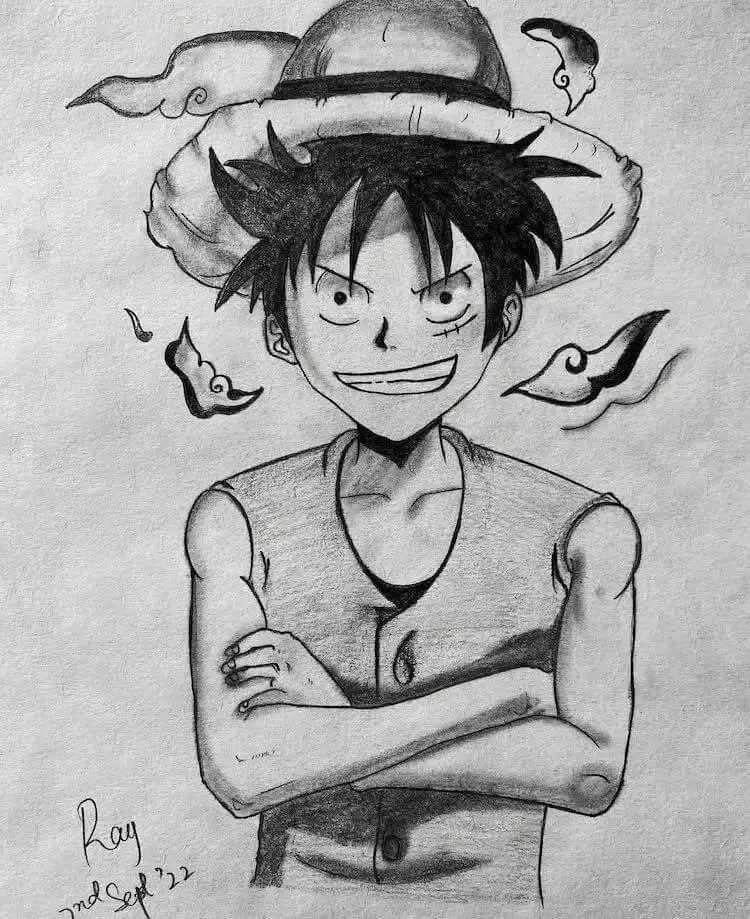
This drawing is a detailed study of Luffy, emphasizing the play of light and shadow across his features and form. It’s an excellent piece for honing your shading techniques. Focus on creating smooth gradients, defining planes of the face, and adding depth to his hair and clothing using various pencil hardnesses.
The goal is to give Luffy a three-dimensional quality, making him appear to pop off the page. Pay attention to the direction of your light source and how it casts shadows under his brow, nose, and chin. This careful rendering enhances his determined expression and makes the drawing feel more realistic and impactful, showcasing mastery of value.
Watercolor Luffy Painting
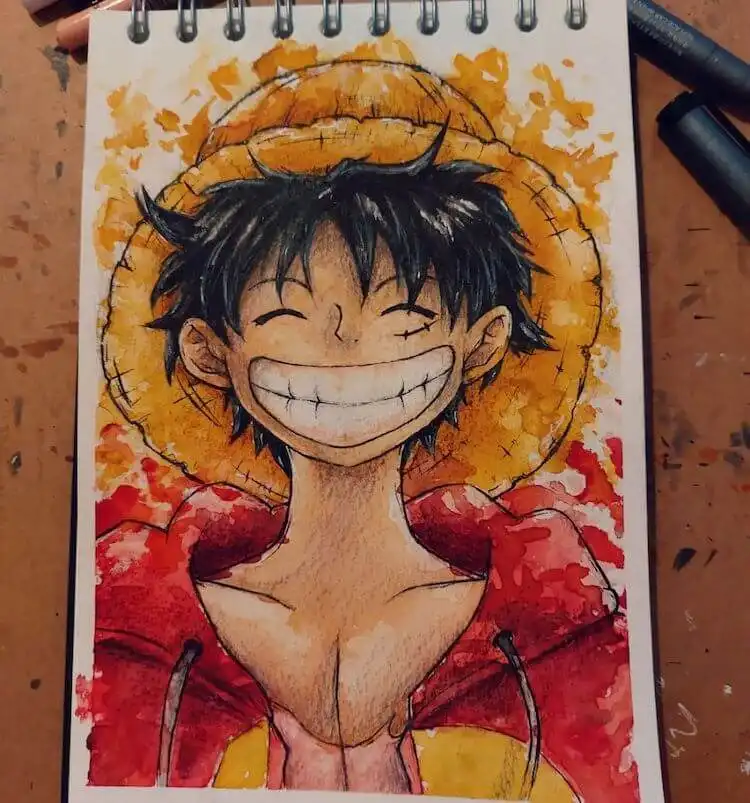
This piece transforms Luffy into a vibrant watercolor illustration, offering a softer yet still dynamic interpretation. Watercolor allows for beautiful blending and fluid effects, perfect for capturing the energetic essence of Luffy. Experiment with washes for his skin tone and background elements, letting colors flow and meld naturally.
For his clothing, use slightly more saturated colors, allowing the white of the paper to show through for highlights and a luminous effect. Techniques like wet-on-wet for backgrounds and dry brush for textures can add varied interest. This medium is fantastic for giving Luffy an ethereal yet powerful presence. If you enjoy this medium, perhaps you’d like to try a cool watercolor plant painting next!
Luffy Without Hat Drawing
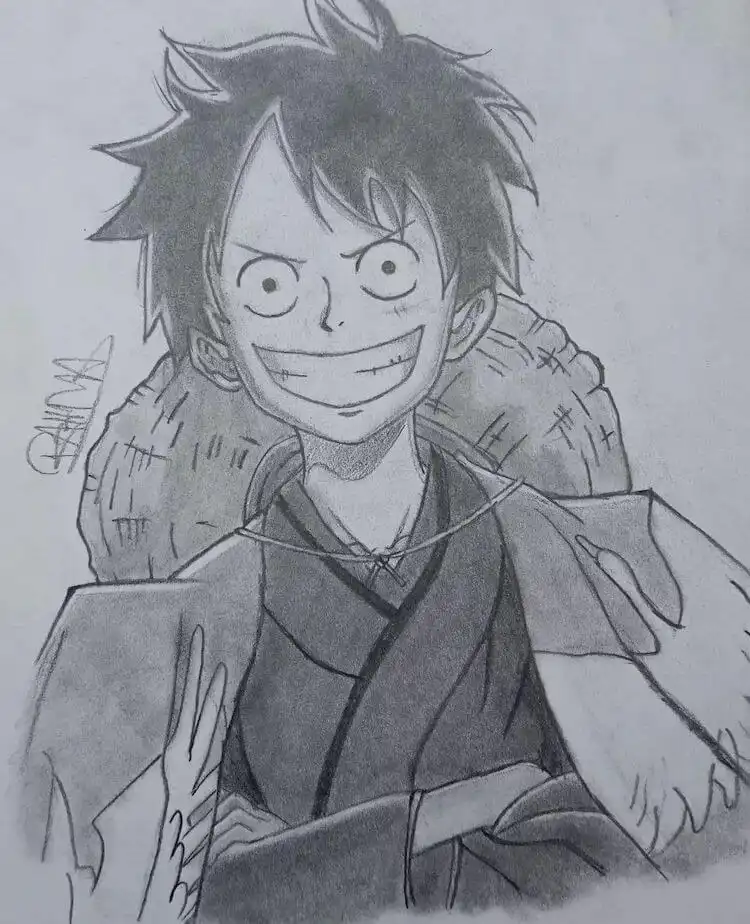
While his straw hat is iconic, drawing Luffy without it provides an opportunity to focus more intently on his facial features and hair. This drawing allows for a clear view of his scar under his left eye, a key identifier, and the texture of his short, spiky black hair. His expression becomes the sole focal point.
Without the hat, artists can practice drawing hair in more detail, considering individual strands and how light catches them. His confident or determined gaze can be emphasized, making the portrait more direct and personal. This stripped-down approach helps highlight the character’s intrinsic features and raw emotion.
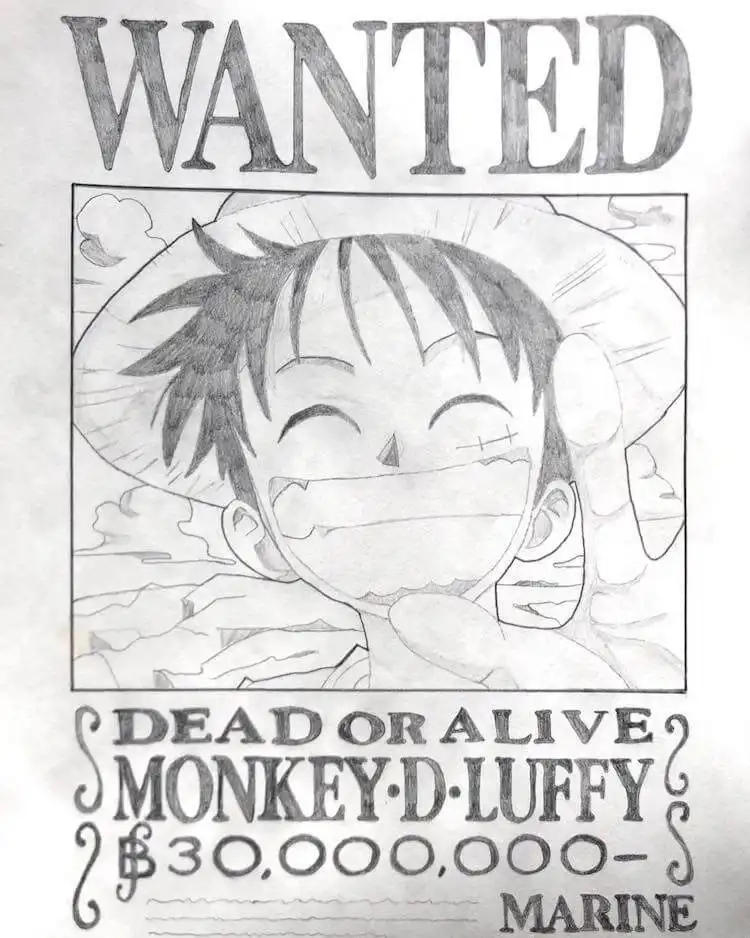
Luffy Wanted Poster Art
Recreating Luffy’s wanted poster is a fun and iconic drawing idea, capturing him in a more stylized, often grittier, form. The essence of a wanted poster is its dramatic, almost propaganda-like quality. Focus on a strong, slightly intimidating pose, perhaps with a smirk or a defiant look. The linework can be bolder, almost like a woodcut.
Consider adding distressed textures to the paper background and using strong shadows to make him look more menacing or legendary. The typography for “WANTED” and his bounty is also crucial for authenticity. This project allows for creative typography and a different artistic mood compared to typical character portraits, leaning into the world-building of One Piece.
Who Are the Straw Hat Pirates?
The Straw Hat Pirates are the central crew of the One Piece saga, led by Monkey D. Luffy. They are a diverse and formidable group of individuals, each with unique skills, dreams, and backstories. Beyond Luffy, the crew includes Zoro, Nami, Usopp, Sanji, Chopper, Robin, Franky, Brook, and Jinbe, each presenting a wealth of artistic inspiration.
Drawing the Straw Hats together or individually allows artists to explore varied character designs, personalities, and interactions. Capturing the camaraderie and distinct traits of each member offers a challenging yet rewarding artistic endeavor. Their adventures together often provide dynamic scenes perfect for illustration, showcasing their bond and collective strength against any foe they encounter on the Grand Line.
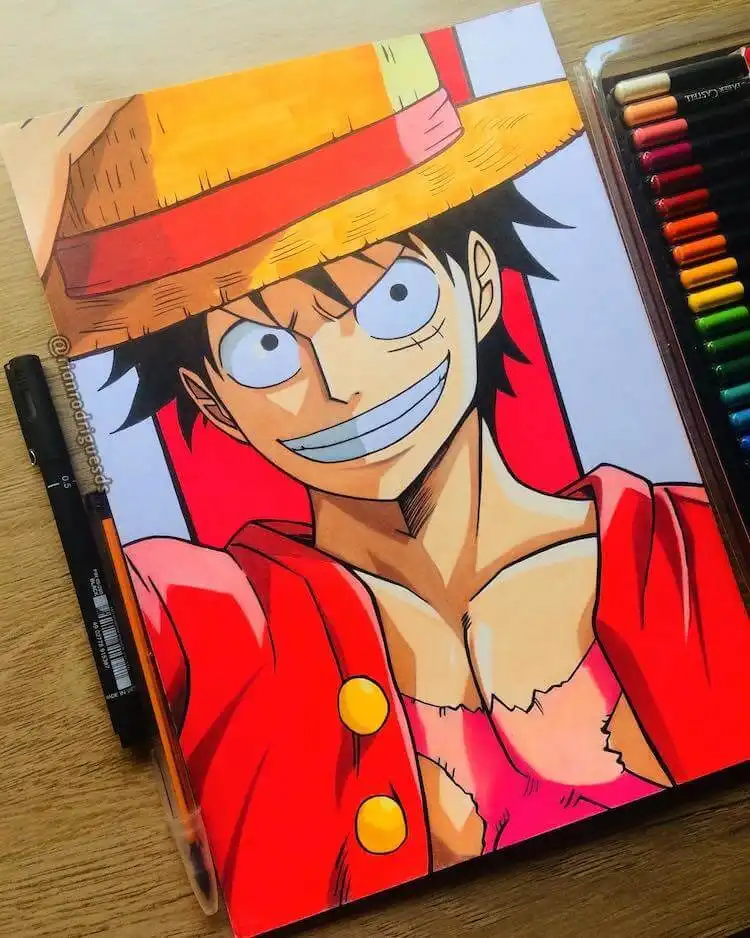
Luffy Marker Art Style
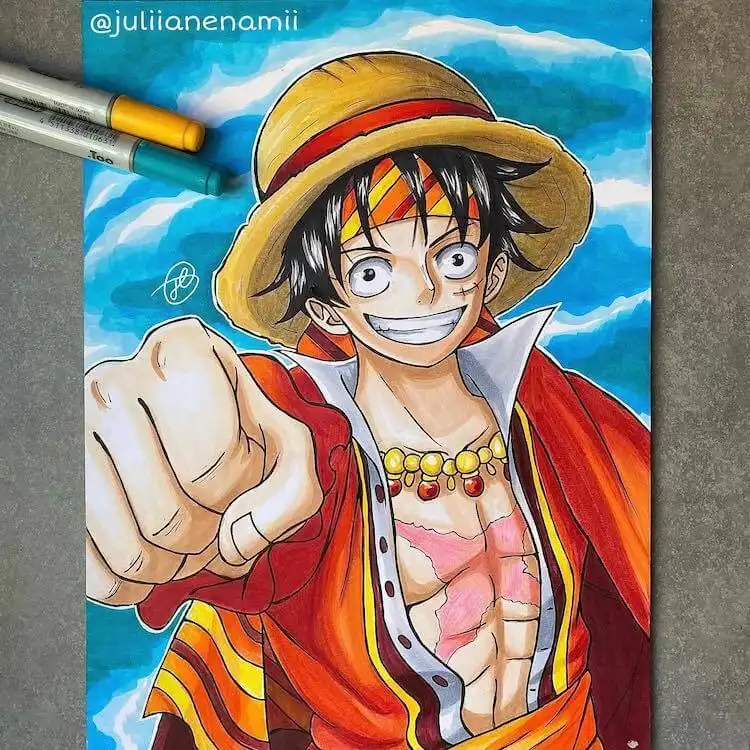
This drawing showcases Luffy rendered with markers, offering a distinct aesthetic characterized by bold lines and vibrant, flat colors. Marker art demands precision in outlining and confident application of color to avoid streaks. Focus on crisp, clean lines for his silhouette and internal details.
When coloring, choose a limited palette of strong colors, allowing for clear separation between different elements of his design. Markers are excellent for creating comic-book style visuals with high contrast and immediate visual impact. This style emphasizes graphic qualities and makes Luffy stand out with striking clarity and energetic pop.
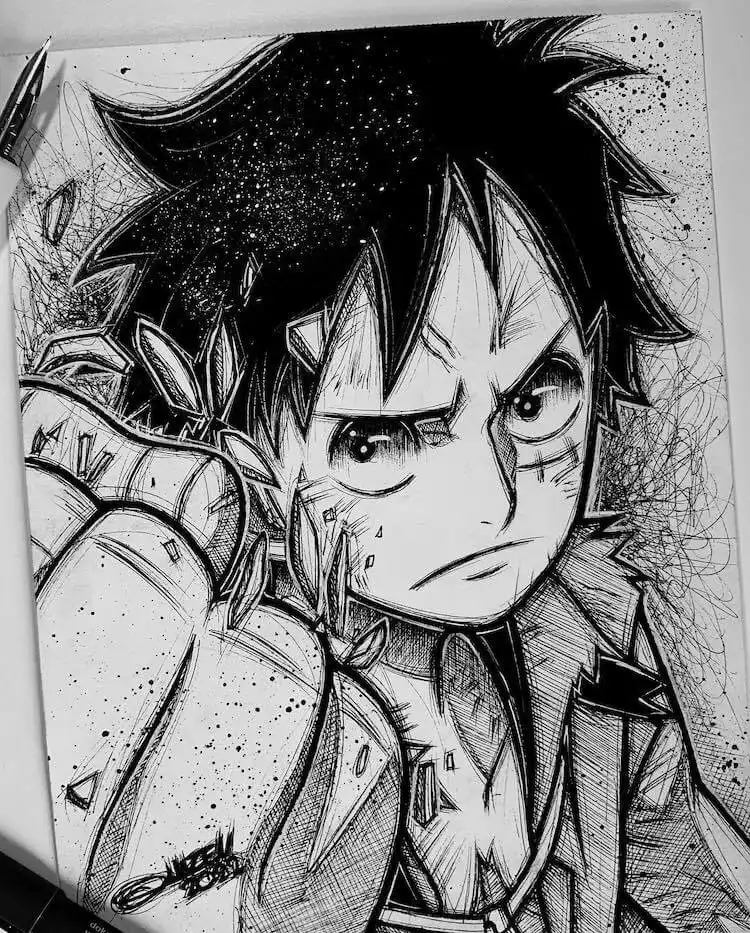
Simple Luffy Sketch Outline
This drawing focuses on the fundamental outlines of Luffy, making it an excellent starting point for beginners or for quick practice sketches. The goal is to capture his essential form, posture, and key features with minimal detail or shading. Concentrate on accurate proportions and dynamic linework to convey his energy and recognizable silhouette.
Use a light hand for initial construction lines and then refine with bolder, confident strokes. This practice helps artists understand Luffy’s basic anatomy and character design before adding complex layers. It’s a great way to warm up or to quickly capture an idea, focusing on the essence of the character.
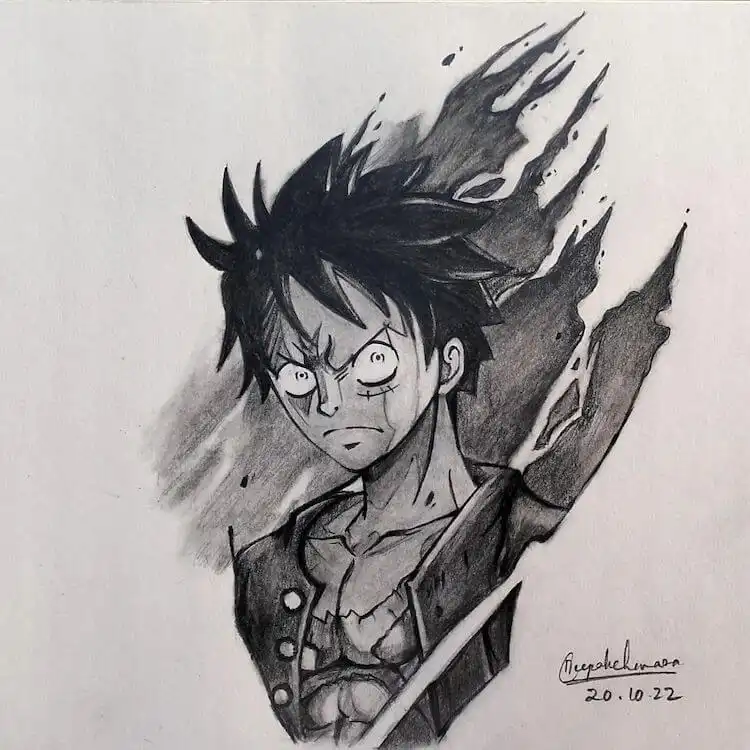
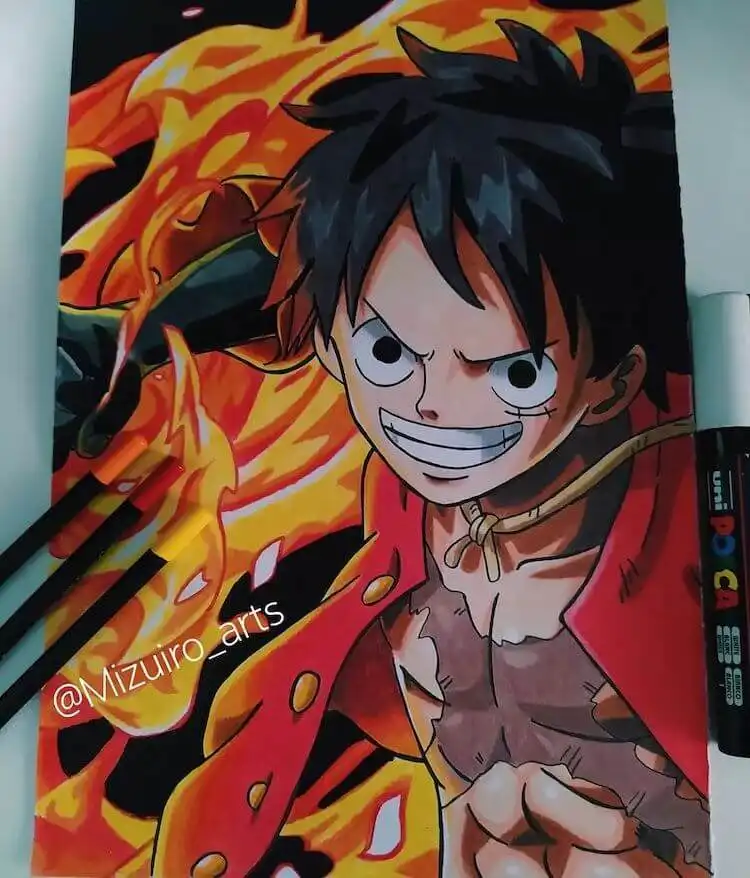
Luffy with Fire Effects Illustration
This illustration depicts Luffy amidst or interacting with fire, adding a dramatic and intense element to the artwork. While Luffy himself doesn’t wield fire, the inclusion of such effects can symbolize his burning passion, determination, or a heated battle. Drawing fire requires dynamic, licking shapes and careful use of color gradients from red-orange to yellow-white.
The challenge is to make the fire look natural and luminous, casting dynamic light and shadow onto Luffy. His expression should reflect the intensity of the flames, whether it’s fierce determination or concentrated power. This piece allows for creative exploration of special effects and how they interact with character portrayal, adding a powerful narrative element.
We hope these incredible One Piece Monkey D. Luffy drawing ideas have sparked your imagination and inspired you to pick up your drawing tools! Don’t forget to save your favorite ideas to Pinterest for future reference, share this guide with fellow artists, and let us know in the comments which Luffy drawing you’re most excited to try!